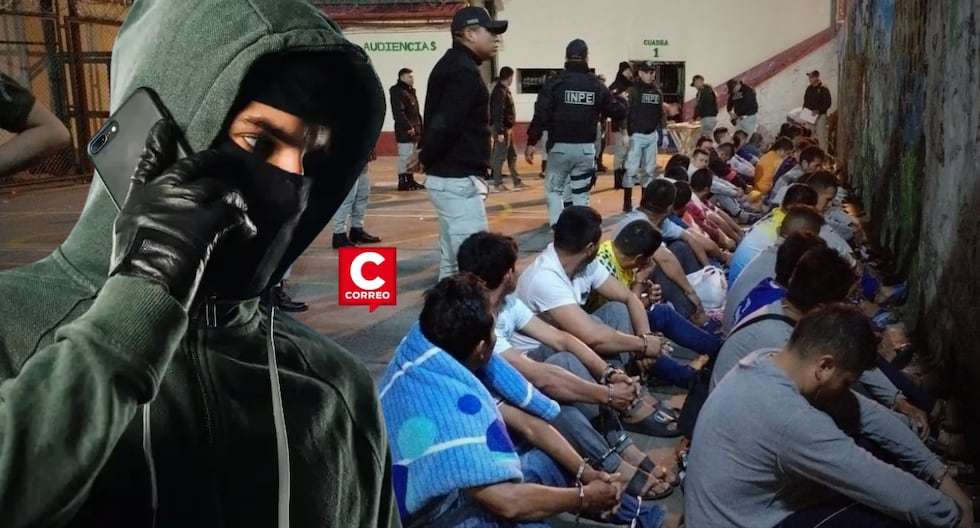
He Supervisory Body for Private Investment in Telecommunications (OSIPTEL) approved this Thursday, a new rule that reinforces control over the illegal use of cell phones within penitentiary centers, youth centers and high security areas. The measure incorporates tools of real-time geolocation to identify lines and equipment that operate within these spaces, even when they are not making calls.
This provision was established in the Resolution of the Board of Directors No. 000139-2025-CD/OSIPTEL, which replaces the previous system based on probabilistic consumption analysis, considered insufficient to detect all cases.
Permanent monitoring in restricted areas
With this standard, operating companies must implement a continuous monitoring of radio communication stations that provide coverage in prison areas and other restricted areas.
Monitoring will allow the lines and equipment that are physically located within these spaces to be accurately located, facilitating faster and more direct identification of prohibited use.
When the system confirms that a line or mobile equipment is operating within a prison or other unauthorized facility, the operating company must immediately cut off the service and block the terminal equipment.
This process seeks to prevent phones from continuing to be used for illicit activities such as extortion, threats or telephone scams.
Alerts citizens to suspicious calls
One of the main novelties is the incorporation of a user alert system. If a person receives a call or message that, depending on the geolocation, could come from a prison and the cut has not yet been executed, the system will send an automatic warning.
The notification will come through a voice announcement and a text message (SMS)informing that the communication could originate in a prison, in order to reduce the risk of the victim falling into deception or extortion.
The operators must inform both OSIPTEL and the Ministry of Justice and Human Rights about every action cut, lock, reactivate or unlock to be carried out. This report must be made within a maximum period of 24 hours.
In addition, they will be obliged to keep records of these interventions for a minimum period of three years, which will allow audits and monitoring by the State.
Failure to comply with the provisions established in the resolution will be considered a administrative offense. The economic sanctions will be determined in accordance with the current OSIPTEL methodology for calculating fines within the sanctioning procedures.
The regulation will begin to apply four months later of its publication in the official newspaper El Peruano. However, a transitional regime has been planned that will allow some control measures to be carried out immediately while the full implementation of the system is completed.