In short
- About 33 million people did not vote in the first round of Brazil’s presidential election, the highest abstention since 1998.
- Osasco, an industrial city outside São Paulo, voted for Luiz Inácio Lula da Silva in 2022 and for Flávio Bolsonaro in this month’s first round.
- Gilberto Almazan, who leads a metalworkers’ union in Osasco, says metal, chemical and textile factories there disappeared and five shopping malls were built.
- Richard Lapper, who has written biographies of Lula and Jair Bolsonaro, calls Lula a “victim of his own success”.
- Flávio Bolsonaro has proposed cutting government spending, ministries and some taxes, while saying he would keep some of Lula’s welfare programmes.
Brazil’s presidential election has gone to a run-off between President Luiz Inácio Lula da Silva and Flávio Bolsonaro, after the right-winger won the first round in places such as Osasco, a former industrial city outside São Paulo where the working class that built Lula’s career has changed shape.
Why did Osasco swing to Flávio Bolsonaro?
Osasco voted for Lula in 2022 and backed Flávio Bolsonaro in the first round this month. Shuttered factories have given way to shopping malls and delivery-app technology companies in the municipality, now dubbed São Paulo’s “Silicon Valley”. Since 1989, every first-round winner has gone on to be elected president.
What happened to the industrial working class?
Gilberto Almazan, who leads a metalworkers’ union in Osasco, says the base Lula once mobilised has eroded. “We had strong deindustrialisation here,” he said. “The profile of the working class changed. They are no longer predominantly industrial workers, they are service workers.” He added: “Metal, chemical, textile factories disappeared. And five malls were built.”
Millions of Brazilians now work in the gig economy — driving for Uber, delivering food or running market stalls and home beauty services — a shift Almazan calls “Uber-isation”. He says many want flexible hours rather than the collective bargaining and welfare Lula championed.
Who is switching to Bolsonaro?
Gisele Bonfim, a lawyer in Osasco, backed Lula in 2022 and will vote for Flávio Bolsonaro this time. “He brings the hope of change, that we can have a different Brazil,” she said. Tairine, a hot-dog seller at an open-air market, previously abstained, citing high taxes on what she buys; “nothing has changed” since Lula returned to power, she said.
Flávio Bolsonaro has proposed cutting government spending, ministries and some taxes while keeping some of Lula’s welfare programmes. The two candidates have traded personal attacks in a televised debate.
How many Brazilians did not vote?
About 33 million people did not vote in the first round, the highest abstention since 1998, although voting is compulsory in Brazil and missing it carries a fine. Lula’s campaign has made turnout its central task for the run-off, with hopes pinned on turnout in Minas Gerais.
What do analysts say about Lula’s record?
Richard Lapper, a biographer of both Lula and Flávio’s father, former president Jair Bolsonaro, says deindustrialisation and the rise of individualised work are global trends that hit Brazil harder because it industrialised late and deindustrialised early. He calls Lula a “victim of his own success”: unemployment fell to a record low and Brazil left the UN’s Hunger Map under his current government, but Lapper sees a crisis of “expectations” as prices, household debt and interest rates rise.
Robson, 53, a municipal civil servant in Osasco who grew up in Lula’s home state of Pernambuco, says Brazil is running deficits and blames high public spending for the “worst phase” of the tax burden. “Now you have to make choices: pay an instalment for your car, or put food on the table,” he said.
How is Lula trying to close the gap?
Lula’s campaign has focused on mobilising students and other voters for the second round and claims one São Paulo rally drew about a million people. “A lot of people didn’t vote, they thought it wouldn’t change anything,” said supporter Leila. “Our fight is to make those people believe their vote changes things.” Aerial video of the rallies has spread online, while US lawmakers have asked Meta to explain alleged Brazil election bias.
Frequently asked questions
Who is in Brazil’s presidential run-off?
President Luiz Inácio Lula da Silva faces Flávio Bolsonaro in a second round, after Flávio Bolsonaro won the first round in places including Osasco.
Why did Osasco vote for Bolsonaro after backing Lula?
Osasco voted for Lula in 2022 and for Flávio Bolsonaro this month. Union leader Gilberto Almazan says factories closed, five shopping malls were built and most local workers are now in services rather than industry.
How many Brazilians abstained in the first round?
About 33 million people did not vote, the highest abstention since 1998, even though voting is compulsory in Brazil and not turning out incurs a fine.
What has Flávio Bolsonaro promised on the economy?
Flávio Bolsonaro has proposed cutting government spending, government ministries and some taxes, while saying he would maintain some of Lula’s flagship welfare programmes.
With reporting from BBC News.
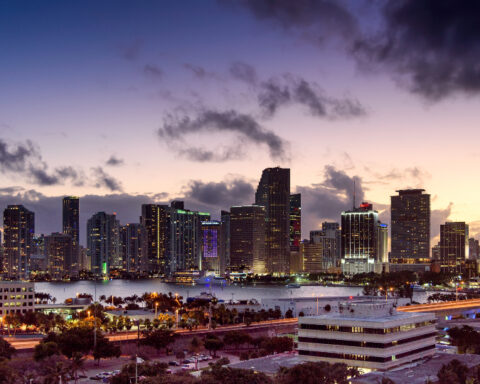
Stock image, not from the events described. City Skyline — Joe deSousa / Wikimedia Commons (CC0 1.0)