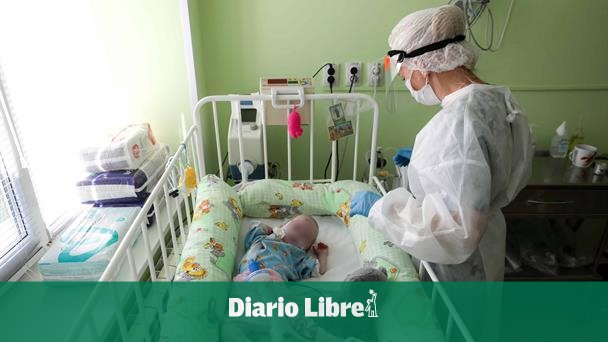
The urgent measures to protect children who are orphaned after a feminicide should start, according to the psychiatrist Luis Verges Baezwith the immediate reestablishment of stable care figures.
The specialist warns that these minors face “a traumatic loss“which affects your emotional security and demands quick actions and coordinated.
Vergés, director of the Behavioral Intervention Center for Men of the Attorney General’s Office, points out that the priority is to place children within the extended family —uncles, aunts or other relatives—capable of exercising “parenting“, a combination of empathy, emotional stability and sensitivity to meet your needs.
The psychiatrist’s call gains relevance after learning the data from the study on the femicides of the Dominican Political Observatory (OPD-Funglode), which established that between 2016 and 2024, 1,072 minors were orphaned by 779 femicides.
only in 2024the 73 cases registered left 77 motherless childrenaccording to the investigation directed by Flor Batista Polo, with the title: “Femicides in the Dominican Republic: x-ray of femicidal violence 2016–2024“.
The study shows that behind every murder there is destroyed homes and interrupted routines.
Vergés emphasizes that these families usually face poverty and generational resentmentsso the state support It is essential.
Assistance programs They must guarantee that children maintain their daily activities and remain in school, even when the emotional process is complex at the beginning.
Another key measure is to avoid stigmatization. The specialist insists that minors should not be labeled as “children of the feminicide“, a narrative that can affect your self-esteem and reinforce the idea that they are marked for future dysfunction.
State assistance
In 2024, 349 families and 705 orphaned children They were accounted for in the Supérate program.
He National Council for Children and Adolescence (Conani) also allocates tens of millions of pesos monthly to the financing of children’s shelters and orphanages that house children in vulnerable situations and without parents or guardians, according to the institution’s reports. Assistance includes education programs.
Psychiatrist Vergés recommends professional evaluations and continuous monitoring, without interpreting each child’s error or behavior as an automatic result of trauma. The school and the community must collaborate to create environments of normality, not excessive pity or compassion. For the psychiatrist, a feminicide causes “traumatic grief”: a deep loss with emotional wounds that can be difficult to heal. However, he warns that they should not be assumed to be irreversible. “We cannot create a self-fulfilling prophecy,” he says.