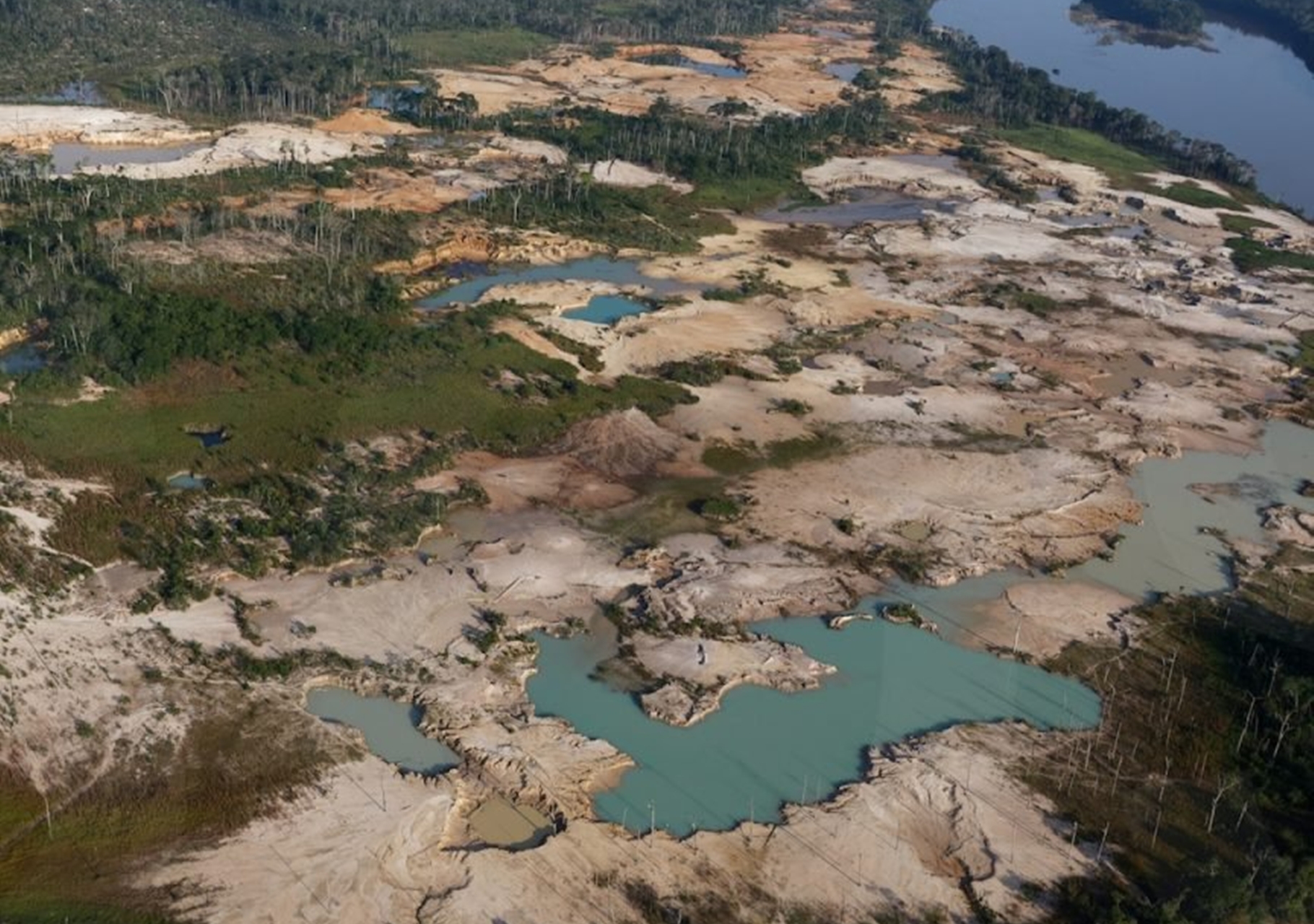
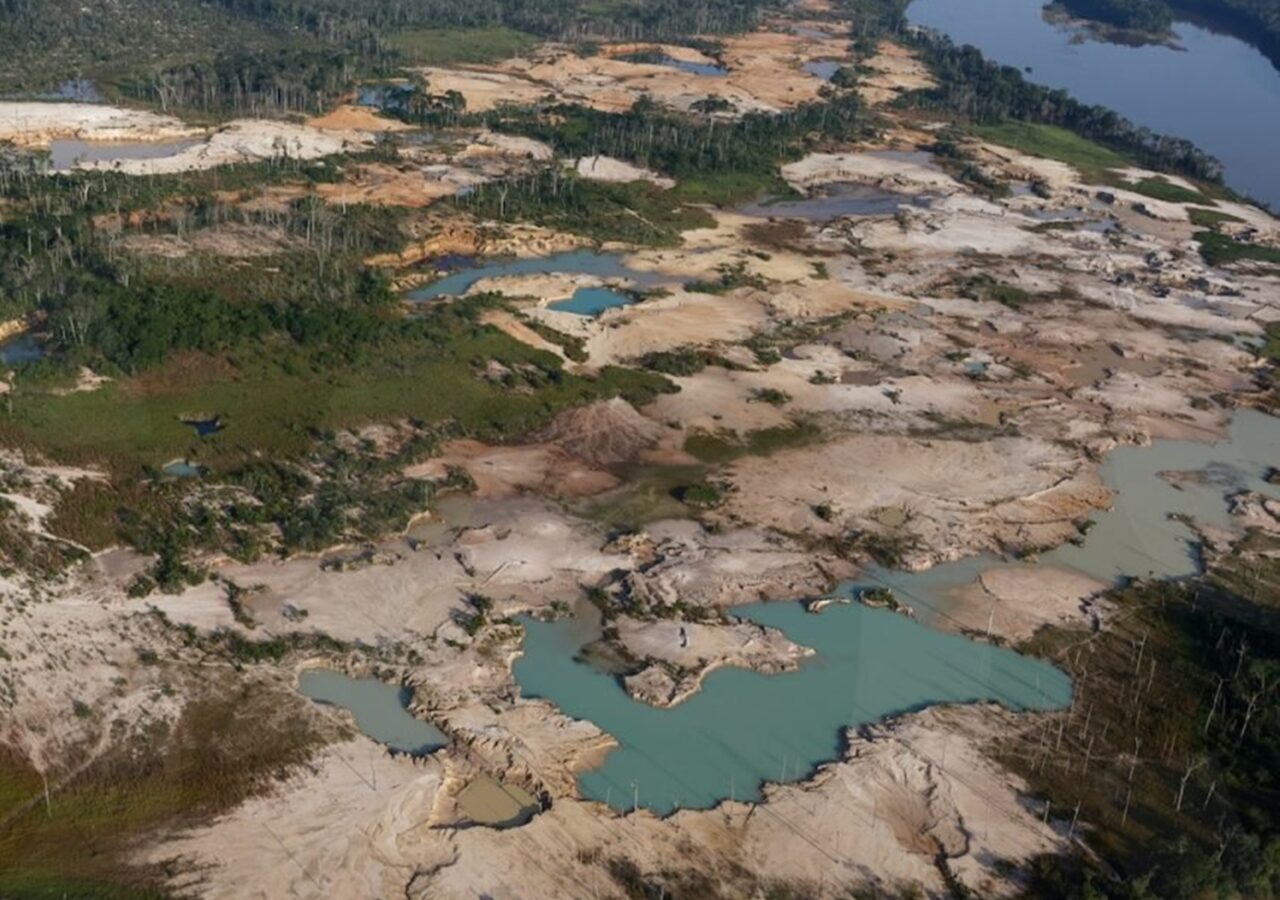
He Arco Minero del Orinoco celebrated a decade of creation, on February 24, 2016, years in which it has left environmental destruction, violence in indigenous territories and weakening of environmental institutions in Venezuela.
The Provea organization remembers that that day the Decree No. 2,248 that created the Orinoco Mining Arc National Strategic Development Zone, encompassing 111,843.70 square kilometers in the south of the country.
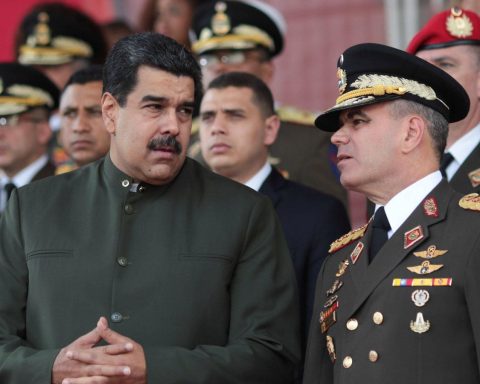
The project, presented by the government of Nicolás Maduro as an economic engine, meant the beginning of a model based on greater extraction of primary income, with more opacity and repression.
“Mining is one of the elements that we have with the best planning and projection, and that allows us today to start this mining engine with great force,” Maduro said at the time.
He also assured that there were investors “from 35 countries” and that special treatment would be given to artisanal mining. However, Provea maintains that the decree was approved without prior, free and informed consultation with indigenous peoples and without environmental and sociocultural impact studies.
Indigenous peoples were transgressed
In the affected area are the Canaima National Park, the Jaua-Sarisariñama, the Caura Forest Reserve, the Orinoco Delta Biosphere Reserve and other natural monuments. And they inhabit peoples such as the Warao, Pemón, Ye’kwana, Sanɨma, Kari’ña, Piaroa, Akawayo, Eñepa and Mapoyo, among others.
The organization affirms that with the Orinoco Mining Arc “The right to self-determination of indigenous peoples was openly transgressed.” and the right to prior, free and informed consultation and the human right to a healthy environment.”
In these 10 years, mining expansion extended beyond the limits of the decree, also impacting the state of Amazonas.
Provea warns that the project is the main threat to the rights of indigenous peoples south of the Orinoco.
The advance extractive has generated militarization and presence of irregular armed groups, including the ELN and FARC dissidents, who dispute control of illegal economies. The organization documents ddisplacements, arbitrary arrests, murders and disappearances, as well as threats against indigenous leaders.
He adds that the environmental impact includes deforestation and mercury pollution in rivers and soils, in an elemental ecosystem for global climate regulation. It also warns that the Amazon is approaching “critical points of irreversible environmental deterioration.”
The crisis is also reflected in health
In the Autana municipality, Amazonas state, only 3 of 12 outpatient clinics are fully operational, according to data cited by Provea of the Regional Organization of Indigenous Peoples of the Amazon.
Part of the health personnel have migrated to illegal mining for low salaries.
The malaria and tuberculosis They continue to be the main causes of death among indigenous people. In recent years there have been more than 390 deaths of Yanomami indigenous people, mostly from malaria.
They are also reported high maternal and infant mortality rates and cases of malformations associated with mercury contamination.
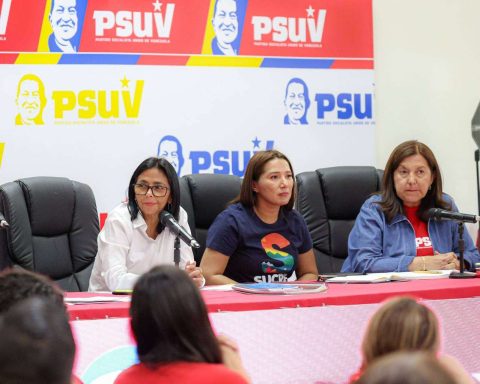
Provea pointed out that in 2025 the now acting president Delcy Rodríguez reported that national gold production reached 9.5 tons and announced the Gold and Mining Expansion Plan 2026. For the NGO, this it deepens extractive expansion without translating it into improvements for communities.