Santo Domingo.- In the Dominican Republic, only patients who need a kidney transplant are covered by the social security system, leaving out those who require liver, heart, lung or pancreas transplants, whose procedures can exceed two million pesos.
The National Transplant Coordination Institute (INCORT) warned that this limitation generates a gap in inequality in access to life, since many patients with terminal liver or heart diseases cannot pay for surgical treatments nor the immunosuppressive medications that they must take for life.
«All the liver transplants that we have done in this country, with almost all exceptions, have been covered by the Plaza de la Salud General Hospitalwhich is where we have the program. Imagine what it means for a Dominican family to have to find a million and a half or 2 million pesos for a transplant. That is unattainable for more than 90% of the Dominican population.«said Jiomar Figueroa, president of the Medical College of Surgeons.
He indicated that INCORT is working on a law to find a way, through social security, to provide coverage to patients who deserve to be transplanted.
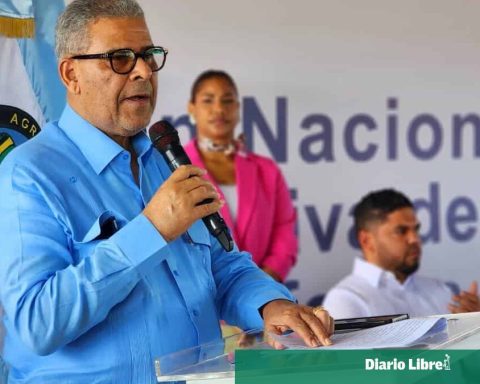
José Juan Castillos Almontedirector of INCORT, explained that currently patients with contributory or subsidized insurance They can access kidney transplants through agreements with specialized centers such as CECANOT, HOMS and Plaza de la Salud. In the Dominican Republic, More than 98% of the population has some type of insurance, which guarantees coverage for the majority of kidney patients.
You can read: 70% of Dominican families refuse to donate organs, according to INCORT
The procedure begins when the patient is evaluated by a specialized group to determine eligibility. Once the certification is issued that the patient is in the study process, the insurance opens coverage of approximately 3.5 million pesosintended to cover the transplant, donor studies and postoperative medications. This coverage is renewed each year as long as the patient maintains their insurance.
Regarding other transplants, such as liver, heart or bone marrow transplants, Castillos Almonte explained that they must first be develop national protocols that establish the needs and cost of each procedure. These protocols require approval from the Standards Directorate of the Ministry of Public Health before submitting them to the National Social Security Councilwhich will decide its inclusion in the coverage.
The director of INCORT assured that protocols for liver and heart transplants are being developed, with the expectation of having their approval towards the end of this year or early next year.