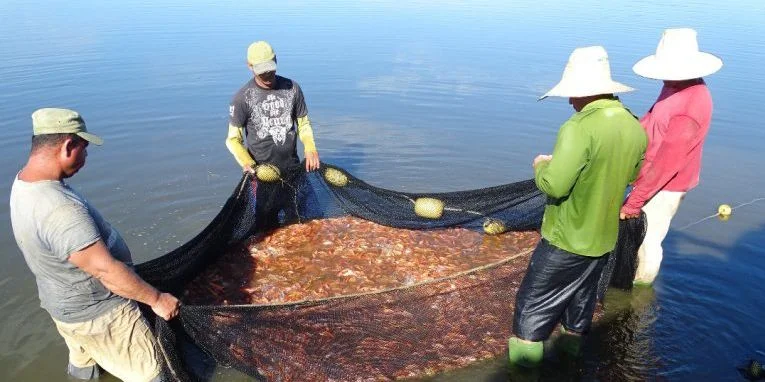
Of the 640 tons of fish that the regime projects in the province, only about 128 would be destined for people’s consumption.
LIMA, Peru – The prime minister of the Cuban regime, Manuel Marrero, urged in Cienfuegos to “prioritize fishing in the sea” during a meeting of the Provincial Government Council in the territory.
According to the meeting, the authorities plan to capture about 640 tons of fish on marine platforms during 2026, of which only 128 would be destined for the population, which represents 20% of the total.
Although the Provincial Council did not clarify the fate of the remaining 80% of the fishing in the province, the plan reflects a distancing from the government’s will in relation to the serious food insecurity that the Island is experiencing.
In a country surrounded by the sea, it is paradoxical and even surreal that fish or seafood is not sold in state establishments, and that obtaining it in urban areas far from coastal towns is practically unthinkable.
As journalist Laura Rodríguez Fuentes recalled in the text published by Cubanet “Sea fish, one of the most expensive foods in Cuba”, this product was for some years a food incorporated into the supply book for medical diets and the general population. Specifically, half a kilo per capita of the so-called horse mackerel or horse mackerel used to be sold per month, until imported chicken came to replace the in-demand product to this day.
In fact, given the shortage in butcher shops, in 2017 the official media themselves they assured that it was decided to “eliminate the concept of chicken for fish and agree on the distribution of the former as part of the process of rearranging the family basket.”
Data collected by The Touch In 2024, as part of a series of reports, they confirm that “each of the Caribbean islands that share geographic status with Cuba maintain levels of fish consumption higher than those of the largest of the Antilles” and that this archipelago is behind countries with similar populations such as Haiti, Honduras and Guatemala.
Currently, fish and shellfish are only regularly purchased in the informal market at prices that are quite high or prohibitive for the pockets of the majority of Cubans.