Fidel Castro, who commanded the M-26-7 from the Sierra Maestra, denied all responsibility in what he described as an “adventurous act.”
HAVANA, Cuba – One of the first acts of air piracy in history was not committed by terrorists from the Middle East, as many might assume, but by a commando of the July 26 Movement that 67 years ago, on November 1, 1958, during the insurrection against the Fulgencio Batista regime, began, with a tragic outcome, the practice of airplane hijackings.
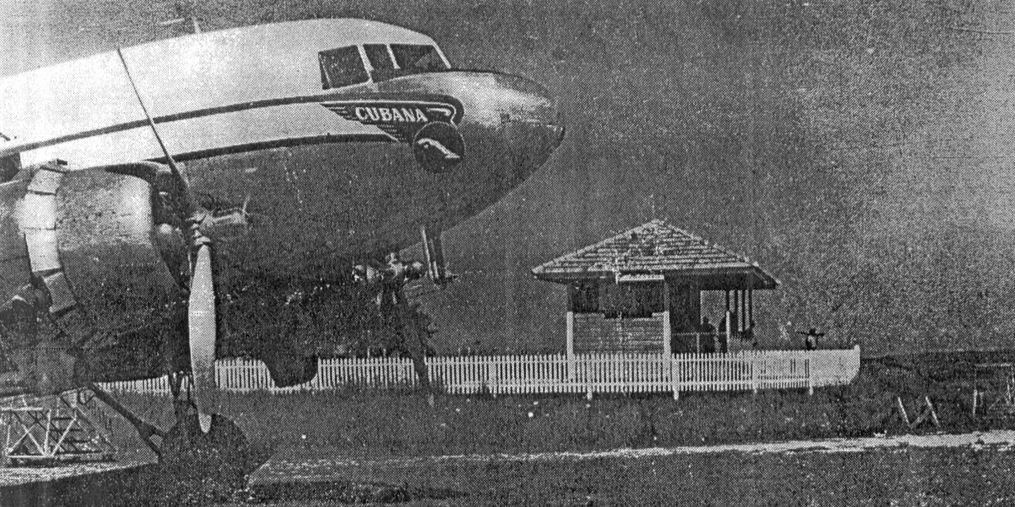
It happened when a five-member commando from M-26-7 diverted, at gunpoint, Cubana de Aviación flight 495, with 16 passengers on board, which was covering the Miami-Varadero route.
Half an hour after the flight started, when there were 15 minutes left to reach Varaderotwo men pointed their guns at the pilot and ordered him to direct the plane towards the eastern region of Cuba. Meanwhile, the other three kidnappers, threatening the terrified passengers with their weapons, ordered them not to move from their seats. Then, they turned off the plane’s lights (according to eyewitnesses later said, one of the hijackers turned off one of the lights with a bullet).
The kidnappers, whose objective was to join the Castro guerrillas, for whom they were carrying ammunition and money, ordered the pilot to land on the runway of the Preston power plant, on the northern coast of the current province of Holguín.
As the pilot had warned the hijackers, the runway was not long enough for the landing of the device, a Vickers Viscount 755D turboprop, and the plane, which was about to run out of fuelveered off the runway and into the deep, shark-infested waters of Nipe Bay.
There were 17 dead: 14 of the 16 passengers and three kidnappers. Among the dead were three children, ages two, four and five, and their mother, who was pregnant.
The crime went unpunished. Although six of the deceased were American citizens, the US government, claiming to have no jurisdiction, did not investigate the incident. And there were no inquiries into the Batista regime, which would be overthrown two months later by the rebels.
Fidel Castrowho commanded the M-26-7 from the Sierra Maestra, denied all responsibility for what he described as an “adventurous act,” and Raúl Castro described the act as “heroic stupidity.”
A few years after Fidel Castro came to power, airplane hijackings would begin by people who wanted to escape his regime. Then, in the 1960s and 1970s, detours became frequent, when, before spreading to the Middle East and Europe, it was the way used by members of radical groups and fugitives from North American justice and by Latin American guerrillas – such as the Uruguayan Daniel Chavarría, the Tupamaro who would become a writer – to seek refuge in Cuba.
Only the little known about the hijacking of Cubana de Aviación flight 495 was reported by the Cuban and North American press at the time and what was collected in a book that took Colombian journalist Gerardo Reyes ten years to complete. We hope that the documentary by exiled director Lilo Vilaplana about that tragic event, which will premiere in Miami on November 2, will provide new details.