Entire communities in Santiago de Cuba claim that they have not even received a visit from authorities to assess the damage.
LA MAYA, Cuba. – One month after Hurricane Melissa passed through the eastern region of Cuba, official figures and international aid reports starkly contrast with what the victims describe in municipalities such as Santiago de Cuba, Palma Soriano, Contramaestre, Songo La Maya and Holguín. In all cases, the same feeling persists: the aid arrives late, arrives incomplete or never arrives, while the conviction grows that part of the donations are being diverted or administered opaquely.
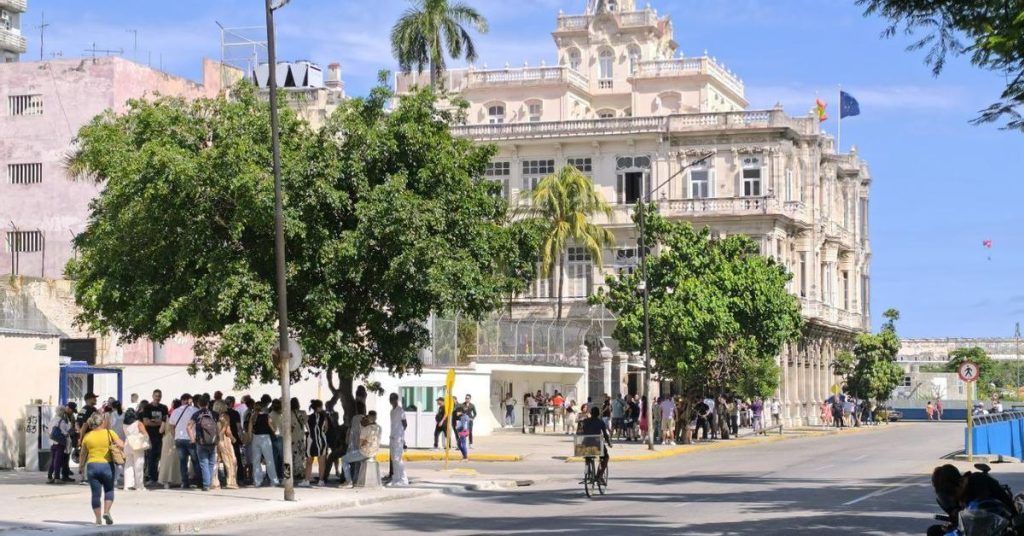
In Santiago de Cuba, where more than 110,000 homes were damaged, according to the official newspaper Sierra Maestra—, real recovery has only just begun for many families. Although the Government claimed to have provided some 882 homes with materials, what has arrived so far is mainly reduced to asbestos-cement tiles, in insufficient quantities. Entire communities claim that they have not even received a visit from authorities to assess the damage, which leaves them outside the official reports and, therefore, access to resources.
On the Santiago coast, in the town of El Francés, the force of the sea destroyed entire homes. CubaNet He spoke with the niece of an elderly couple over 70 years old, who completely lost their home due to the impact of waves of up to seven meters. The young woman asked to protect her identity for fear of reprisals, and decided not to reveal the names of her uncles “out of respect.” However, he authorized the publication of the information.
The source details that his uncles received a mattress sent from Havana (Perfect Dreams brand, generally manufactured in Mexico) which, in addition, must have arrived accompanied by a backpack with basic supplies, the same one that other neighbors received and they did not. In response to complaints, the area delegate alleged that it had been assigned to another person, without being able to prove it. The family interprets this difference as a possible deviation.
In addition to the mattress, the elderly couple received a kitchen module (pots, jugs, plates, cutlery) and a food module from Mexico, La Tienda brand. In addition, they were given a set from the International Red Cross, which included blankets, medicines, mosquito nets, lamps, basic tools, flip flops and other supplies.
What they have not received continues to be the essential: construction materials, a tarp to protect what little they have left, and facilities to rebuild their home. The tiles that arrived in the area are not destined for total collapse. Meanwhile, the family survives thanks to personal donations, the Protestant church in the area that has helped with food, and half-used items that the niece herself has been buying so that the elderly can overcome this disaster.


The young woman specifies that her uncles did not receive tarps from the Red Cross even though they were delivered in nearby areas such as Juan González and Loma del Yarey, where the scenes during the delivery were chaotic: mothers with children carried between pushes to reach the emergency sets of Chinese origin. “A total disaster,” describes the interviewee.
Very close there, in El Cobre, the same dynamic is repeated: the community was practically devastated by the winds and, however, most of what they have received comes from churches, MSMEs that have sent yogurt and sausages for the children and from the sociocultural project The Cuban Familymade up of actors who reside on the Island and in the United States.
On the other hand, in the local warehouse they have only distributed rice, sugar, peas, oil and some extra products for children from zero to four years old and those over 65. The rest of the population continues waiting.
The tiles that arrived—at “subsidized” prices—must be paid for about 100 pesos each. “Where is someone who lost everything going to get money?” asks Dailin Samé from Santiago. Regarding electricity, only a small part of the town has restored it: what the Government presented as a caravan of linemen from the West was, according to residents, pure propaganda. In practice, only one car works on the repairs, and the workers cannot even stay long hours because they must travel to the Sierra Mar hotel to receive food. “I myself had to give them lunch so they could move forward,” says the woman who lost part of her roof.


The same complaints multiply as we advance towards Palma Soriano. There, Virgen Rodríguez, 60, assures that in her neighborhood “they have not received a single food module.” In fact, on Facebook, the official profile Heroes of Moncada public photos of products intercepted in the same municipality in an attempted robbery: Four women—one of them the manager of the “La Concepción” winery—were caught trying to steal food intended for the victims. Virgen regrets that her daughter, pregnant and with two children, lost all the tiles in her house and “has not received anything, neither materials nor visits from anyone.” He assures that in the quarter known as “La Manzana”, where the hurricane tore off the entire roof, families sleep outdoors. “Here the only thing they are handing out are promises,” he says.
In Contramaestre, where the eye of the hurricane passed, the complaint is even more forceful. Exiled activist Yoandris Veranes affirms that there “the aid ended up in the regime’s coffers,” because those affected still do not receive support. What the cyclone destroyed—houses, roofs, crops—remains the same. Residents do not remember the last time an official told them about a recovery plan.
In Songo La Maya, for its part, the situation worsens in areas such as Jarahueca, where the flooding of the river destroyed homes and agricultural production. The food modules and donations that the authorities mention in the media have not arrived there. The residents of Los Reynaldos, Ti Arriba and Ponupo remain partially cut off due to the floods caused by the intense rains of Melissa.
At the La Maya materials point, the only thing that appeared were asbestos-cement tiles that, according to a worker confessed to CubaNet“they are embezzling themselves.” “They are selling them for 1,600 pesos because people know that they will not be able to afford them. This is the second time they have brought them, the first time they were gone in a flash,” he explains. In fact, in several Revolico groups in the province, large lots of tiles have suddenly begun to appear for sale at the same price.

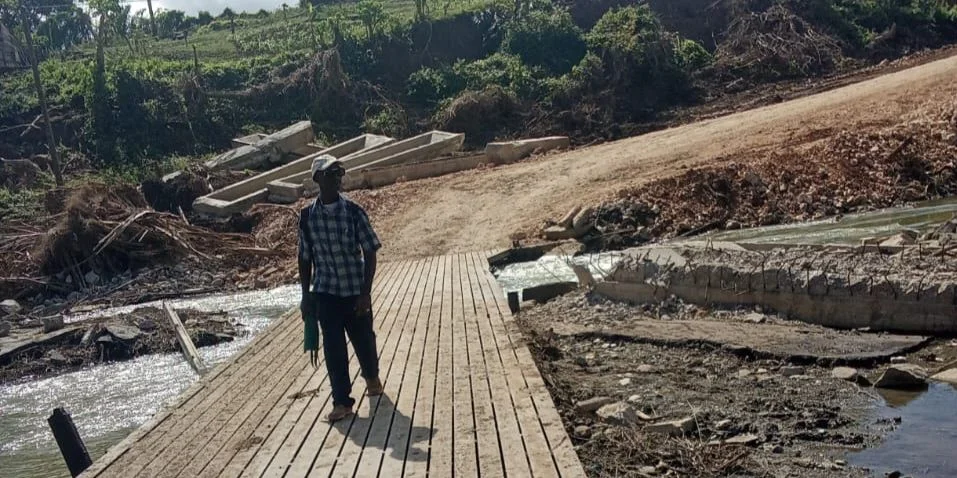
“They came, put on a show, took photos and left. Nothing more. We made the wooden bridge to cross ourselves,” says Dailin Samé from Los Reynaldos, a community popularly known as Baltoni.
In Holguín, the province where Melissa left the national territory, although the damage was minor, the complaint is direct: “In a large part of Holguín they have not delivered even a grain of rice,” denounces Maritza Martínez. The debris collection took more than 20 days and the population hoped that, with the amount of food and funds announced, the assistance would be enough for the entire province. It wasn’t like that. Here we are not dying of viruses and hunger.”
Meanwhile, in nearby provinces like Guantánamo, international donations are mixed with state sales of products, which confuses the victims. Donation mattresses They are delivered free, but those from the so-called “state reserve” – 1,580 units – are sold at 3,730 pesos, a prohibitive price that, according to the authorities, will be reduced in some cases.
On November 20, the official website Santiago de Cuba today, indicated on Facebook that Cayo Granma, in Santiago de Cuba, was receiving free mattresses and “other personal items”, which were not donations, at the price of 1,430.76 CUP.
Despite the 4 million dollars mobilized by UN agencies to the affected area and the shipments of donations received by the Cuban Government, in the affected areas the families interviewed claim to have received “very little or nothing.” No destroyed home has begun to be rebuilt and the materials that arrived must be purchased half price. A good part of the donations come through state channels without there being a single public list of beneficiaries or a catalog of deliveries.
The result is a mosaic of frustration: in the most affected areas of eastern Cuba, aid arrives in dribs and drabs and thousands of families continue to sleep in borrowed houses, under improvised tarps or directly in the open air. What is perceived in each conversation is a mixture of fatigue and disappointment: the feeling that the hurricane has already passed, but abandonment continues to blow.