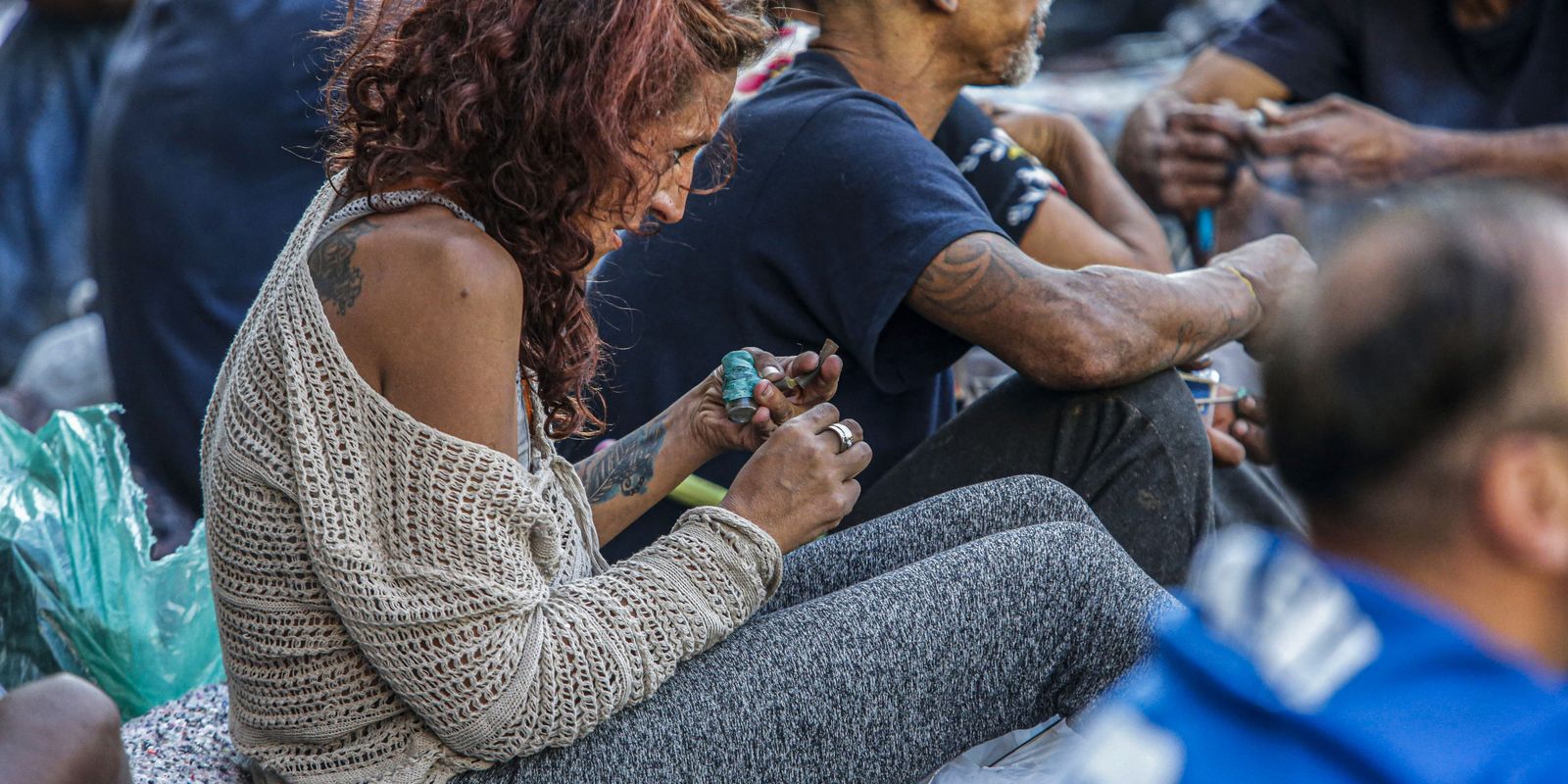
Around one in five Brazilians (18.7%) has tried illicit psychoactive substances at least once in their lives, according to the update from the National Alcohol and Drug Survey (Lenad), from the Federal University of São Paulo (Unifesp). Among men, 23.9% have used drugs and among women, 13.9%. 
Among young women (minors), the number of girls who tried drugs was higher than that of boys.
According to the survey, 8.1% or more than 13 million people used drugs up to a year before the survey. Among adults, consumption went from 6.3% in 2012 to 15.8% in 2023, tripling among women, a group for which the evolution was from 3% to 10.6%.
This third version of the study follows the same methodology as the 2006 and 2012 editions, investigating the consumption of illicit psychoactive substances by the population, through 16,608 questionnaires answered by people over 16 years of age, in 2022 and 2023.
“Lenad’s findings point to the groups most at risk in terms of problematic drug use in the country, making it clear that we need to prioritize girls, especially younger ones”, commented, in a note, researcher Clarice Madruga, one of those responsible for the study.
The material also reveals a scenario of expanding consumption, changes in the profile of users, especially among teenagers and women, and the growing presence of synthetic substances in the country. The South and Southeast regions are the ones that consume the most and there is also a strong concentration of consumption among young people, especially adults between 18 and 34 years old.
The data reveal a pattern of relative stability in cocaine and crack consumption, alongside signs of expansion of synthetic stimulants and hallucinogens in urban recreational contexts.
Situating Brazil on the international scene, the Lenad III findings indicate that the country occupies an intermediate position in prevalence of use, but combines this level with a high burden of disorders among users, which produces a substantive impact on the psychosocial care network, urgency/emergency services and sectoral policies”, describes the research.
Cannabis
According to the study, cannabis (marijuana, skank or hashish) remains the most consumed illicit substance in the country, with more than 10 million Brazilians having consumed it in less than a year before responding (6%).
Around 28 million Brazilians aged 14 or over have used cannabis in their lifetime (15.8%), double the rate recorded in 2012. The increase was greater for women.
Among young people aged between 14 and 17, at least 1 million are sporadic users, half of which were users one year before answering the survey. Unlike the first two editions, consumption fell among boys, from 7.3% to 4.6%, and increased significantly among girls, with the rate evolving from 2.1% to 7.9%.
Among cannabis users, more than half (54%) reported using daily for at least two consecutive weeks, equivalent to 3.3% of the population or more than 3.9 million Brazilians. Around 2 million Brazilians meet the criteria for cannabis dependence, equivalent to 1.2% of the population or 1 in every 3 users.
Around 3% of users have already sought emergency care due to consumption, but among teenagers, this number rises to 7.4%, which for the study is an indicator of greater vulnerability to poisoning and acute crises.
The survey also indicated growth in experimentation with synthetic and psychedelic substances in the last decade. Ecstasy consumption went from 0.76% to 2.20% of people. The use of hallucinogens went from 1.0% to 2.1% and the use of synthetic stimulants (ATS) increased from 2.7% to 4.6%.
Search
The research was carried out in partnership with the National Secretariat for Drug Policies and Asset Management of the Ministry of Justice and Public Security (Senad/MJSP) and with Ipsos Public Affairs.
According to the study, the increased presence of synthetic drugs shows a more complex drug market, with increased risks for consumers. This worsens the situation for adolescents, while a “greater vulnerability of adolescents – especially girls – to adverse events, psychological distress, polyuse and the need for emergency care” leads to thinking about changing preventive strategies, which must be more gender sensitive, integrated with the promotion of mental health and the reduction of violence and discrimination.
For researchers, the results reinforce the centrality of epidemiological surveillance in alcohol and other drugs as a permanent function of the health and social protection system, and show the importance of this type of research as a way of keeping society and managers informed, guiding service policies.