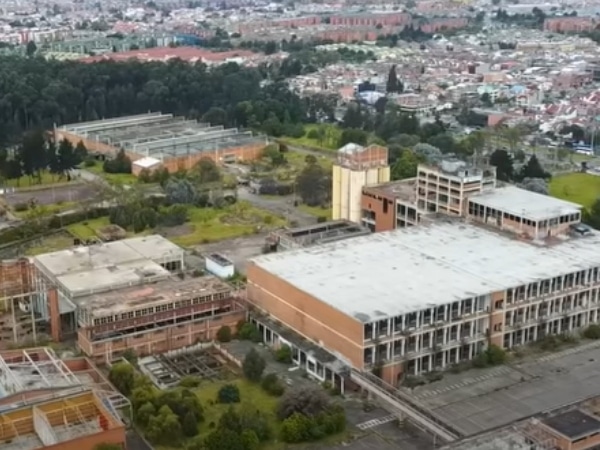

In the heart of Bogotá, between rusty structures and walls that fall apart, are the ruins of the old Bavaria factory
News Colombia.
In Bogotá there is a place that seems taken from a movie from the end of the world: Ruins of the old Bavaria factory. Between abandoned buildings, rusty boilers and an urban forest with more than 22,000 trees, this space mixes history, mystery and nature
Also read:
There are 78 hectares where abandoned wineries, giant boilers and more than 22,000 trees, which makes this site one of the most important environmental lungs of the capital, located in the town of Kennedy, considered the most contaminated in the city, coexist.

Bavaria’s imposing past in Bogotá
The history of Bavaria began in 1889, when the brothers Leo and Emil Koppel, of German origin, along with the brothers San Diego and Carlos Castello, founded the most important brewer in the country.

For decades, this plant was the epicenter of the production of the popular “Pola”, becoming the largest industry in Bogotá. However, complaints about pollution, noise and odors led the company to move its operation to Tocancipá in 2010, leaving behind a steel, concrete and an extensive forest of eucalyptus forest.

An urban forest in the midst of the ruins
Although many think there are only debris, much of the land was claimed by nature. There grow more than 12,000 eucalyptus that, over the years, became 22,000 trees, birds and small animals.
By decree, these trees cannot be talled or removed, which makes the place a natural refuge in the middle of the city.
Security and abandonment problems
Despite its beauty, the place faces serious problems:
- Clandestine entry of people.
- Spaces used to hide stolen objects.
- Presence of street inhabitants.
- Robberies and robberies in the surroundings.
The old factory has private surveillance, but the risks are evident due to the deterioration of the facilities and the easy access in wooded areas.
The uncertain future of the ruins of Bavaria
According to the information of the Colombian YouTuber Kevin Bolaños, an urban project that raises the construction of homes, parks and alamedas is contemplated on these lands.
However, the initiative has not prospered for the opposition of environmentalists and neighbors, who seek to protect this natural space.


In fact, more than 400 community meetings have been held to define what to do with the property, but there is still no definitive agreement.
The ruins of Bavaria in Bogotá are more than a forgotten factory: they are a symbol of the transformation of the city, a space where the industrial past mixes with a present green and full of life.
https://www.youtube.com/watch?v=uoumy-mskne