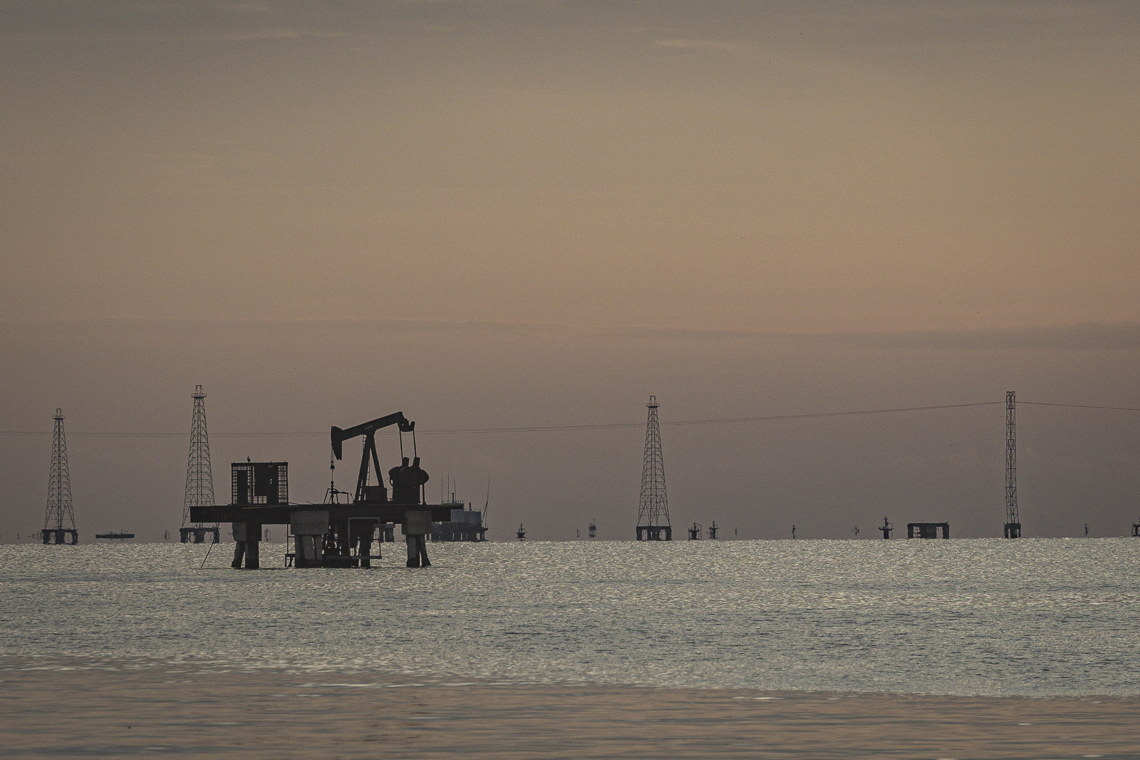
An oil tanker that has transported Venezuelan fuel to Cuba since April 2025 completed the loading of 150 thousand barrels of gasoline in Venezuela this week, according to a shipping schedule reviewed by Reuters.
According to the British press agency’s note, the ship was last seen in Venezuelan waters on Monday of this week, according to the TankerTrackers.com monitoringalthough until this Thursday it was not clear if it had set sail or what its final destination would be.
The operation occurs in an exceptional context. The United States has controlled Venezuelan oil exports since January, after the capture of President Nicolás Maduro and the deployment of military forces in the Caribbean. This means that any ship leaving Venezuelan waters requires authorization from Washington, a fact that marks a historic turn in regional energy trade.
Venezuelan fuels: a pivot now absent
This Thursday, President Miguel Díaz-Canel recognized that the future of ties with Venezuela will depend on the competence of both countries to reconfigure it amid external aggression.
“The future of Venezuela’s relations lies in the way in which we are able to build that future from the present situation of Venezuela, which has been attacked, that the president and his wife were illegally kidnapped and kept in a prison in the United States,” he expressed in press conferenceemphasizing that the alliance with Caracas is not limited to trade, but responds to principles of integration and solidarity.
Díaz-Canel denounced that Washington’s measures have generated a true energy blockade against Cuba, by frustrating the maritime arrival with Venezuelan fuel.
“The Trump Administration’s measure has prevented Venezuelan ships or ships from other countries with Venezuelan fuel from reaching Cuba,” he denounced, adding that the sanctions and tariffs seek to isolate the island.
For more than two decades, Venezuela was the main supplier of crude oil and derivatives to Cuba, supporting the island’s energy matrix in the midst of recurring crises.
The energy cooperation agreement between both countries was consolidated in 2000, when Hugo Chávez and Fidel Castro signed agreements that allowed Cuba to receive up to 100 thousand barrels of oil per day under preferential conditions.
This constant flow of crude oil became a pillar of the Cuban economy, allowing electricity generation and public transportation to be maintained, in exchange for medical and technical services sent by Havana to Caracas.
However, the Venezuelan economic crisis, aggravated by sanctions from Washington and the collapse of PDVSA’s production, progressively reduced shipments. By 2019, shipments had fallen to less than half, about 30,000 barrels per day, and in December 2025 they were completely interrupted due to the US blockade.
Shortages and social unrest in Cuba
The interruption left Cuba with very few options to maintain electricity generation and guarantee fuel for transportation. In fact, about a thousand MW of distributed generation are idle as the plants cannot be powered with diesel and fuel oil.
For its part, Mexico, a minor supplier, sent a shipment in January, but has not repeated the operation.
The shipment amounted to 86 thousand barrels of crude oil, transported by the tanker Ocean Mariner, which set sail from Veracruz on January 5 and arrived in Havana on January 9.
The lack of alternatives from other suppliers has caused long lines at gas stations and an increase in blackouts, even in the capital, Havana, where public passenger transportation was also suspended this week.
Residents and witnesses report increasing difficulties in accessing gasoline and diesel, at dispensing stations that are charged in US dollars, which has directly impacted urban mobility, public transportation, and food distribution.
At the press conference, with Cuban and foreign media related to the Cuban government, Díaz-Canel announced that his government will present next week a contingency plan to face the severe fuel crisis and that in this effort he had dusted off to update the plans from the 90s when the zero oil option was foreseen, which never came to fruition.
Although no details were given, it is expected to include rationing measures and reorganization of distribution, in an attempt to mitigate the immediate effects of the lack of imports.
Last week, the United States announced tariffs on goods from countries that send oil to Cuba, which has already had an impact on food and transportation prices on the island.
He Cuban expert Jorge Piñóna specialist at the Energy Institute of the University of Texas (USA), estimated for the Spanish agency EFE that, if it did not receive new oil shipments, Cuba would be in a “serious crisis” by March.