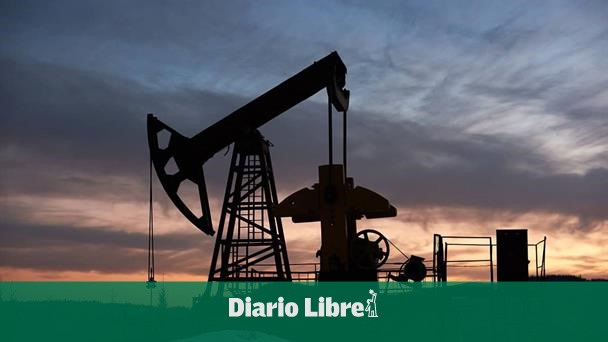
The oil priceswhich had fallen for a good part of the session today, have changed trend and are now showing slight increases after the US intervention in Venezuela and that the OPEC++ will confirm its decision to maintain the production level until April.
According to Bloomberg data, at 1:00 p.m. (12:00 GMT), the Brent, The reference crude oil in Europe rose 0.43% and a barrel exceeded 61 dollars, while the West Texas Intermediate (WTI), a benchmark in the US, rose 0.49% and moved around $57.6 per barrel.
Crude oil prices had risen in the first moments of the session and subsequently deflated and registered drops, to now quote again with slight increases, which reflects the market indecision of crude oil.
eToro Senior Market Analyst Javier Molina believes that US intervention in Venezuela can generate “tactical moves and rebounds volatility“, but points out that these types of events “rarely” alter the structural trend of risk assets.
Trump demanded “full access” to the oil
The American president, donald trumpsued this Sunday the new Venezuelan leader, Delcy Rodríguez, “full access“to the natural resources of Venezuela.
“What we need (from Delcy Rodríguez) is full access. Full access to oil and other things in the country that allow us to rebuild it,” he stressed.
For the director of Capital Markets Strategies at Tikehau Capital, Raphael Thuinthe global economic impact of Venezuela is “limited” and rules out the markets’ long-term prospects being affected.
However, Thuin does consider that they could occur “positive catalysts“in the market oilsince the American administration aims to “facilitate the exit of more oil Venezuelan to world markets”.
The economist and founder of Fortuna SFP, José Manuel Marín Cebriánpoints out that the greatest risk lies in the occurrence of a “logistic collapse“derived from the years of sanctionsinstitutional deterioration and obsolete infrastructures Venezuela.
Along the same lines, the analysts of Banking March They consider that the impact on the price of oil In the short term it will be “minimal” since the recovery capacity of Venezuelan production is “very limited and will require high investments.”
Rubio: US refineries are the best
The US Secretary of State, Marco Rubioexplained this Sunday that one of the main interests of his Administration is to refine heavy crude oil from Venezuelathe country with the largest reserves of oil of the world, in the American refineries.
- “Our refineries on the US Gulf Coast are the best at refining this heavy crude oil. In fact, there have been shortages of heavy crude oil around the world, so I think there would be enormous demand and interest from private industry if they were given the opportunity to do so,” Rubio explained on ABC News.
Hours before, the OPEC++, which brings together the members of the OPEC+ and other oil powers such as Russiahad confirmed its decision to keep its crude oil supply stable at least until April, without reacting to the capture of the president of VenezuelaNicolás Maduro, on behalf of the US.
The decision was made in a short teleconference held on Sunday by ministers of Energy and Oil of Saudi Arabia, RussiaIraq, United Arab Emirates, Kuwait, Kazakhstan, Algeria and Oman.
These eight countries are the ones that applied in 2023 voluntary cuts of production to support prices. However, in April 2025 they began to gradually reverse these reductions with monthly increases that represented a strategic turn to recover their market share.
The total increase between April and December amounted to 2.9 million barrels per day (mbd), which represents close to 2.8% of the world production.
The group still has a little more left a million barrels daily to complete the dismantling of the voluntarily cut volumes (one of 2.2 mbd and another of 1.65 mbd), but in November it decided to “pause” the monthly increases during the first quarter of 2026, a measure that the ministers confirmed on Sunday.