AEBU maintains the pre-conflict in all its terms
In the last collective instances -assemblies and board of delegates- it was resolved, among other things, to request a meeting with the Minister of Labor and Social Security Juan Castillo and to be received by the Parliamentary Commission on Legislation and Labor.
The union also defined, at the request of the MTSS in the last area, a list of priority issues to discuss, among which stand out: salary, replacement of vacancies 4 x 2 rest regime for the Insurance Bank Hospital, incorporation of the workers of the National Housing Agency to the agreement, decentralization of positions and issues on the rights, gender and care agenda.
The approved motion also urged the union majority, when making public statements, not to deviate from the collective resolutions and generate confusion in them about the ultraactivity of the agreement, as well as to begin, without further delays, the campaign to disseminate the union’s programmatic issues, until now without being implemented by AEBU despite what was resolved in the Assembly of last December 18.
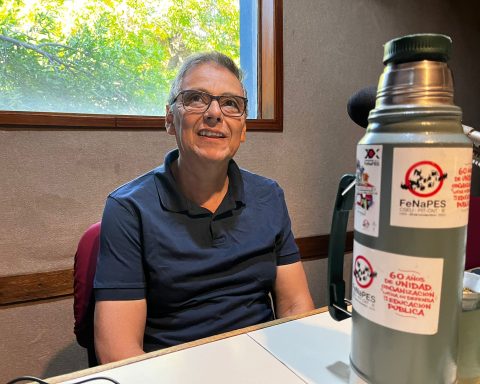
“We are in the process of renewing a Collective Agreement that came to an end on September 3. A fairly ambitious platform was being negotiated, according to what was resolved by a Meeting of Delegates in June.” held Alvaro Legaspy in interview with THE PROFESSIONAL Radio this Monday, January 12.
The negotiation process was led by the majority leadership of the Union, both in its way of carrying it out and in the definition of mobilization, which was practically not carried out.
“This pre-agreement, as a negative aspect, did not contemplate a proposal that AEBU has had for a long time, which is the decentralization of positions” reported. “This means that workers from the interior of the country can compete for positions in Montevideo, that is, for the central offices of the Banks, and that they carry out the task partially or totally from their place of residence” said. “Today, computer systems allow, for example, a credit analyst to do credit analysis remotely. This was a possibility that was open to interior workers, a progress in terms of their functional career. It was not taken into account and this is not a budgetary issue” assured the leader of the AEBU Coordination for Change Current.
Another negative aspect seen by the minority sector is that the new officials who entered interior offices were going to have 5 days less leave than the rest of the workers.
The transfer protocol was also modified, an achievement that was achieved during the presidency of the Coordination for Change in the Representative Office of the Bank of the Republic. “That was going to be suspended due to operational problems. The Bank says that this protocol, which guarantees the rights of workers, causes harm to its operations” he commented. “This is another thing that most harmed colleagues in the interior because horizontal mobility allowed workers to get closer to their new home” stated Álvaro Legaspy.
On December 30 of last year it was received from the Executive Branch “some unhappy expression” that since the pre-agreement had been rejected, everything started from scratch and that at the same time a legal consultation would be carried out to determine what rights and what benefits the activity has. “It is the threat of leading to the total loss of our benefits or a major reform for not having signed.”
This determined that AEBU carried out a 2-hour strike in each branch, which took place last Thursday, January 8, to generate assemblies towards the Board of Delegates on Friday, January 9.