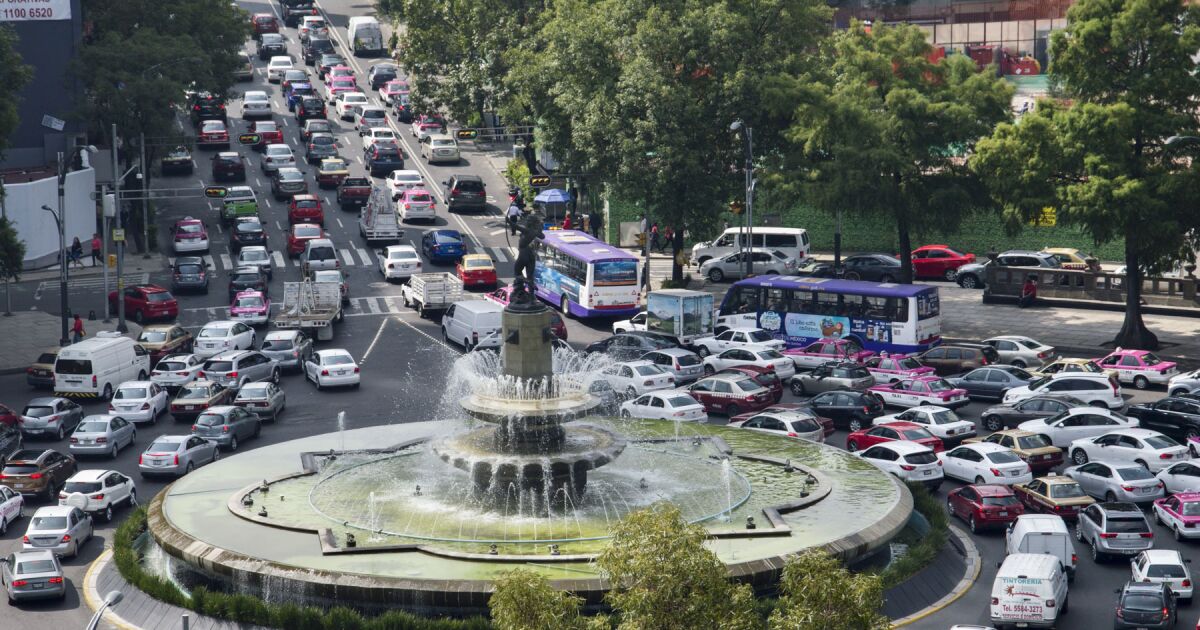
Cars that will not be able to circulate this Friday
According to the official calendar the restriction applies from 5:00 a.m. to 10:00 p.m. and affects vehicles with:
-Blue gummed
-9 or 0 plate termination
-Hologram 1 or 2
If your car falls into any of these categories, it is advisable to leave it at home and opt for public transportation or alternatives such as bicycles and electric motorcycles.
(Government of Mexico)
Cars that can circulate
The following are exempt from the measure:
-Vehicles with hologram 0 or 00
-Electric or hybrid cars
-Vehicles with hologram 1 or 2, as long as they do not have blue stickers or ending 9 or 0
Will there be a Double Not Circulating Today?
No. This Friday there is no environmental contingency, so the measure operates regularly, without additional restrictions.
Where does the measure apply?
Hoy No Circula governs the 16 municipalities of CDMX and 18 suburban municipalities of the State of Mexico:
-Atizapán de Zaragoza
-Coacalco
-Cuautitlán Izcalli
-Chalco
-Chimalhuacan
-Chicoloapan
-Ecatepec
-Huixquilucan
-Ixtapaluca
-La Paz
-Naucalpan
-Nezahualcóyotl
-Nicolas Romero
-Tecámac
-Tlalnepantla
-Tultitlán
-Chalco Valley Solidarity
In addition, from July 1, 2025, the measure also operates in the metropolitan areas of Toluca and Santiago Tianguistenco, from Monday to Saturday, for vehicles with hologram 1 and 2. In these places, fines will begin to apply until January 2026.
Fines for non-compliance
If you circulate without respecting the restriction, you could receive a fine of 20 to 30 Measurement and Update Units (UMA). In 2025, each UMA is worth 113.14 pesos, so the fine is:
-2,262 pesos (minimum)
-3,394 pesos (maximum)
The exact amount will depend on the discretion of the authority.
Tips to avoid sanctions
-Check the official Hoy No Circula calendar before leaving.
-Review the daily air quality report.
-Plan your routes in advance.
-Check the rubberization and finish of your vehicle’s license plate.
Complying with the program not only avoids fines, but also helps improve air quality in the Valley of Mexico and protects the health of those who live in the region.