President Donald Trump affirmed this Friday that Cuba is going through a “very bad situation” after losing Venezuela’s oil and financial support and “no one really knows what is going to happen to Cuba,” leaving in suspense the immediate future of the island that in recent days has been on his rhetorical radar after the attack on Caracas.
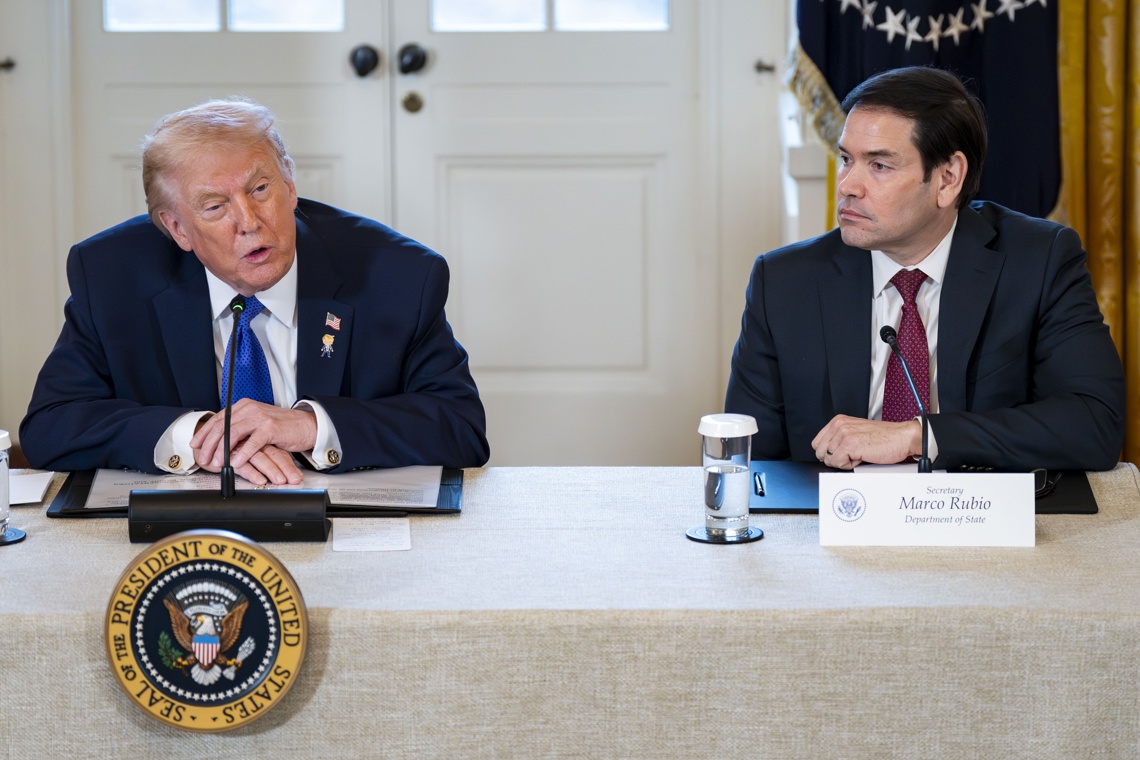
For his part, the Secretary of State, Marco Rubio, maintained that Cuba’s fundamental problem is the lack of competition and its insistence on maintaining political control over the economy.
Both statements were made this Friday at a round table at the White House with executives from international energy giants, including Americans, in which the future of the Venezuelan oil industry was also discussed.
“Cuba depended on Venezuela for oil and money, and no one really knows what is going to happen to Cuba. They are doing very badly. It is completely Third World,” said Trump, who also highlighted the strength of the Cuban exile in the United States and suggested that many would be willing to return to help rebuild the island.
The president stressed that Cuba “does not have energy or oil” and that its dependence on Caracas left it vulnerable. “What they do have are very strong people, and very powerful people militarily,” he added, referring to the role of Cuban advisors in protecting the Venezuelan government for years.
Rubio was even more blunt: “The fundamental part of Cuba’s problem is that they are not competent. They prefer to have political control over the people instead of an economy. They can have a real country with a real economy where their people can prosper, or continue with their failed dictatorship, which will lead to systemic and social collapse.”
The United States moves part of its military fleet in the Caribbean to the north of Cuba
Part of the American warships deployed in the Caribbean Sea during the period before the capture of Venezuelan president Nicolás Maduro were relocated, and two of them would be north of Cuba, according to Washington Post.
At least the boats USS Iwo Jima and USS San Antonio would have been positioned north of Cubain the Atlantic Ocean, according to defense officials, who spoke to the newspaper on condition of anonymity.
Trump calls on the oil companies, not without caution on the part of the companies
The roundtable at the White House brought together executives from Chevron, ExxonMobil, ConocoPhillips and Spain’s Repsol, among others. Trump assured that the companies are willing to invest up to 100 billion dollars to revitalize the Venezuelan oil industry, although he clarified that it would be private capital and not US government funds.
“They are going to invest their money, not that of our Government, they do not need it, but they do need our protection,” said the Republican leader, promising government security for operations.
Managers, however, were cautious. Darren Woods, CEO of ExxonMobil, said his company needs “significant changes” in Venezuela before investing again. “If we look at the commercial structures and the environment that is in place today in Venezuela, it is impossible to invest,” he stressed.
For his part, Ryan Lance, CEO of ConocoPhillips, insisted that a restructuring of Venezuelan sovereign debt is required to finance any injection of dollars. His company maintains one of the largest claims against the Venezuelan State for the expropriation of assets in 2007, with a debt that amounts to 12 billion dollars.
In contrast to American caution, Spain’s Repsol expressed its willingness to substantially increase its presence in Venezuela. Josu Jon Imaz, the company’s CEO, told Trump that Repsol is ready to triple its oil production in the coming years.
“Today we produce 45 thousand barrels of oil per day and we are ready to triple that figure, investing substantially in the country,” said Imaz, highlighting that the company already guarantees part of Venezuelan energy stability with its gas production.
The beginning of normalization with Caracas
The energy discussions occurred in parallel with a diplomatic turn. After the capture of former President Nicolás Maduro and the swearing-in of former Vice President Delcy Rodríguez as interim president, Washington and Caracas began a process to reestablish diplomatic relations, interrupted since 2019.
This Friday, US diplomats arrived in Caracas to evaluate a “gradual resumption” of ties, while Rodríguez sent a delegation to Washington. The agreement includes the reactivation of the Venezuelan oil industry, with the United States assuming a decisive role in the selection of companies that will operate in the country.
“You are negotiating with us directly, you are not negotiating with Venezuela,” Trump told the executives, guaranteeing security and assistance to those who decide to invest.
Skepticism and risks
Despite Trump’s enthusiasm, American oil companies recalled the risks of operating in Venezuela, where their assets were confiscated twice in the past. “Our assets have been seized there twice, so you’d imagine re-entering a third time would require some pretty significant changes,” ExxonMobil’s Woods warned.
The deterioration of Venezuela’s oil infrastructure, US sanctions and political uncertainty remain obstacles. Although Venezuela has the largest proven crude oil reserves in the world – some 303 billion barrels, equivalent to 17% of the global total –, much of it is found in the Orinoco Belt in the form of extra-heavy crude oil, which requires advanced technology and large investments for its exploitation.
The beginning of normalization with Venezuela also has regional implications. Trump intensified pressure on Colombia and Mexico, whose governments he accuses of being lax with drug trafficking, although he eased tensions with Colombian President Gustavo Petro in a phone call.
María Corina Machado is invited to the cast
Meanwhile, the Venezuelan opposition, led by María Corina Machado, seeks international recognition of its victory in the 2024 elections, which it claims were taken from it by Maduro.
For now, Trump assured that he will speak with Machado about his ability to play a possible role in the future of Venezuela, when the two meet next week in Washington.
The leader of the Vente Venezuela party expressed her intention to share the Nobel Prize she received with Trump. The president described the proposal as “very kind” and maintained that “I can’t think of anyone in history who deserves the Nobel Prize more than me,” alluding to his alleged role in resolving international conflicts.
Machado, who had already dedicated the award to Trump at the time of receiving it, reiterated in an interview with Fox News that “he certainly wants to give it to him and share it with him.” However, the Norwegian Nobel Institute clarified that the prize cannot be transferred to third parties, closing the possibility of the former US president being officially recognized as a co-owner of the award.