Thirty years after Beijing’s statement, No country managed to eliminate completely Inequalities between men and women And comply with all measures established in the international commitment, says UN Women, the United Nations entity designed to promote women’s empowerment and gender equality. In all, 189 countries, including Brazil, pledged in 1995 to reduce such inequalities.
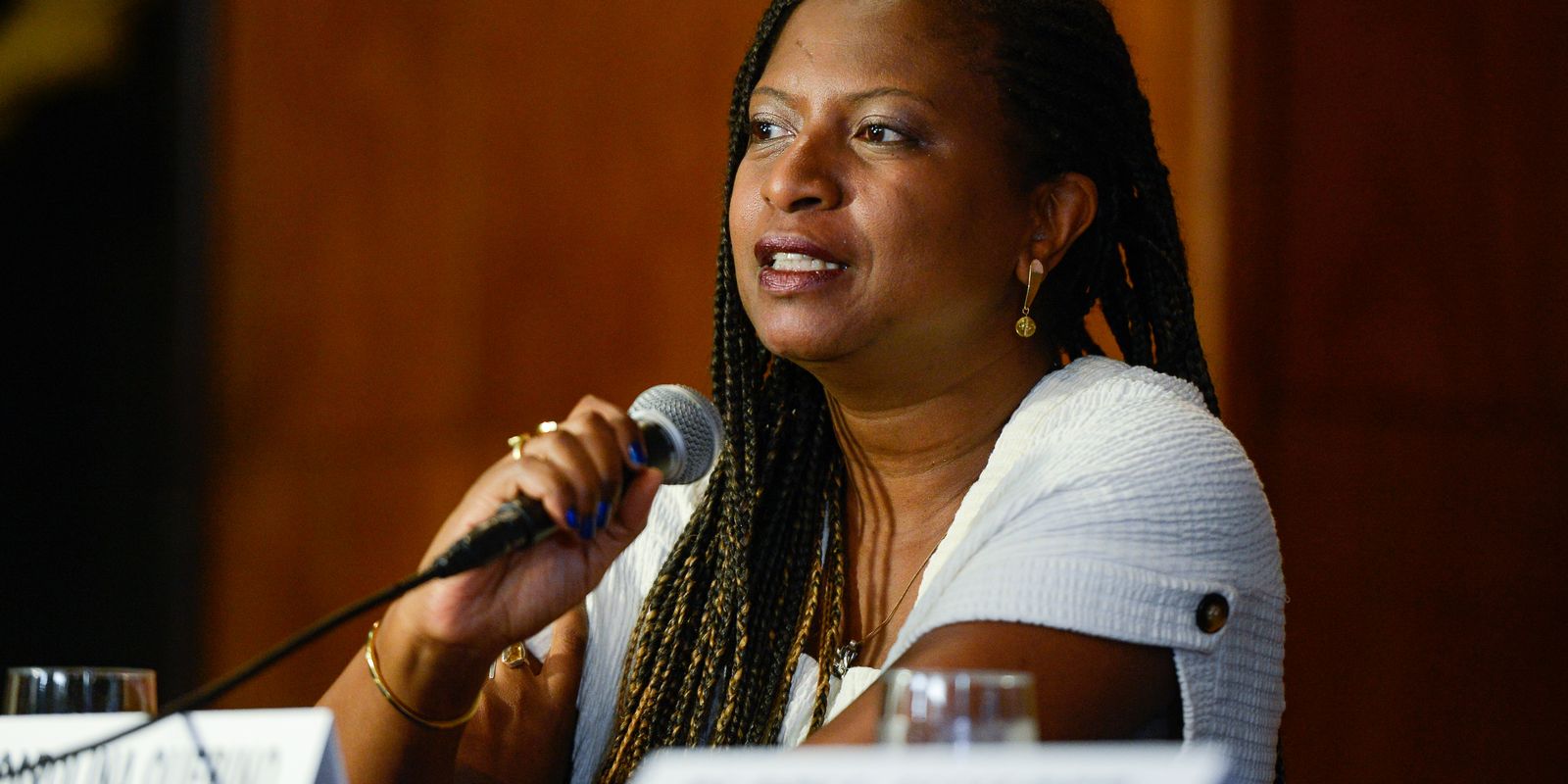
“No country in the world has reached full gender equalityeven those we see as the most advanced, who are at the top of gender equality rates, ”said UN Women’s Interim Representative Ana Carolina Querino.
According to Ana Carolina, the main impediment for countries to develop effective and consistent actions is the budget.
“The first and large, which is still the main barrier to achieving gender equality, is the issue of financing. It is not enough to have policies, it is not enough to have systems, it is not enough to have a structure if this structure does not feed with the right inputs, with adequate human resources and the financing, ”he said.
She also stressed that the theme needs to become a state policythat is not subject to the alternation of government.
“It is not a specific government that will be able to solve the problems of all women in that country. There must be continuity, continuous commitment and a state commitment. This can only guarantee efficiency and effectiveness. ”
Ana Carolina participated on Tuesday (18) in the launch of the report Review of Public Policy for Gender Equity and Women’s Rights, prepared by the Federal Court of Audit (TCU). The report brings together the various initiatives, programs, public policies, studies and audits conducted in Brazil over the last 30 years, with the objective of guaranteeing women’s rights.
The report, which was launched in a webinary in the TCU channel on youtubeis part of monitoring in Brazil of the Declaration and Platform of Beijing Signed at the 4th World Conference on Women, held in 1995. The Beijing Declaration is a global mark of policies and an action plan to achieve gender equality and The empowerment of women and girls around the world.
In the Beijing Action Platform, 12 areas are defined, with strategies and objectives to be met. Among the areas are: education, health, environment, violence against women, women in power and women and poverty.
Brazilian challenges
The TCU report shows that Oo Brasil has “ample legal framework, including several international conventions ratified by the country, as well as constitutional and infraconstitutional provisions”, which guarantee women’s rights. In practice, however, there are still several challenges to put the normatives in force.
Challenges include the continuity of public policies aimed at women and monitoring their execution and their results, as well as the production of data on gender inequalities, so that the developed actions are enhanced.
The report points to the need for policies for women to be transversal, ie covering various areas, and intersectional, taking into account the many socioeconomic, racial, among others, Brazilian women.
The budget is also one of the highlighted issues. Document data show that in 2022, the lowest allocation of federal resources was allocated to the confrontation of violence against women, and there was also low budget execution and reduction of the scope of the actions implemented.
Between 2019 and 2022, R $ 68.22 million were authorized to address violence against women, however, only R $ 35.34 million (51.8%) were indeed liquidated. Only in the year 2022, the authorized credit was R $ 950 thousand, but there was no settlement of resources.
Over the past few years, the TCU points to the creation of the Ministry of Women, in 2023, as a positive fact, as policies aimed at women cover various areas, such as education, health, justice, safety and others, requiring an organ that can centralize the articulation and foster the actions. Prior to the creation of the ministry, this role was up to the broader folders, such as the Ministry of Human Rights, created in 2017, which was focused on several other actions.
The special advisor of the Ministry of Women, Isís Taboas, who also participated in the launch of the report, said that it is necessary to fight for, in times of crisis, the rights of women do not back down.
“Today, 30 years after Beijing’s statement, we need to take care and fight for the ideological crisis we face in the world, a crisis that has its representatives and leaders questioning equality between men and women, questioning the need for women to be equitably us Spaces of power, questioning the recognition of our diversity, our plurality, questioning the inclusive language, does not retrieve in directs that have already been conquered. Not only can we get back back, but we need to move forward and move fast, ”he said.
Rankings international
Women represent 51.2% of the Brazilian population, according to data from the third quarter of 2024 of the National Household Sample Survey (PNAD) of the Brazilian Institute of Geography and Statistics (IBGE).
Still, gender inequality is a structural problem that manifests itself in various dimensions of social, economic, political and cultural life, reflecting on discrimination, violence, limited access to economic resources and disparities in political participation, salaries, employment, education and health.
As for the salary difference between men and women, Brazil is in 117th place in ranking of GLOBAL GENDER REPORTin a total of 146 countries. According to PNAD Continuous 2019, women receive about 77.7% of men’s income.
The country also occupies 94th position in a ranking From 191 countries in the Gender Inequality Index (GII), a measure that reflects the inequality of accomplishment between women and men in three dimensions: reproductive health, training and labor market. This indicator is used by the United Nations Development Program (UNDP). The data is 2021/2022.
For UNDP, besides being a basic human right, ending all forms of discrimination against women and girls “is fundamental to accelerate sustainable development, since female empowerment has a multiplier effect and helps promote economic growth and development worldwide, ”says the report.
Node Global Gender Gap Index (Global Indicator of Gender Inequality), from the World Economic Forum, among 146 countries, Brazil occupies the following positions in the analyzed aspects: 94th in participation and economic opportunity; 85th in educational achievement; 85th in health and survival and 104th in political empowerment.