The government of Nicaragua has suspended the free visa for Cuban citizens this Sunday and thus puts an end to a decision in force since November 2021 that allowed the existence of the main immigration corridor for hundreds of thousands of Cubans who tried to reach the United States in recent years.
The Provision No. 001-2026 of the Nicaraguan Ministry of the Interior, signed by the general director of Immigration and Immigration, Juan Emilio Rivas, establishes that all Cuban citizens with ordinary passports will change their immigration category from “A” (visa exempt) to category “C” (visa consulted at no cost).
The official text orders the immediate activation of administrative mechanisms to apply the new requirement at airports, land borders and ports, and notifies the Nicaraguan Institute of Civil Aeronautics to inform air transport lines about the application of the measure.
The government of Daniel Ortega had eliminated the visa requirement for Cubans on November 22, 2021arguing that the decision responded to “the number of requests from brother Cuban citizens with relatives in Nicaragua and with the aim of promoting commercial exchange, tourism and humanitarian family relationships,” according to the Nicaraguan government.
The “volcano route”
But in Cuba this migratory alternative would be known as “the route of the volcanoes”, an irony to speak of the Havana-Managua air route, with no return. The expression arose when a Nicaraguan official, faced with the massive arrival of Cubans from the island, stated that they were traveling as “tourists” to visit the country’s volcanoes, an excuse that the Cuban choteo resigned.
“They are lovers of our volcanoes. They don’t have volcanoes, so it is impressive for them that we have that active lava lake volcano, and that they can see it up close, that it is one of our strengths or our star products at the moment,” said INTUR Director of Promotion and Market, Ana Carolina García.
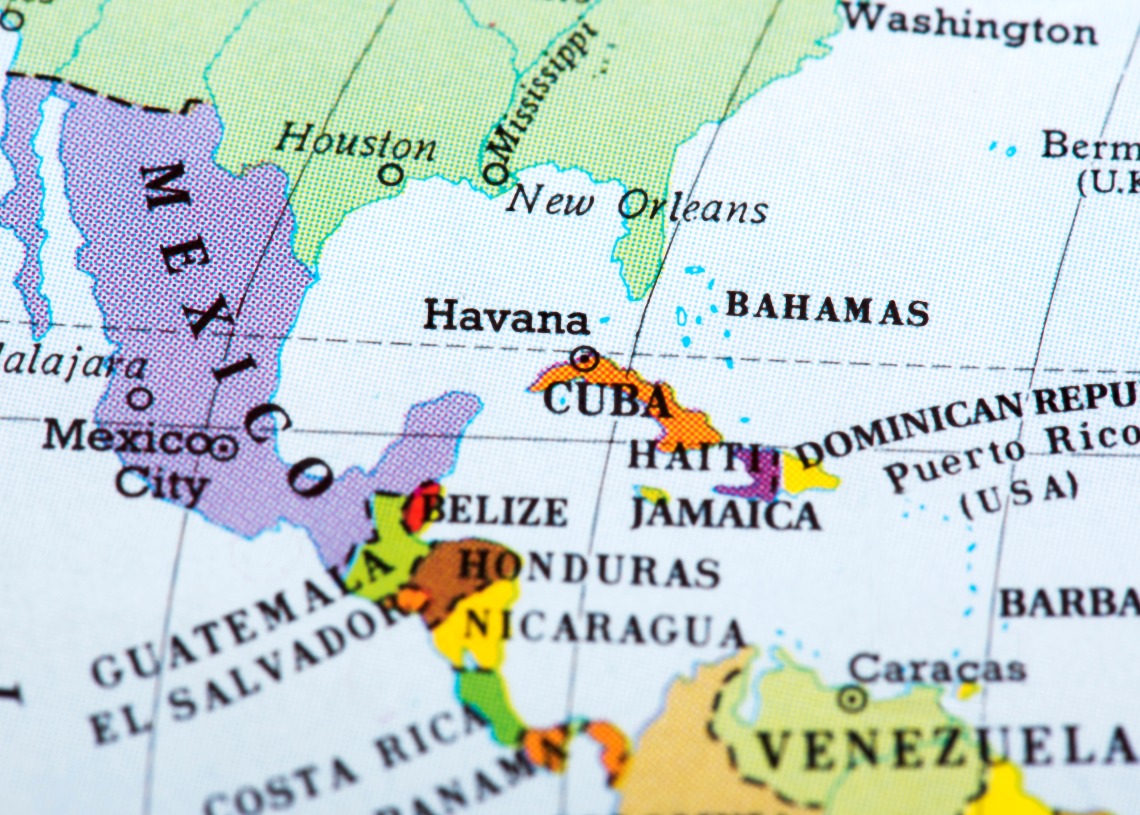
However, this measure had a much greater impact than announced. Nicaragua became the key entry point for the so-called “Central American route,” used by Cubans seeking to later reach the southern border of the United States. Between 2021 and 2024, more than 400,000 Cubans used this route, crossing Honduras, Guatemala and Mexico to reach the southern border of the United States.
Only between January and July 2025, more than 21 thousand migrants bound for the United States entered Honduras from Nicaragua, of which 83% were Cubansaccording to data revealed by the independent newspaper The Press.
For Nicaragua, the migratory flow — not just from Cuba — became a lucrative industry: charter flights, inflated fares and mandatory payments, and became a crucial source of income. In 2022, the authorities of the “Augusto César Sandino” airport reported a growth of 170% in travelers (634,800).
Pressure from Washington
The suspension of the free visa occurs amid strong pressure from the United Stateswhich has repeatedly pointed out Managua as a key corridor for irregular migration to its territory.
Donald Trump’s administration has intensified measures against Nicaragua for its immigration policy. In 2025, Washington announced visa restrictions against more than 250 senior Nicaraguan officials, calling the regime “a security threat” and accusing it of turning irregular migration into a political instrument.
Washington maintains that Managua allows, and even promotes, the entry of Cubans, Haitians, Venezuelans and citizens of other countries to send them en masse to the US southern border.
The closure of the Nicaraguan route, combined with Trump’s restrictive policies, is redirecting the Cuban migratory flow to other destinations such as Brazil or Spain.
Until the closing of this note, Provision 001-2026 had not been published in official Nicaraguan sources, which has generated calls for caution.
Nicaragua’s immigration regulations are usually published on the website of the Ministry of the Interior or in La Gaceta, the official state newspaper. However, multiple international media have confirmed the information, and consular sources have begun to receive notifications about it.