Nicaragua made that decision amid pressure from Donald Trump’s government due to the irregular migration that arrives in that nation.
The Government of Nicaragua reestablished the visa requirement for citizens of 128 countries, including those of Cuba, Venezuela, China, Iran, Haiti and African nations, amid pressure from the Donald Trump administration over irregular migration.
The new provision signed by the Nicaraguan Minister of the Interior, María Amelia Coronel, and by the general director of Migration and Immigration, Juan Emilio Rivas, establishes that citizens of 128 countries will require a consulted visa, category C, to enter Nicaragua.
The list of countries, in addition to Cuba, Venezuela and Haiti, includes North Korea, Iraq and Libya, as well as China, Iran and Syria, although for those last three countries only for holders of ordinary passports.
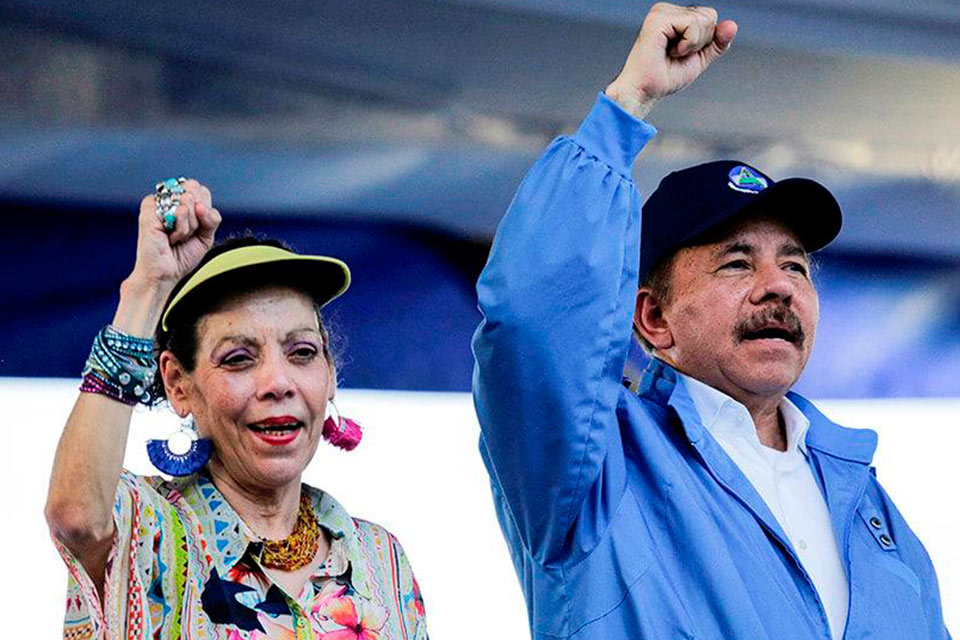
The Executive led by the spouses and co-presidents, Daniel Ortega and Rosario Murillo, made that decision amid pressure from the Donald Trump government due to the irregular migration that arrives in that nation.
*Read also: 109 migrants were deported from the US: 83 men, 15 women and 11 minors
The US had described as “worrying” the open-door policy applied by the Nicaraguan government to facilitate irregular migration to the North American country through Managua, where charter flights from countries in Africa, Asia and Europe landed.
The previous Government of Joe Biden had been warning about Cuban, Haitian and African migrants who used charter flights to Nicaragua and, from there, embarked on a land trip to the Mexican border with the United States.
In the last four years, Nicaragua has established visa-free agreements with Cuba and African countries.
The provision orders the Ministry of Foreign Affairs of Nicaragua to inform the accredited and concurrent consular representations in Managua about this measure.
The provision also establishes that citizens holding diplomatic, official, service, public affairs and special passports, with which Nicaragua has signed bilateral agreements, remain exempt from the visa requirement.
With information from EFE
*Journalism in Venezuela is carried out in a hostile environment for the press with dozens of legal instruments in place to punish the word, especially the laws “against hate”, “against fascism” and “against the blockade.” This content was written taking into consideration the threats and limits that, consequently, have been imposed on the dissemination of information from within the country.
Post Views: 410