He New Year It comes as a universal moment of renewal and according to Jorge Traslosheros Hernández, academic at the Institute of Historical Research of the UNAM, remembering that each change of cycle, from birthdays to collective festivities, reinforces the ability to look forward.
The date marks a transition point in the Gregorian calendar, in force for 443 years, which establishes January 1 as the beginning of a new cycle, but it is also an emotional window.
In this regard, the UNAM psychologist, Beatriz Macouzet Menéndez, emphasizes that this end of the year encourages reflections on what has been experienced and reconsiders personal goals, although It can also trigger anxiety or sadnessespecially in those facing loss or loneliness. Therefore, integrating children, young people and older adults in the celebrations helps strengthen emotional ties.
In this context, rituals take a leading role; some with roots ranging from Roman antiquity to pre-Hispanic worldviews, these practices mix superstition, spirituality and family tradition with a common goal: attract prosperity, love, travel, health and abundance.
Favorite rituals in Mexico to welcome the New Year
Below are some of the most widespread and their symbolism:
• Eat 12 grapes
Of Spanish origin, it consists of making a wish for each chime. They represent the 12 months to come and the aspiration for everyone to arrive with good luck.
• Brand new clothes
A sign of new beginnings and reward for the effort of the year that ends. New clothes symbolize renewal.
• Underwear by color
A medieval tradition that today personalizes the wish for the next cycle:
Yellow: money and abundance
Red: love and passion
Green: hope
Pink: romance
White: peace
Blue: balance
Purple: spirituality
Orange: vitality
Black: pleasure and luxury
• Suitcases to attract trips
Walking around the house—or down the street—with loaded luggage symbolizes adventures and movement during the year.
• Light 12 candles
Each one represents a month of the year. Colors and light seek to illuminate desires and give thanks for what we have experienced.
• Seeds in the wallet
Rice or lentils as an ancestral symbol of food abundance.
• Throw coins inside the house
A direct call to ensure that money is not lacking in the home.
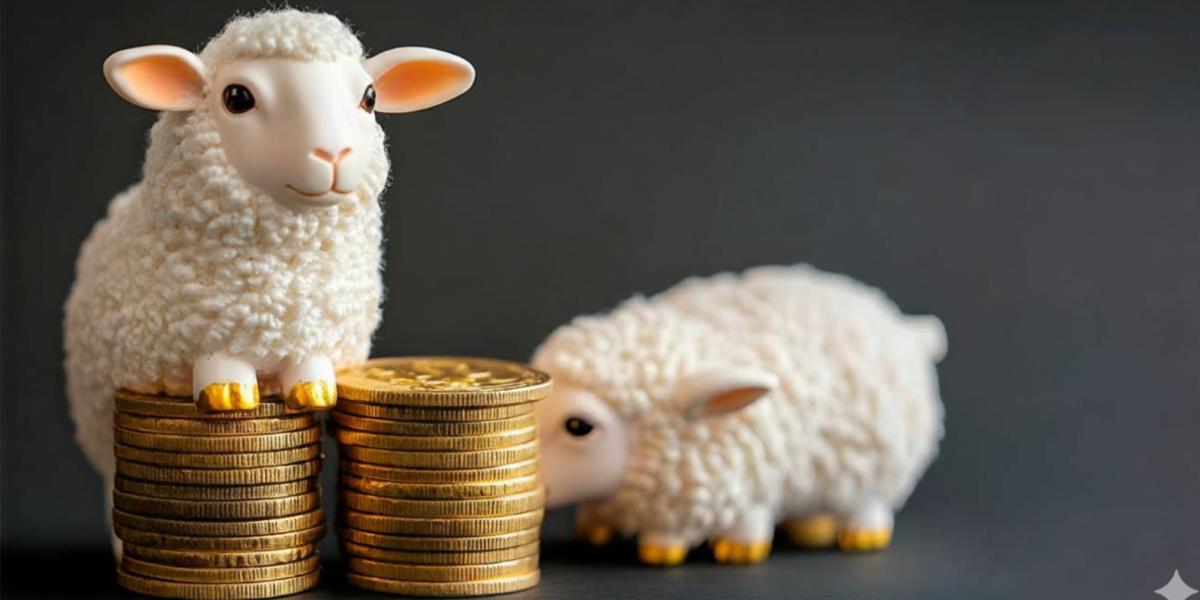
The little sheep of money: a symbol that Mexico made its own
Among end-of-year amulets, few are as popular as the money sheep. Its use is linked to the idea that wool is synonymous with wealth, an expression evident in the popular saying “having a lot of wool.”
According to UNAM researcher Idanely Mora Peralta, it is believed that this element must be given as a gift for it to work and can include coins, hearts, clovers or seeds, and is usually placed near the door, as a gesture of welcome to prosperity.
Although its origin is not documented, two possibilities are attributed:
- Swiss Alps, where a short spell is recited about wool and money
- Andalusia (Spain), where it represents harmony and good luck
Today, the custom is reinvented, as there are versions with plants of abundance, bells or grains, integrating religious beliefs, popular culture and artisanal creativity.
Rituals that cross borders
The traditions to receive the New Year They are replicated in the world in very diverse ways:
Japan: temples ring 108 bells to purify the spirit
Russia: written wishes are burned and the ashes are drunk in champagne
Denmark: plates are broken to attract good fortune
Latin America: The walk with suitcases has become a common scene
The UNAM academics agree that the New Year is a space to ponder the good, review what hurt and build from what has been learned. They also point out that it should be celebrated without commercial pressures and enjoy emotional ties.
With information from UNAM Global and Exatec/ Tec de Monterrey blog