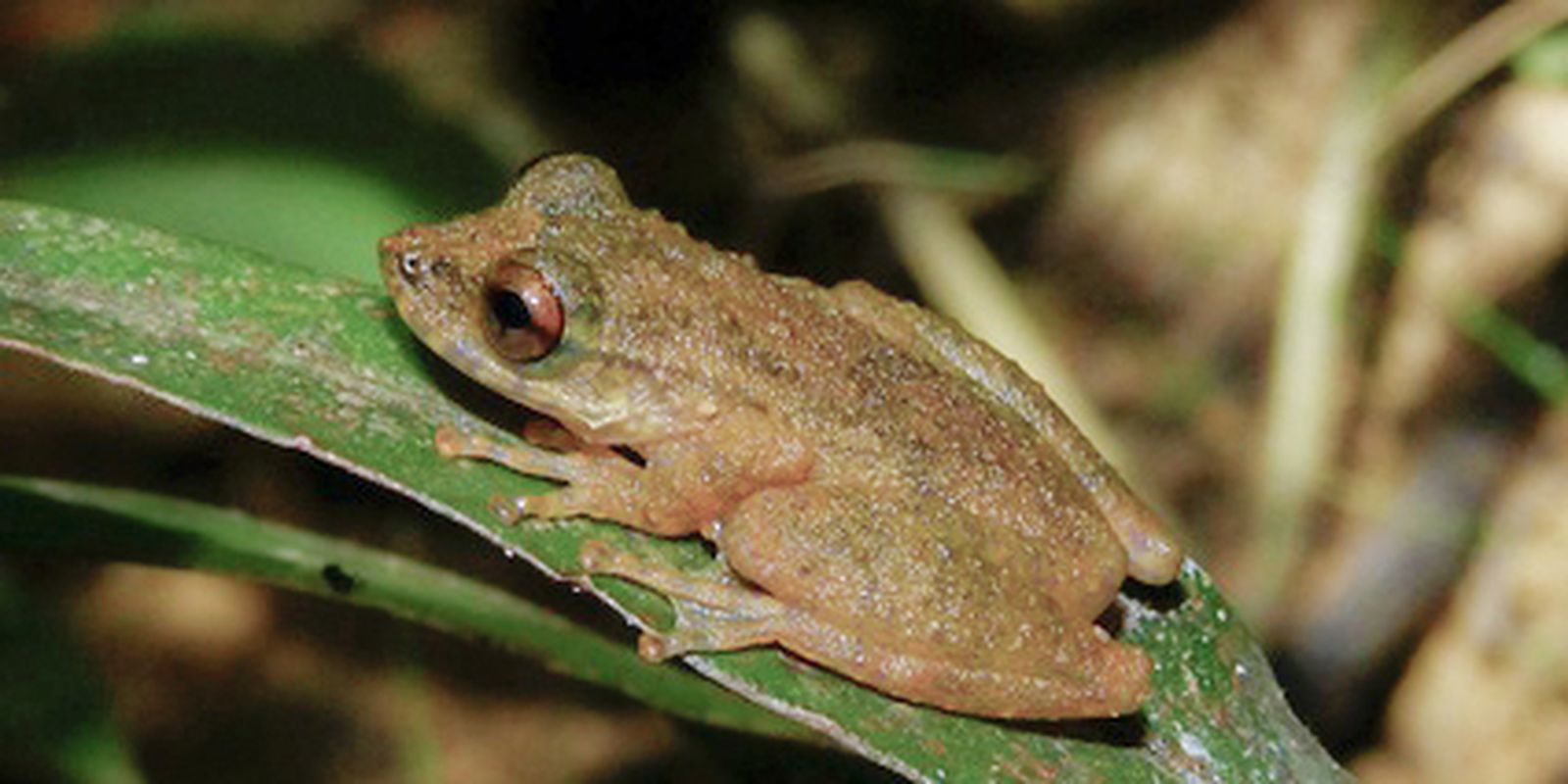
Researchers have discovered a new species of tree frog that exclusively inhabits the Cerrado of northwestern Minas Gerais. Named Ololygon paracatu, the amphibian has an extremely restricted distribution and was only recorded in two nearby locations in the municipality of Paracatu.
The research involves institutions such as the University of Brasília (UnB), the Chico Mendes Institute for Biodiversity Conservation (ICMBio), the Federal University of Goiás (UFG) and the Museo Argentino de Ciencias Naturales. The result of study was published in the scientific journal Zootaxa.
The study combined genetic analyses, morphological comparisons and recordings of vocalizations. An essential part of this process involved the use of biological collections.
Small in size, the species presents morphological, acoustic and molecular differences in relation to other tree frogs of the same genus. Males measure between 20.4 and 28.2 millimeters, while females range from 29.3 to 35.2 millimeters.
Like other species of the genus Ololygon, the animal lives in so-called gallery forests, forest vegetation associated with small rivers, fast-flowing streams and rocky beds. The new species is the eighth of the genus Ololygon described in the Cerrado, expanding the list of amphibians endemic to the biome.
Homage
The name of the new species refers to the Paracatu River, one of the main tributaries of the São Francisco River. The choice also carries an environmental warning. During fieldwork, researchers observed signs of degradation in part of the streams analyzed, such as siltation.
“The conservation of the streams and creeks where this new species lives is essential not only for its survival, but for the maintenance of the Paracatu River itself and its tributaries”, warns Daniele Carvalho, researcher at the National Center for Research and Conservation of Reptiles and Amphibians (RAN-ICMBio) and first author of the study.
“Describing a species is giving it a name; it is making it visible to science and society. We hope that this name will help draw attention to the water and environmental crisis that is plaguing this important river basin and that threatens not only amphibians, but the entire society”, says Daniele.
“The research is the result of years of care and dedication to the study of amphibians from the Cerrado, an incredibly rich but severely underestimated and threatened biome”, adds Reuber Brandão, professor at UnB and member of RECN, an initiative of Fundação Grupo Boticário.