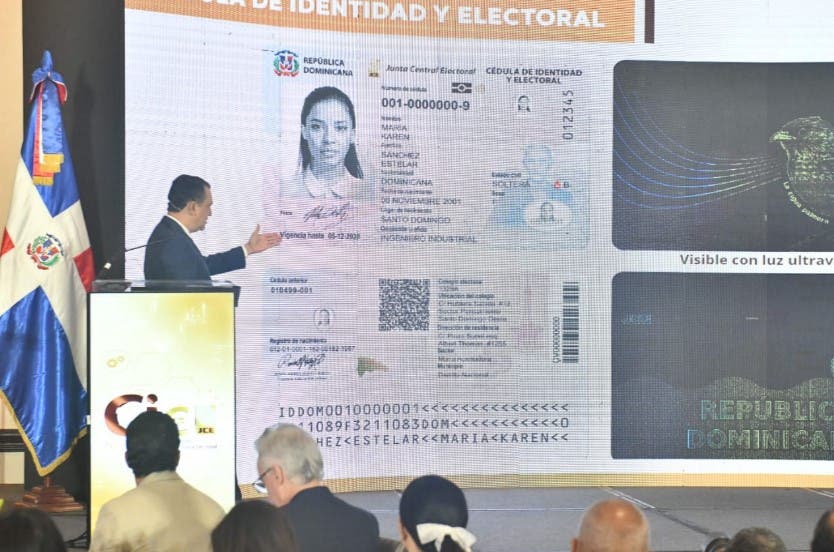
Santo Domingo.– The new Dominican identity and electoral cardwhich will begin to circulate from 2026, marks a substantial change in the design and security levels of the country’s most important official document.
The new plastic incorporates advanced anti-fraud technology, digital verification and a renewed visual designaimed at making falsification more difficult and facilitating identity validation, both in person and electronically, said Román Jáquez Liranzo, president of the Central Electoral Board (JCE).
This Thursday, the electoral body presented to opinion leaders and communicators the new design and the main security elements that the new ID will have, which maintains the horizontal formatbut features a completely redesigned appearance.
New features
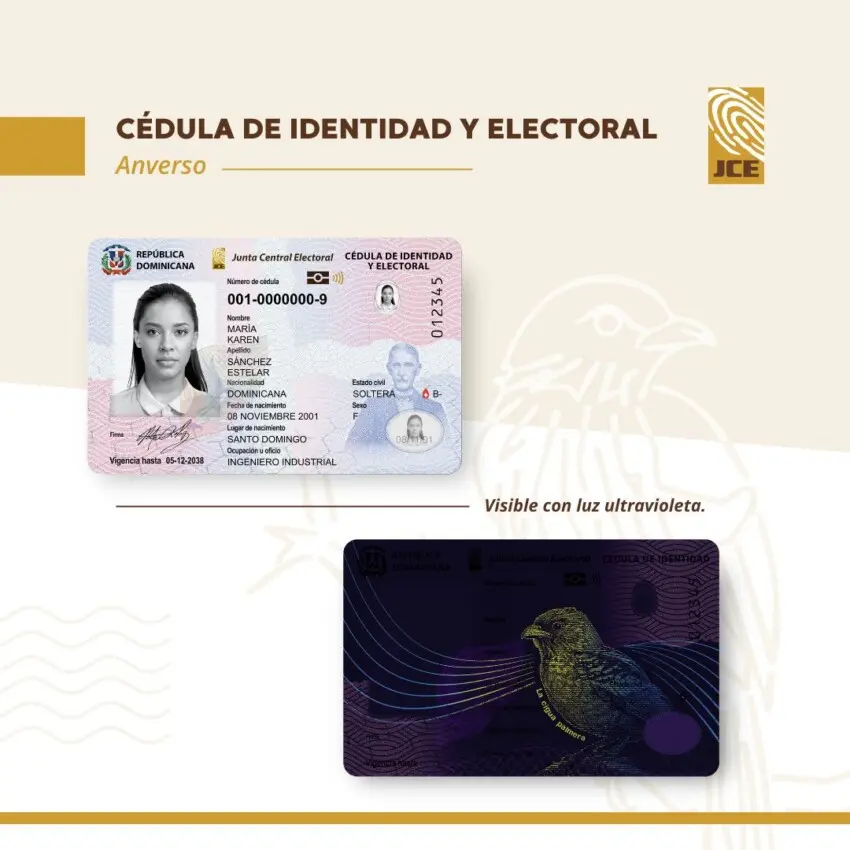
In the front facethe photo of the holder is printed using grayscale laser technologyintegrated directly into the card material, which prevents its alteration. On top of this image is superimposed a beehive weavevisible to the naked eye, which functions as a security element. The photograph is also reproduced as ghosting and in an inverted version, perceptible only from certain angles.
The card incorporates the National Shield, the golden logo of the Central Electoral Board (JCE) and the identification number in high relief, allowing any attempt to physically manipulate the document to be detected.
According to the JCE, one of the key elements of the new design is the integration, on one of the sides, of a contactless chipwhich will allow the electronic identity verification and complies with the international safety standards established by the International Civil Aviation Organization (ICAO-ICAO).
About the personal information of the citizen: full name, date of birth, nationality, sex, blood type and signature; will be laser printed on a polycarbonate composed of nine layerswhich will make it impossible to delete or modify the data without destroying the card. Added to this are changing laser imaging (CLI) and simulations of the patriotic colorswhich vary depending on the inclination of the document.
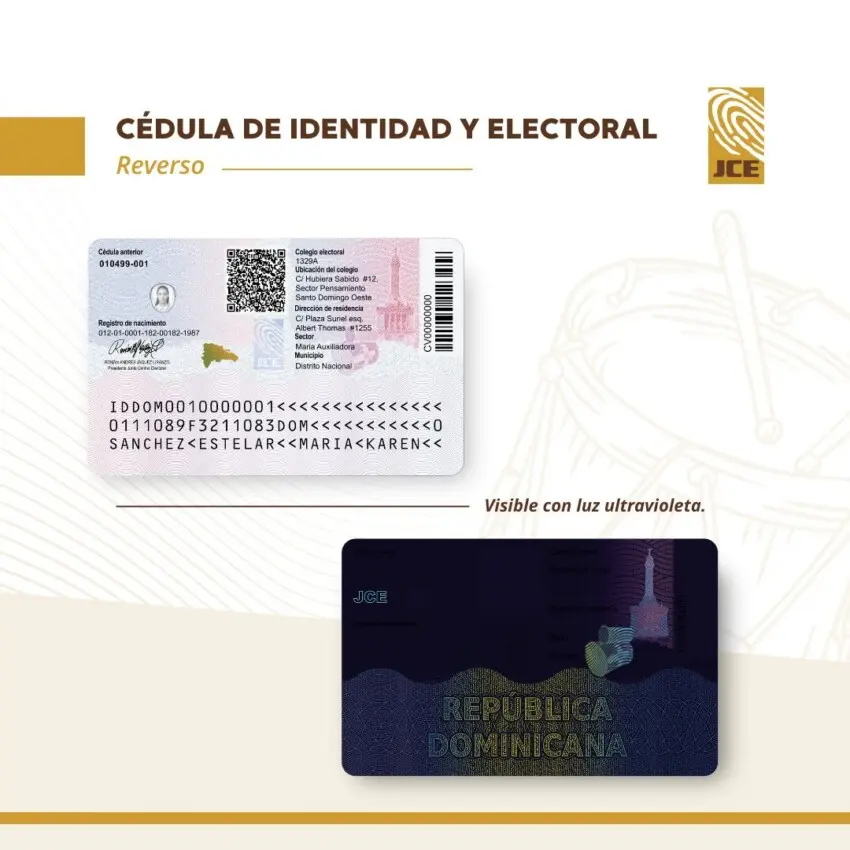
While, on the back face or reversethe card includes a QR code for quick reading using authorized devices, as well as a machine readable code (MRZ)similar to that used in passports, designed for automatic validations. It also incorporates a map of the dominican republicreferences to historical monuments and a unique serial number that identifies each card. The ghost image of the headline appears again, reinforcing visual coherence and cross-checks.
The electoral body assured that the entire document responds to a layered security scheme: visual, tactile, digital and electronic.
Renewal schedule
The plenary session of the Central Electoral Board reported that the process of renewal of the ID card will begin on April 8, 2026, the date from which citizens will be able to go to capture data and receive the new document.
You can read: Luis Abinader calls key session of the CNM to elect judges. Details here!
Before the general opening, the President of the Republic, Luis Abinaderwill be the first to receive the new ID on January 26, 2026. Later, between February and March, the process will include senators, deputies, judges of the Judiciary, political delegates, athletes, businessmen, religious people and academics.
The JCE clarified that citizens will be able to carry out the procedure during the month of your birthwithout prior distinction of groups.

Dominicans abroad
For the diaspora, the electoral body reported that as of April 8, 2026 Overseas deputies, diplomats and representatives of political parties may initiate the process. The rest of the Dominicans abroad must request an appointment from May at the electoral headquarters corresponding to your country of residence.
Deadlines and validity
Dominicans residing in the country will have up to March 2027 to obtain the new ID, while citizens abroad will be able to do so until January 21, 2028. The current ID, issued in 2014, will lose official validity on March 31, 2027.
The president of the JCE, Roman Jaquez Liranzoexplained that these dates were established to avoid conflicts with the electoral roll, since both documents will be used in the internal processes of political organizations.
The Central Electoral Board also reported that the validity of the new ID will be determined by the age of the holder: for those between 16 and 18 years old, the document will expire upon reaching the age of majority; From 18 to 35 years old it will be valid for 12 years; from 36 to 60 years old will be valid for 16 years, and for citizens aged 61 and older, for a period of 20 years.
With this redesign, the JCE is committed to a more secure, modern document aligned with international identification standards.