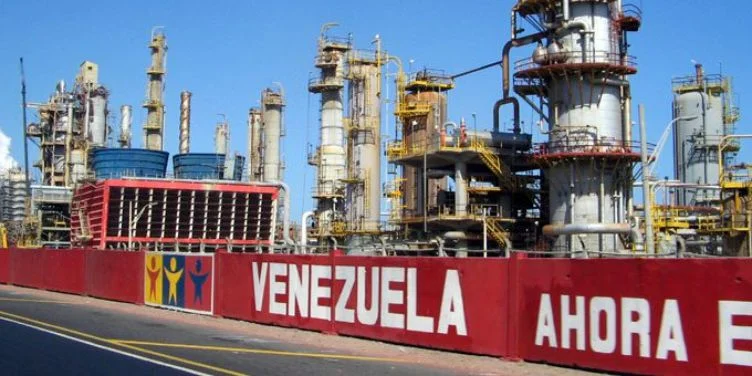
LIMA, Peru – The United States authorized five companies to exploit and refine oil and gas in Venezuela, while vetoing their transactions with vessels sanctioned or related to several countries, including Cuba.
A report of Euronews points out that the companies with the green light from the Trump Administration are the Spanish Repsol, the Italian Eni, the British Shell and BP, and the North American Chevron, which will also have the power to supply goods, services or technology to plants or platforms within the oil industry in Venezuela.
The Office of Foreign Assets Control (OFAC) published a document that prohibits companies from unlocking assets in the hands of the Chavista Government, doing business with ships sanctioned by Washington or with entities linked to Russia, China, Iran, North Korea or Cuba.
Likewise, the White House issued another license that allows companies from around the world to sign contracts for new investments in the Venezuelan oil and gas sector.
The events immediately follow an official visit in Caracas by the Secretary of Energy of the United States, Chris Wright, who met with representatives of Chevron and the Chavista leadership, including the interim president herself, Delcy Rodríguez.
The agreements further intensify the energy isolation imposed by the US president on the Havana regime, until recently dependent on allies such as Venezuela and Mexico on crude oil.
On January 29, the president of the United States declared “national emergency” with respect to Cuba, considering that “the policies, practices and actions” of Havana constitute “an unusual and extraordinary threat” to the national security and foreign policy of the North American giant.
In the executive orderTrump maintains that Havana “aligns” and “supports” hostile countries and actors, in addition to pointing out organizations such as Hamas and Hezbollah, among others.
A published information by the White House details that Cuba hosts Russia’s largest overseas signals intelligence facility focused on stealing sensitive national security information from the United States and provides safe haven for transnational terrorist groups.
In response to the emergency, the order establishes a “tariff system” that would allow the imposition of an additional tax on imports from countries that “sell” or “provide” oil to Cuba, directly or indirectly.
The document indicates that, “as of the date of entry into force,” this additional rate “may be imposed” on imported goods that are “products” of any country that supplies oil to the Island.
Likewise, it contemplates that, if the Government of Cuba or another affected country “takes significant steps” to address the emergency and “sufficiently aligns” with the United States in matters of national security and foreign policy, the president “may modify” the order.