Madrid/Some Cubans, possessed by the enthusiasm and hunger for good news, have already titled their publications in social networks and independent media with phrases such as “the communist regime in Nepal fell.” The temptation is understandable: on the island we have been waiting for similar headlines for decades for Havana. But it should be stopped, look with magnifying glass What happens in Katmandú And recognizing that what is happening there is much more complex. It is not a clean drop in the regime, but a process of erosion, uncertain transition and struggle for the power that just begins. The Cuban regime is taking note of everything. And those who want a democratic change in Cuba should do the same.
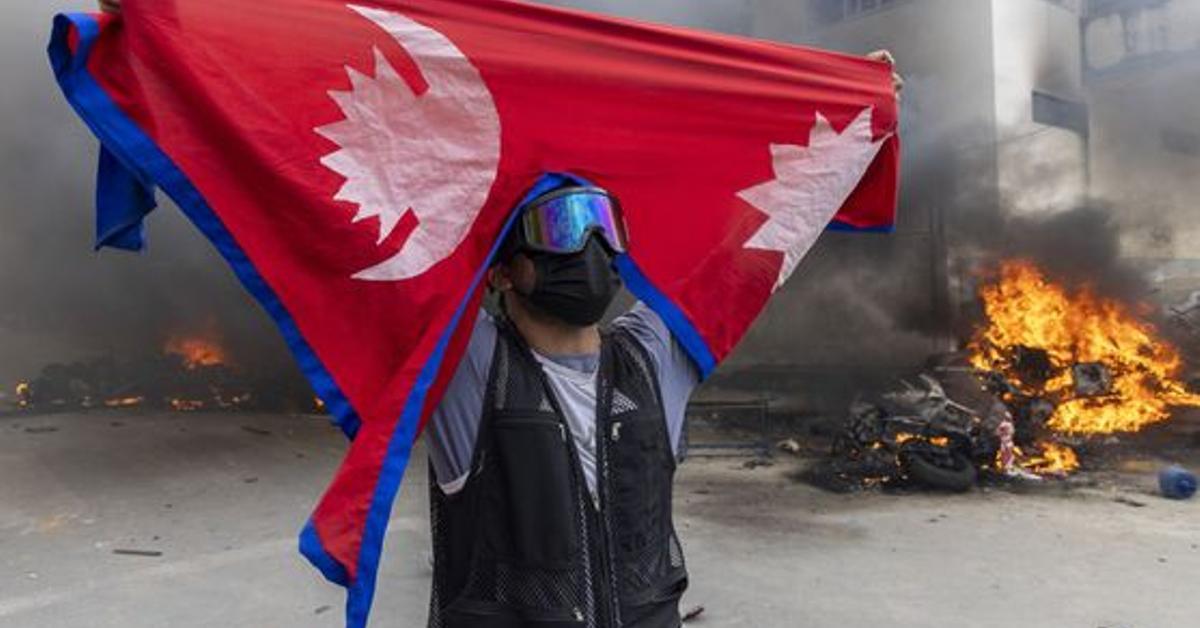
On September 8, Nepal woke up with mass protests throughout the country. The demonstrations, promoted by young people who organized to challenge the censorship of social networks and denounce corruption, found a brutal repression. In a few hours, the streets caught fire – literally -, dozens of people died and the protesters assaulted official buildings, including Parliament.
The Prime Minister, KP Sharma OLI, of the Communist Party of Nepal (CPN-UML), presented his resignation. But does that mean that the regime fell? Not necessarily. The resignation of a prime minister can be a great symbolic triumph, but the power structures – the communist party, the state bureaucracy and the security devices – remain intact. The Army occupies the streets, Parliament has not been dissolved and there is still no fully recognized transition government. More than a fall, what we are seeing is a partial collapse of legitimacy, a leadership vacuum and an open dispute over who will conduct the country in the coming months.
For Cubans, that we look at these events with the anxiety of who is recognized in the mirror of others, there are several important lessons. The spark can come from youth and technology. In Nepal, the trigger was the closure of 26 digital platforms and the outrage of a generation that no longer accepts the absolute control of the State. In Cuba, the 11j of 2021 showed a similar pattern. They were mainly young, telephones in hand, who convened the protest in real time, despite the fact that the regime knocked down the connections near noon.
The strategy was to gain time in cathartic meetings and in promises of placebo solutions to avoid the expansion of the protest
More recently, we witnessed on the island of the students’ spontaneous reaction against the Rate of Etecsa. Here the protest concentrated fundamentally within classrooms and social networks, not on the streets. That is why the regime launched its “soft containment” protocols. The work of appeasing the most docile was commissioned to mass control organizations, such as the University Student Federation (FEU). The strategy was to gain time in cathartic meetings and in promises of placebo solutions to avoid the expansion of the protest. Previous experiences, such as the fight against Decree 349, the 27N and the Assembly of filmmakers, have shown that the regime is not willing to a real dialogue and that, when it deals with doing so, it is rather a firewall operation, not a scenario for specific changes.
A different strategy is applied to the least dociles. The regime immediately detects uncomfortable leadership and sends political police. State security bodies then go to direct intimidation: expulsion threats, family coercion, interrogations, arbitrary arrests, directed internet cuts, housing blockages, acts of repudiation, condemnations in courts or, if necessary, lethal actions with accidental appearance.
Protests in Nepal began peacefully. It was the repressive forces that shot against the protesters using real ammunition. In Cuba something similar happened during July 11 and 12, 2021, the police shot the young man shot DIUBIS LAURENCIO TEJEDA and they were reported Other cases of bullet wounds.
Worse, the Cuban army already rehearsed in Africa the use of its weapons against the civilian population. During the bloody purge that occurred in Angola in May 1977, after a failed coup attempt headed by Nito Alves against President Agostinho Neto, the Angolan government brutally repressed with support from Cuban troops. They shot at the protesters, interrogated, tortured and executed thousands of dissidents and young activists. Some estimates place the number of victims in more than 30,000, many of them without any link with the uprising. It is worth remembering that many of the Cuban officers who participated in that massacre today are general and occupy high positions in the repressive forces of the island.
The fall of a figure does not equals the end of a regime
In an unusual gesture of recognition, in 2021 the president of Angola, João Lourenço, publicly apologized to the families of the victims, qualifying what happened as a “great evil” and committing to initiate the search for the remains of the disappeared to return them to their relatives.
Returning to Nepal, the fall of a figure does not amount to the end of a regime. OLI’s resignation is comparable to what would happen if Díaz-Canel were forced to leave office. The system could continue working with other names. The power machinery, if not dismantled, will continue to reproduce its authoritarian dynamics.
The role of the army is decisive in these cases. In Nepal, the military is now the key actor who can tip the balance towards an orderly transition or to a dictatorial hardening. In Cuba, the revolutionary armed forces are the true center of economic and political power. No transition will be viable without at least neutralize its repressive capacity.
Enthusiasm can also be a double -edged sword. Celebrating too soon can demobilize citizens or create expectations impossible to meet. Optimism is vital, but it must be accompanied by cold analysis and medium and long -term strategies.
We must also recognize the differences between one country and another. Nepal is a multiparty system – although dominated by communist factions -, with periodic elections and a certain media plurality. Cuba, on the other hand, is a unique party state that controls all means and does not admit real electoral competition. The nepal transition, even if it is consolidated, is not necessarily replicable on the island.
In any case, dictatorships do not fall alone, they fall when people decide to push them
In addition, Nepal is surrounded by formal democracies (India) and pragmatic powers (China) that prefer stability, but do not unconditionally support the ruling party. Power in Cuba, on the other hand, could have the political support of aggressive powers such as Russia and allies in Latin America that could act to avoid a regime change.
Let’s not fool ourselves, the Cuban regime is observing carefully. The repression of the 11J was followed by a hardening of digital control and an improvement of the surveillance apparatus. What happens in Katmandu serves as a general essay for the strategists of the Ministry of Interior and the FAR. If in Nepal the closure of networks was the spark of the rebellion, in Cuba they will seek to shield that front before the first dump of the corner burns.
Therefore, learning for those who dream of a democratic cuba is double. Be inspired by the courage of those who today take the streets in Katmandu, yes, but also plan with intelligence so that a future transition on the island does not remain in the hands of the same usual structures or derive in a “cosmetic renewal” of authoritarianism.
In Nepal, the story is still being written. Perhaps in a few months we can talk about free elections, a new constitution, or a transitional justice process. But maybe the opposite happens and let’s see a military tightening and a return to repression. In any case, dictatorships do not fall alone, they fall when people decide to push them, when internal fractures become unsustainable and when the international community stops turning a blind eye. Cubans must be prepared for that moment, with less euphoria and more strategy.