IMESI discount will benefit one and others not
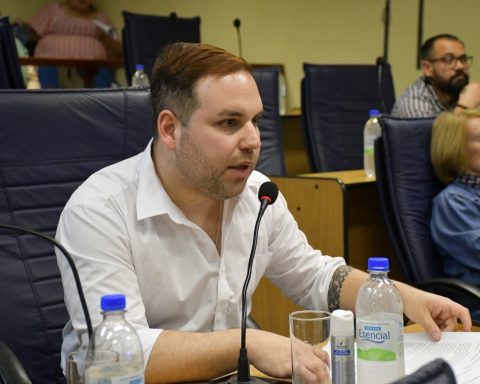
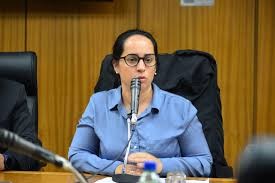
Deputy Yisela Araujo warns about the need to contemplate families living in fuel sale
The FrontAmplista legislator valued the announcement of the Ministry of Economy and Finance on the extension of the benefit to Melo, although she warned that many families depend on Nafta’s resale as the only income. “No one does because they want, they do it out of necessity,” held.
The deputy for Cerro Largo, Yisela Araujo (Frente Amplio), celebrated the announcement of the Undersecretary of Economy and Finance, Martín Valcorba, on the extension of the IMESI discount at the price of fuels in Melo. The measure, explained the legislator, responds to a historical demand for border merchants and aims to protect local trade, but at the same time acknowledged that he will impact those families that subsist through the informal sale of fuel.
“This announcement leaves us very calm, because it is a government that took specific measures for the border,” Araujo said in statements made after the official confirmation of the project that will be sent to Parliament. The benefit will consist of a 15% discount in gasoline, progressively applicable and within an extended strip of 60 kilometers, which will allow the departmental capital of Cerro Largo to include.
The deputy recalled that this measure is part of a broader process of border policies, which includes VAT discounts on purchases, exemptions in employer contributions for the hiring of employees and tax benefits applied since June. “These are decisions that seek to equate the reality of national trade against competition that implies having a living border like ours,” he said.
However, beyond the positive assessment, Araujo introduced a clear warning: “When measures are taken it is important to contemplate all reality. We know that many families, due to the lack of genuine work, choose to load fuel and sell in their homes. No one does because they want, they do it because there are no other work options.”
“No one does because they want, they do it out of necessity”
The legislator said she is aware of the precariousness situation of numerous families of Melo and other border towns. “They choose to sell fuel because they have no other job. Even knowing about the risks it implies in security, even putting their lives and that of their families at risk, they do so because that depends on the income to feed and others,” explained.
Therefore, he insisted that the State must also give an answer to that reality: “Just as measures that favor some are taken and we are deeply happy because we are talking about saving local businesses and generating more work sources, on the other hand, we want to contemplate these families. It is not about benefiting some and that the others are affected. What we are looking for is a solution that, in the medium term, can benefit everyone.”
Araujo stressed that this approach is not new or improvised, but already transferred it to different ministries. “This I already talked to the Ministry of Social Development, with the Ministry of Economy and Finance, I also raised it to industry. Because my duty as a national representative, and also as a militant of a political force that has a particular sensitivity for the most vulnerable, is to move that reality. There are families that would remain without their only livelihood and we have to think alternatives.”
The extension of the strip and the parliamentary path
Valcorba’s announcement confirms that the benefit of the IMESI, until now circumscribed to a reduced border strip, will be extended to a radius of 60 kilometers, thus contemplating the departmental capital. “It was a historical demand for Melo merchants, who today compete with the prices of the Brazilian side. The hope is that this measure will consolidate more jobs in local trade and, at the same time, avoid business closures,” The deputy detailed.
As for the procedure, he explained that the project will be sent to Parliament and the legislative procedure is expected to be agile: “When you arrive at Parliament, you vote directly. It does not have a long process like other measures. The idea is that it can be operational before the end of the year.”
He recalled that, in the case of the tax exemptions announced in June, the regulations took several months until its application, but hoped that this time the process will be faster.
A necessary balance
For Araujo, the key is to achieve a balance: “It is an announcement that we celebrate because it favors formal trade and will allow to sustain and generate genuine employment. But we also want to make it clear that there are families that will run out of income if parallel measures are not implemented. We are not talking about large merchants, but of humble families who found in the sale of fuel their only way to survive.”
He reiterated that the objective of his approach is not to oppose the measure, but complement: “We want it to be an integral measure, that benefits everyone. That local businesses can sell more, that jobs are created, but at the same time the reality of those who depend on an irregular income is attended. Because if they sell Brazilian or Uruguayan naphthath, it is because they have no other job. If the measure equates prices, leaves those people without work. And that is where we have to act as a state.”
In that sense, he mentioned the need to open alternative work spaces: “The approach is clear: these families must have the possibility of accessing decent work. It is not about criminalizing those who reverse gasoline. We know that it is irregular and that it entails risks, but we also know that no one gets up one day and decides to do it because they want. They do it because it is the way to take a plate of food to their home.”
A line of future work
Finally, the front -year deputy said that this will be a permanent work axis on her agenda: “What I did was transfer this concern, transmit it, and it is a line of work that we want to sustain. Because we understand that, in an department like Cerro Largo, where formal employment levels do not meet all needs, the State must be present with real solutions. We cannot look the other way.”
In his final reflection, Araujo insisted that the challenge is not facing each other: “It is not formal trade versus families that sell gasoline. It is the same social problem that must be solved with public policies that contemplate all realities. What we want is that the benefit is for everyone, not for one at the expense of others.”