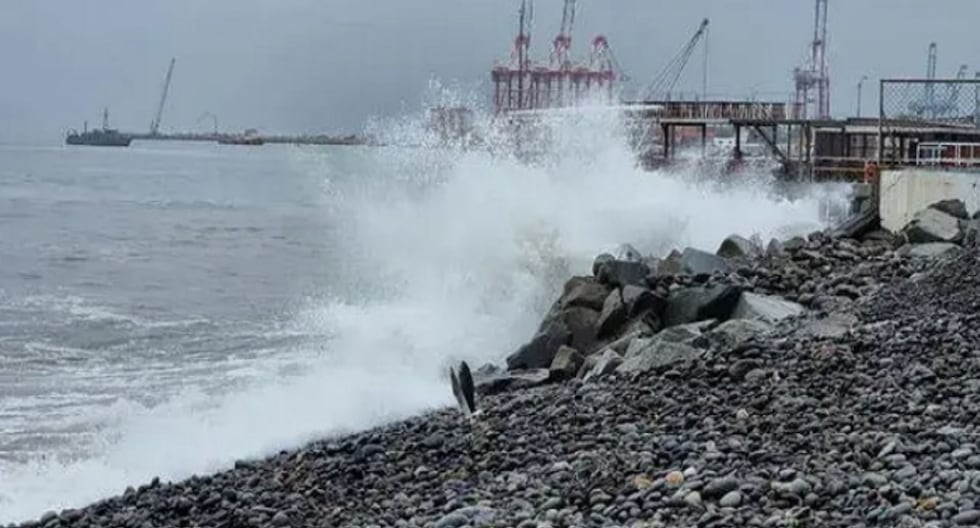
Marco Antonio Bartens, frigate captain and head of the Navigation Department of the Hydrography and Navigation Directorate of the Peruvian Navy, pointed out that the 7.6 magnitude earthquake registered in Japan “does not generate tsunamis on the Peruvian coast.”
He added that the alert issued by the Navy this morning was intended to reinforce surveillance on the Peruvian coast, but stressed that this does not imply restrictions nor does it affect the development of maritime activities.
“After monitoring, we have already been able to analyze and it effectively no longer generates tsunamis on the Peruvian coast. [¿Se ha restringido algún tipo de actividad?] No type of activity has been restricted”, he declared to RPP.
He indicated that the reinforcement in surveillance is due to the permanent monitoring of all the balls installed on the Pacific coast – through the National Tsunami Warning System (SNAT) – in addition to the ocean-meteorological stations located in the area.
“We begin to verify how this anomalous wave is traveling, because it is not a normal wave, after a movement as strong as the earthquake, waves are generated that can generate possible tsunami waves. We have an oceanographic network, and there we monitor how this wave is traveling and what the intensity of the wave is so that we can carry out surveillance and monitoring. With this analysis we can now determine whether or not there is a danger of a possible tsunami.”he added.
According to the EFE agency, the earthquake recorded in Japan reached a level 6 higher on the 7-level Japanese seismic stake, which evaluates surface intensity and destructive potential, in the city of Hachinohe, while an intensity of 6 was reported in the towns of Oirase and Hashikami.