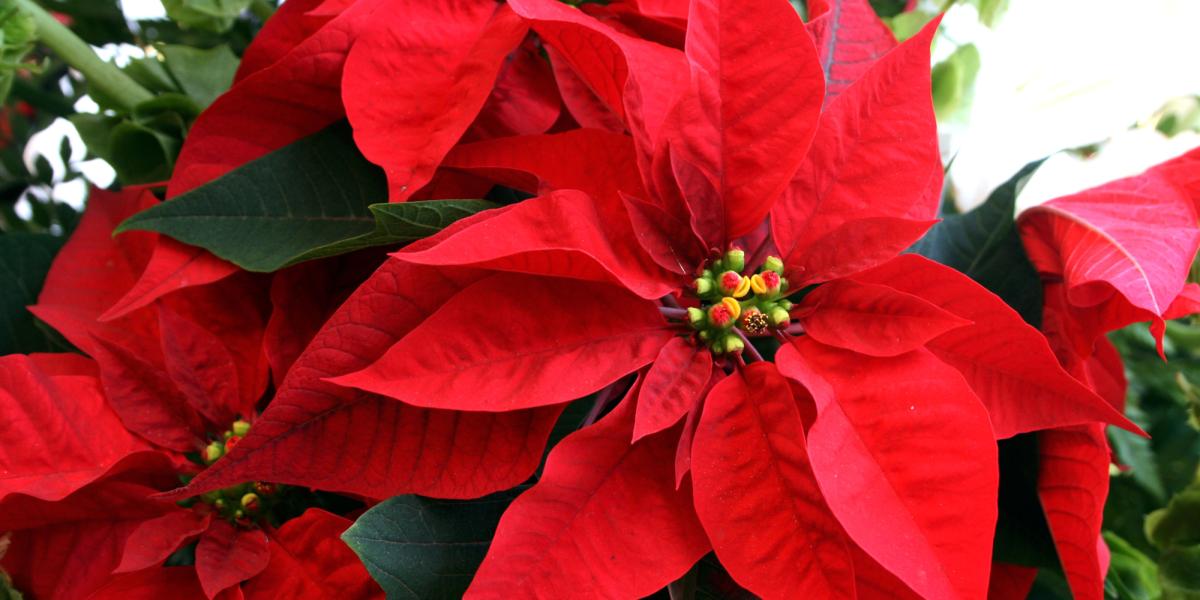
Every December, the country’s homes are filled with color with the poinsettia flowera plant native to Mexico that today is a global emblem of the Christmas season.
Its presence in markets, gardens, squares and houses coincides with a special date: the December 8, when commemorating National Christmas Eve Daya day dedicated to recognizing its history, its cultural value and the work of thousands of producers who cultivate it.
Symbol that unites pre-Hispanic roots and Christmas tradition
Christmas Eve, whose scientific name is Euphorbia pulcherrimagrows wild in the dry forests of the Mexican Pacific, from Sinaloa to Chiapas and part of Guatemala.
For the native peoples, especially in the Mexica world, it was known as cuetlaxochitlthe flower that symbolized purity, renewal and the passage of fallen warriors.
Its petals were used to dye textiles and leather, and its medicinal properties relieved fevers and skin conditions.
With the arrival of the viceregal period, the flower began to be associated with Christmas since the Franciscan friars incorporated it into nativity scenes in Taxco, Guerrero, in the 17th century and, over time, it became an indispensable element in Christmas celebrations. In other places it is known as Christmas Flower, Easter Flower, Christmas Star, Saint Catherine or Fire Flower.
December 8 was established as its national day to recognize its cultural and agricultural importance, and to make visible the role of the Mexican countryside in the preservation of this tradition.
More than 100 varieties
Although 90 percent of poinsettias are red, Mexico produces dozens of varieties, including white, yellow, pink, salmon, marbled and marbled. Flower growers have developed shades and shapes that are today appreciated both in the country and abroad.
Mexico has more than 100 varietieswhile in the world there are more than 1000 derivatives of the original species. The wild ones, less branched and with more subdued colors, are still present in areas of Guerrero and Oaxaca, where their genetic diversity is conserved.
Poinsettia is one of the most important ornamental crops of the season. In 2024, Five states concentrated the highest production:
Michoacanwith 11 million 340 thousand plants
Moreloswith 8 million 748 thousand
Mexico Citywith 3 million 260 thousand
Pueblawith 3 million 102 thousand
Jaliscowith 1 million 876 thousand
The value of national production exceeded 1,124 million pesos, according to data from the Agri-Food and Fisheries Information Service.
Xochimilco and Tláhuac: productive heart of the capital
In Mexico City, Christmas Eve keeps the link with conservation land alive. For the 2025 season, SEDEMA reported 1.8 million plantsgrown by 216 producers in areas such as San Luis Tlaxialtemalco, San Gregorio Atlapulco, Santiago Tepalcatlalpan, San Juan Ixtayopan and Santiago Tulyehualco.
Production reached its highest figure in five years thanks to the Altépetl Program, which promotes specialized cultivation techniques and a direct sales model that reduces intermediaries and strengthens the local economy. The marketing points include flower markets, main avenues, esplanades and public spaces where the plant with the distinctive label is offered. Made in Xochimilcowhich guarantees its origin.
Christmas Eve is today second best-selling floral ornament in the worldalone behind the orchids. Its image appears on decorations, textiles and Christmas objects on all continents, and although its popularity is global, its origin remains rooted in Mexico.