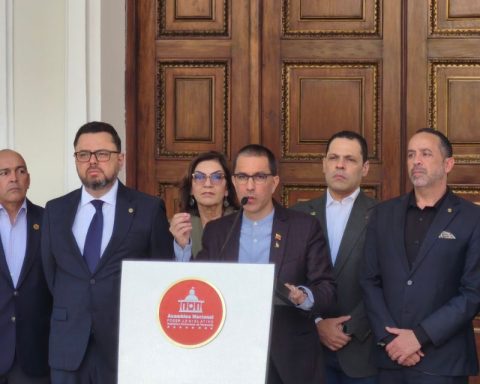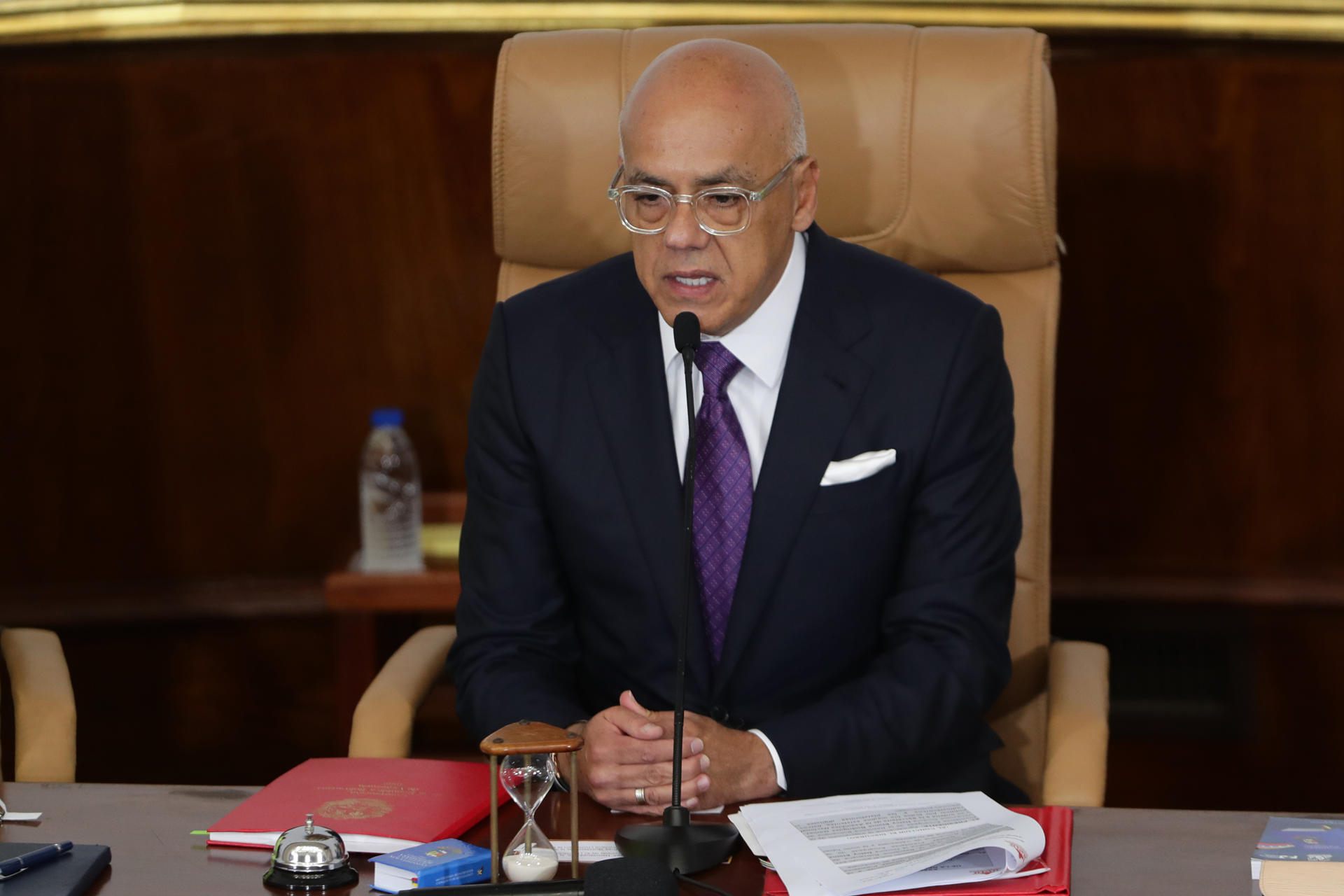

The president of the National Assembly (AN), Chavista Jorge Rodríguez, affirmed this Saturday that the legislature will advance next Tuesday in the approval of the partial reform of the hydrocarbons law, an initiative of the president in charge and her sister, Delcy Rodriguezwhich was already approved in the first instance on Thursday.
“Next Tuesday in the National Assembly we will move forward to approve the reform of the organic hydrocarbon law”said Rodríguez during the first public consultation on the reform of the legislation, in an event with the workers of the refinery in the city of Puerto La Cruz (east), broadcast on the state channel VTV.
At the event, the head of the AN pointed out that the idea of this reform is to achieve “an increase in oil production.”
Likewise, he assured that this legislation – which allows associations with private companies and flexibility in royalties – does not compromise national sovereignty because, he added, the oil is from Venezuela, as established by the Constitution.
The “primary” objective of the reform, he noted, is “adapt to a situation” that “allows oil to be extracted from the earth” and that “those who want to invest in Venezuela can come.”
“We have to get that oil out of the ground and turn it into goods, into prosperity,” he said.
Guarantee “legal certainty”
For his part, the president of the state-owned Petróleos de Venezuela (PDVSA), Hector Obregonindicated that the reform seeks to update the laws to guarantee “legal certainty” to private investors.
Obregón said that the model of productive participation contracts, incorporated in the reform, allowed private investment equivalent to 900 million dollars to be concentrated in the hydrocarbon sector in 2025.
The Parliament, with a Chavista majority, approved on Thursday in the first instance the partial reform of the Organic Law of Hydrocarbons.
A second discussion is required for the project to be definitively sanctioned as law. Between both debates, modifications to the legislation can be proposed.
Once this process is completed, the law is sent to the president, who is in charge of its promulgation, and comes into force upon its publication in the Official Gazette.
The discussion of these reforms takes place while Caracas and Washington are going through a new stage in their bilateral relationshipmarked by the US attack and President Donald Trump’s manifest interest in Venezuelan oil, the sale of which he has anticipated that his country will handle.