The reform of the Hydrocarbons Law expands fiscal and parafiscal benefits, makes the economic conditions of projects more flexible and reduces parliamentary control over the constitution of mixed companies, opening greater spaces for the participation of private operators
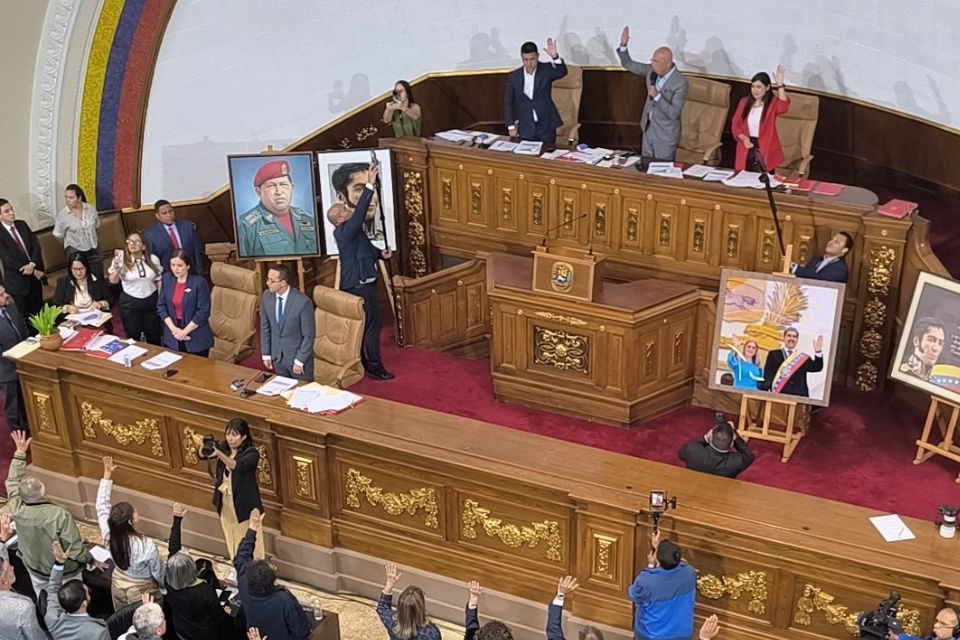
The National Assembly discussed and unanimously approved the partial reform of the Organic Law of Hydrocarbons. This Thursday, January 29, the second discussion of the legal instrument took place.
The president of Parliament, Jorge Rodríguez, said that this norm “is sanctioned for history, for the future, for our daughters and our sons, the organic law to reform the Organic Hydrocarbons Law.”
The Organic Law of Hydrocarbons will come into force after its publication in the Official Gazette, except for articles 51, 55, 56, 57, 58 and 59, which will come into force once 60 days have passed after publication.
The purpose of this standard is to regulate everything related to the exploration, extraction, collection, transportation, storage, processing, improvement, refining, commercial industrialization and comprehensive use of hydrocarbons under the principles of energy sovereignty, public domain of the deposits, progressive maximization of income, legal certainty, contractual transparency, environmental protection and adaptation to the energy transition.
*Read also: New version of the oil reform proposal extends exemptions to private companies
What is modified in the Hydrocarbons Law?
The new text expands fiscal and parafiscal benefits, makes the economic conditions of the projects more flexible and reduces parliamentary control over the constitution of mixed companies, opening greater spaces for the participation of private operators.
One of the central axes of the reform is the creation of an integrated hydrocarbon tax, which replaces the traditional logic based on royalties, income tax and special contributions. The new tax establishes a rate of up to 15% on gross income and empowers the Executive to reduce it project by project to preserve the so-called “economic-financial balance.” In the previous Law there was no unified scheme of this type and the tax burden was distributed among different taxes and contributions.
The reform also expressly expands the tax and parafiscal exemptions applicable to oil activities. The approved text lists taxes and contributions from which projects in the sector will be exempt, including the Large Wealth Tax, the contributions provided for in the Organic Law of Science, Technology and Innovation (LOCTI), contributions to sports, the fight against drugs and the protection of pensions, as well as state and municipal taxes. This set of exemptions was not contemplated in the Organic Hydrocarbons Law of 2006 and represents a significant reduction in the parafiscal burdens that fall on operators.
In terms of royalties, the reform maintains the 30% limit established in current legislation, but reinforces the power of the Executive to modify the percentage applicable to each project according to criteria such as the nature of the investment, economics and international competitiveness. The text explicitly links these adjustments to the need to guarantee the economic viability of the contracts, expanding the margin of discretion of the Executive in defining the fiscal conditions.
Another relevant change is the expansion and more precise regulation of the direct marketing of hydrocarbons by mixed companies and private operators. The new articles establish requirements regarding reference prices, tax and environmental compliance, and attention to internal supply. In the current law, marketing was a central responsibility of state companies and private participation in this phase was more limited.
The reform also maintains the reduction in parliamentary control over the sector. While the Organic Hydrocarbons Law required authorization from the National Assembly for the constitution of mixed companies and the definition of their essential conditions, the approved text establishes a presidential authorization scheme with simple notification to Parliament. In practice, this reduces the ability of the Legislative Branch to veto or condition new strategic partnerships in the oil industry.
The new framework also consolidates the opening to private operators in primary exploration and production activities. In addition to state companies and mixed companies with a majority shareholding of the Republic, the reform allows private companies domiciled in Venezuela to operate through contracts with state companies or their subsidiaries, assuming comprehensive management “at their own cost, expense and risk”, without the contracting state company being responsible for its debts or financial obligations.
Regarding contracts signed under the Anti-Blockade Law, the reform expressly ratifies their full legal validity and orders their adaptation to the new legal framework without deterioration of the agreed conditions. This shield did not exist in the original law and reinforces the incorporation of exceptional contractual schemes to the ordinary hydrocarbon regime.
The repealing provisions also eliminate regulations approved between 2006 and 2009 that reserved activities and services related to hydrocarbons to the State and regulated specific contractual models of mixed companies, dismantling part of the legal framework built after the oil nationalization.
Transparency and accountability
Deputy Orlando Camacho, president of the Permanent Commission on Energy and Petroleum, said that they received more than 120 proposals for the reform of the Hydrocarbons Law, from abroad, and from parliamentarians from other parties. He assured that all of them were systematized.
Camacho assured that with the reform of this regulation “the country’s economy will change and it will make great transformations for us, our children, grandchildren and for the future of Venezuela.”
For his part, deputy Antonio Ecarri, who described the proposal to reform the Hydrocarbons Law as “historic,” said that he hopes that the benefits will not only be for the oil companies, but that he hopes that other sectors of the national economy “will also benefit from these new criteria.”
However, Ecarri explained that in his opinion, a negative aspect of the Law is that it leaves “excessive discretion in the hands of a single official, which results in corruption and, of course, damage,” which he assured has left several directors of Petróleos de Venezuela (PDVSA) imprisoned.
In that sense, the deputy for the Pencil Alliance proposed two final provisions: “Transparency and accountability” so that there is legal security for companies in the country.
*Journalism in Venezuela is carried out in a hostile environment for the press with dozens of legal instruments in place to punish the word, especially the laws “against hate”, “against fascism” and “against the blockade.” This content was written taking into consideration the threats and limits that, consequently, have been imposed on the dissemination of information from within the country.
Post Views: 84