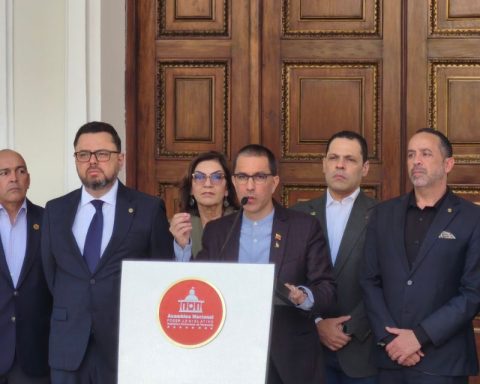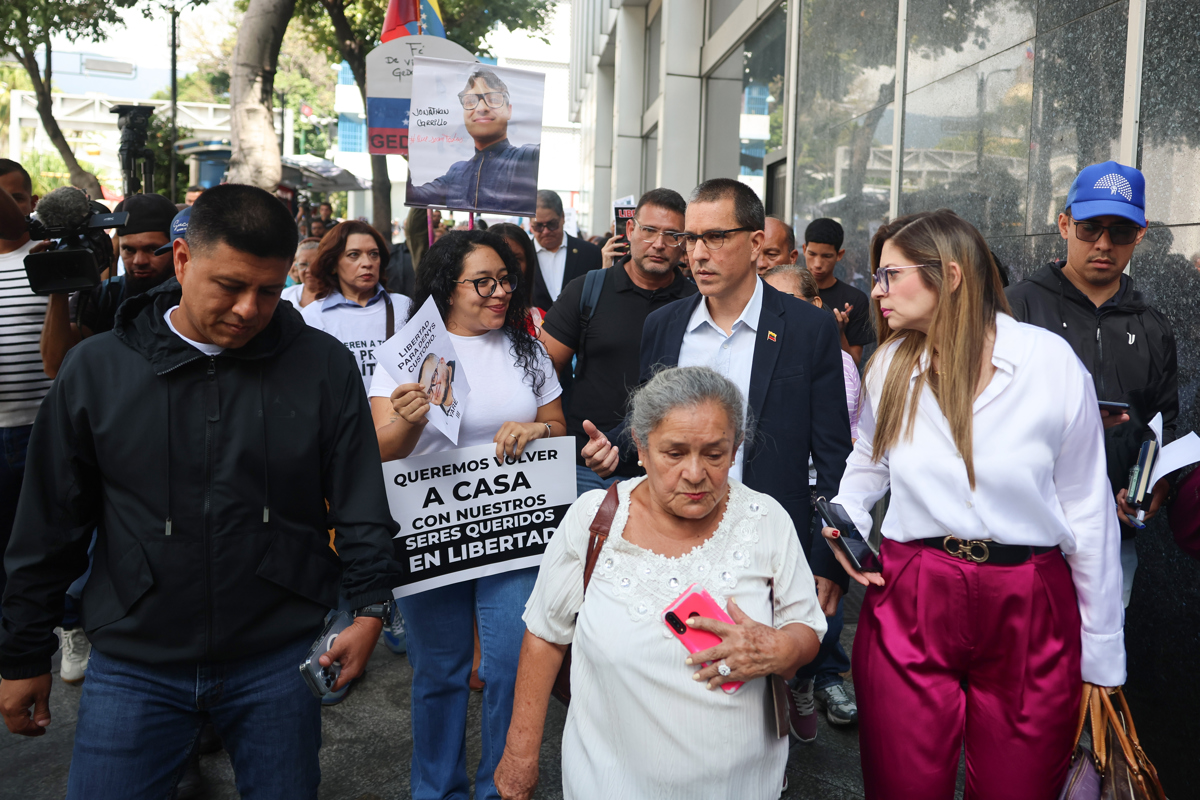
The National Assembly – controlled by Chavismo – received relatives of political prisoners this Tuesday to discuss the amnesty bill which was approved in the first discussion and is in the process of public consultation for the second debate and final approval.
During the meeting, Chavista deputy Jorge Arreaza defended the opening of Parliament to hear proposals and testimonies from legal experts and those who have suffered “the impacts of the political confrontation of recent years.”
“We have to listen to them (the families of the detainees) so that we can reflect their perceptions in the law,” Arreaza said.
Representatives of the Legislature met with members of the Committee for the Freedom of Political Prisoners (Clipp) and with members of the NGO Foro Penal, an organization that has been documenting the partial releases and the conditions of those who have been released from prison in recent weeks.
Arreaza, who chairs the special commission in charge of the project, reiterated that the intention of the law is to promote reconciliation and democratic coexistence. According to him, Parliament works to build consensus and overcome differences between opposing political sectors.
Ernesto Villegas, coordinator of the Program for Peace and Democratic Coexistence, reported that this Wednesday more relatives of political prisoners in a day scheduled at the Rómulo Gallegos Center for Latin American Studies, in Caracas, where the conversations would continue.
They warn that more than half of the political prisoners would be excluded from the amnesty law
The detainees’ relatives had gathered near the Federal Legislative Palace, in the center of the capital, to demand to be heard by the parliamentarians.
They warned that “more than half” of the detainees could be outside the scope of the amnesty because they consider that the text, promoted by the interim president, Delcy Rodríguez, excludes cases from years such as 2018, 2020 and other periods in which numerous arrests were recorded for political reasons.
The amnesty – according to the project – would cover events from 1999 to January 2026, detailing certain years in its articles, without including the entirety.
Criminal Forum reported that it has verified 426 releases since this process began on January 8, although it continues to warn that hundreds of detainees remain in custody or with restrictive measures.
The debate on the bill takes place at a time of intense claims from human rights organizations and relativeswhich demand not only the full release of those imprisoned, but also transparency in the official lists and clear guarantees on the application of any legal benefits derived from the amnesty.
With information from Efe.