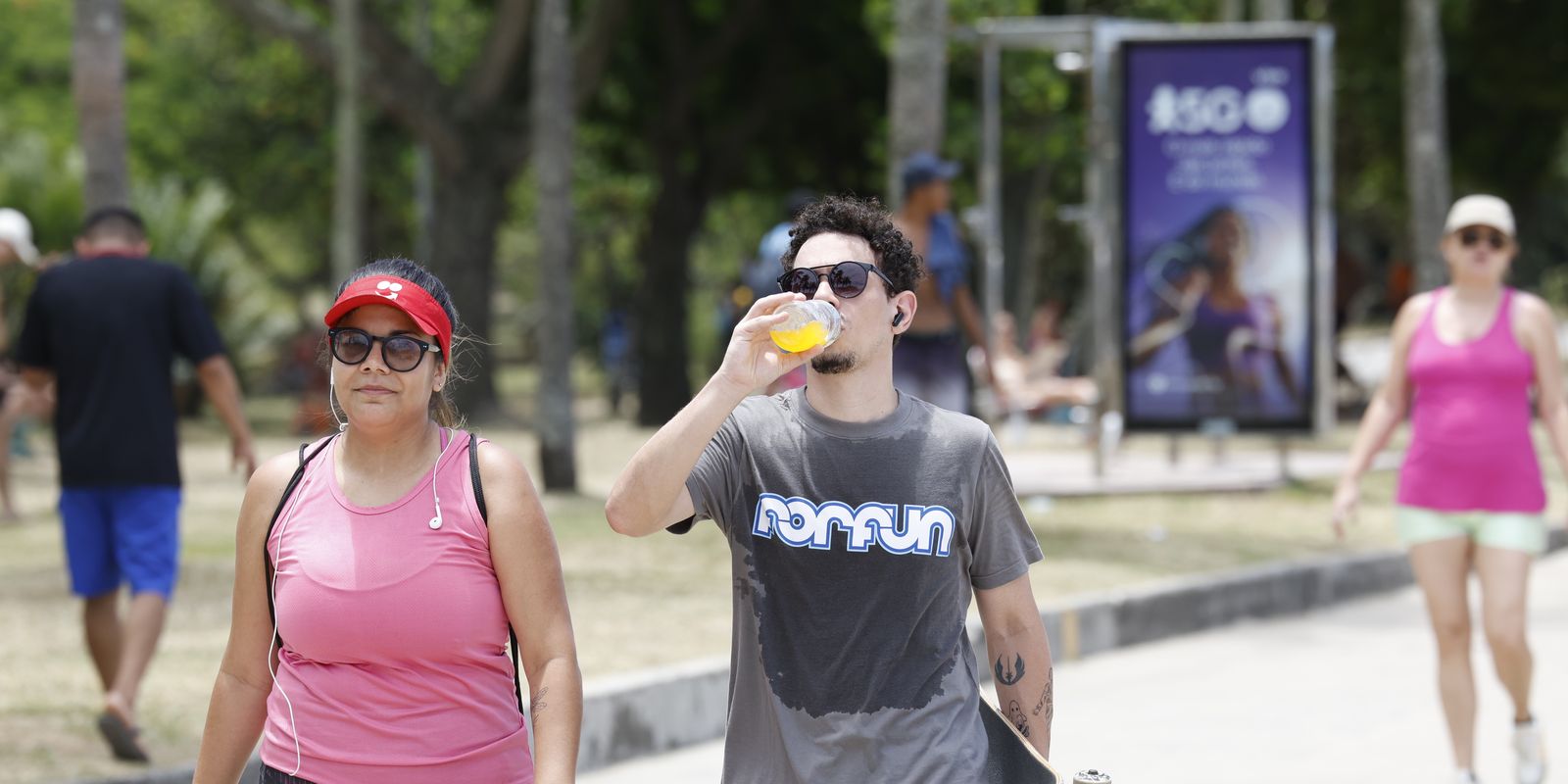
Christmas Thursday (25th) is sunny and hot in the city of Rio de Janeiro. According to the Rio Alert System, the forecast for the entire day is clear to partially cloudy skies, no rain and a maximum temperature of up to 40°C. Winds are expected to be light to moderate throughout the day.
Still on Christmas Eve, at 3:50 pm this Wednesday (24), the capital of Rio de Janeiro reached the third level of the Heat Protocol (Heat 3). This stage is characterized by high levels of heat, between 36°C and 40°C, expected to remain or increase for at least three consecutive days. The level precedes the two stages considered most critical, which reinforces the need for extra care.
The forecast for the next few days indicates that this situation will continue. Between Friday (26) and Monday (29), Rio should continue with clear to partially cloudy skies, no rain, weak to moderate winds and high temperatures.
Alerta Rio and the Municipal Health Department recommend simple measures to minimize the effects of heat, such as drinking plenty of water, wearing light clothing, keeping environments ventilated, eating light meals, using sunscreen and avoiding physical activity outdoors between 10am and 4pm.
Health
The State Department of Health of Rio de Janeiro (SES-RJ) issued a warning to the 92 municipalities in Rio de Janeiro about the beginning of a period of excessive heat from Christmas onwards. According to the Strategic Health Surveillance Information Center (CIEVS/SES-RJ), 22 municipalities are expected to face excess heat on the 25th, at levels ranging from mild to extreme. The capital is classified as severe level.
Among the municipalities predicted to experience extreme heat are Itaboraí, Itaguaí, Japeri, Mesquita, Niterói, Paracambi, Piraí, Queimados, São Gonçalo and Seropédica. Nova Iguaçu, Barra do Piraí, Belford Roxo, Maricá, Rio de Janeiro, Saquarema and Tanguá are expected to face severe heat. Araruama, Guapimirim, Pinheiral, Rio Bonito and Volta Redonda appear in the light heat category.
“This alert is for municipalities to prepare and offer public hydration points and thermal refuges to take care of the population’s health. We noticed an increase in the frequency of cardiovascular problems during these periods, therefore, care must be doubled”, said the Secretary of State for Health, Claudia Mello.
According to SES-RJ, groups such as the elderly, children, bedridden people and workers exposed to the sun are among those most vulnerable to the effects of prolonged heat. State Emergency Care Units (UPAs) function as public hydration points throughout the year.
The secretariat reinforces that the risk is calculated based on the comparison of current temperatures with the maximum temperatures of the last 30 years, in addition to the assessment of hotter mornings, which reduce the human body’s ability to adapt.