
Despite recent legislative announcements about an amnesty law in Venezuelathe case of gendarme Argentinian Nahuel Gallo seems having been trapped in a legal limbo. After 440 days of confinement In the El Rodeo I prison, his family denounces that the new regulations have not brought the expected relief.
María Alexandra Gómez, wife of the detainee, broke the silence this Saturday with a statement that exposes the wound of the fractured family since that December 8, 2024. Their claim is not only a legal requirement, but a cry for help in the face of the absolute lack of communication that Gallo suffers.
“We demand once again the immediate freedom of Nahuel Agustín Gallo. 440 days have passed without hearing his voice, without a call, 440 days of anguish, of endless nights, of a son who asks and waits. They talk to us of peace and reconciliation… but true peace begins with freedom and truth,” Gómez published through his X account.
The paradox of amnesty
Gallo’s case symbolizes the contradiction of the current political process. While Parliament promotesto national reconciliation, the situation of the Argentineaccused by the judicial system of serious crimes, suggests that the amnesty is selective. For María Alexandra, official rhetoric collides with the reality of an empty home.
The publication, which went viral along with an image of her and her son holding a protest sign, closes with a message of resistance. “Nahuel has to come home. Your son needs it. I need it. “We are all waiting for it with the same love and the same hope with which we resist every day.”
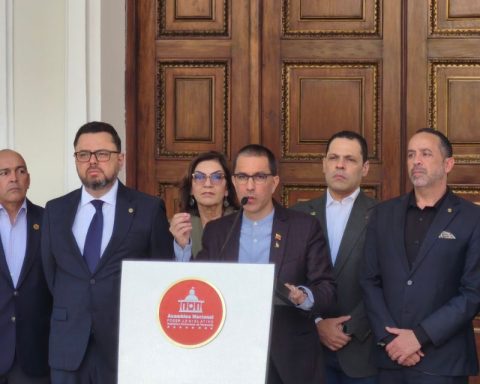
In a recent press conference, Alfredo Romero, president of the Penal Forum, assured that Nahuel Gallo “is not included in the amnesty” and The presence of the gendarme’s mother-in-law stood out.
Delcy Rodríguez’s government announced on January 8 that it would release a significant number of prisoners. Government spokesmen have said that they have been released almost 900 inmates since December, although the Penal Forum Until Wednesday, the release of 448 people for political reasons.