SANTA CLARA, Cuba. – A week before a liter of gasoline exceeded six dollars in the informal market, Dagmara, owner of a sales stand located near the Sandino stadium in Santa Clara, managed to stock up on a batch of merchandise that a supplier brought her from Havana at a quite reasonable price. The packages of rice, beans, sugar and edible oil included in that last assortment were sold out in less than two days. “People took things by the box, as if the end of the world were coming,” he says.
As the paralysis of transportation became evident, many families began to buy non-perishable food in large quantities for fear that these points of sale, commonly located in neighborhoods, would be out of stock or that, from one day to the next, prices would triple. At the time, Dagmara considered the hoarding wave too exaggerated, until her usual supplier canceled a second order in mid-February.
Many of these small merchants are supplied by third parties who bring them supplies from wholesale warehouses or directly from the Mariel Container Terminal. While the official press assures that operations there continue with “absolute normality,” Dagmara reports that the transfer of a container to this central province is costing more than one million pesos. “No one is willing to pay that much money. If we are closer, I can’t imagine how much it will cost to take it to the East,” he says.
The paralysis of cargo transportation to move merchandise, the increase in transportation costs and the suspension of usual routes between provinces and municipalities have left many entrepreneurs without an economic alternative to replenish their shelves. In a triumphalist publication of Cubadebate At the beginning of February, several users concerned about the assortment of their businesses commented precisely that, above all, towards the eastern provinces there is already a worrying shortage of supplies. “How do people access Mariel to extract the containers?” Yanitsy Pujalá from Camagüey asked in the comments. “When they tell you that the container is there and you are not going to load it, they penalize you and you have to pay for your stay at very high prices,” someone responded.
The fuel crisis has hit hard the range of MSMEs and small businesses that function as retail outlets, where people usually purchase basic foods for everyday life. Logic indicates that the rise in fuel prices inevitably leads to higher prices for products, mainly those in high demand.
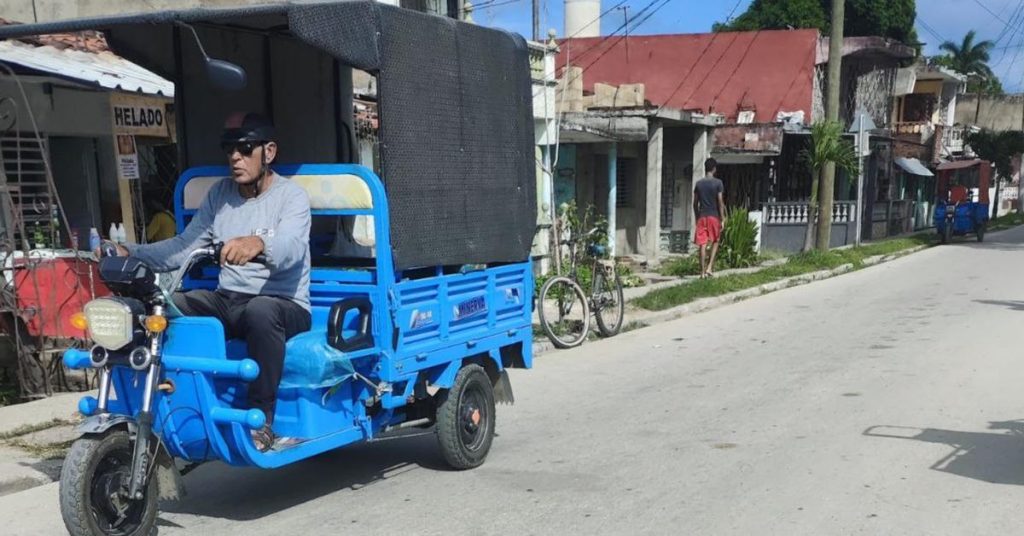
“We were looking for part of the things in Camajuaniin a warehouse of a MSME, but now the truck to get there costs us thousands of pesos and add to that that everything has also gone up in the retail price,” says Adrián Aguilar, an employee of a stall located on the highway to Sagua. To keep his business afloat, the owner hired the services of a transporter who uses an electric tricycle in which he can barely load 5% of what he previously moved on each trip. According to Adrián, in his sales stall they are “running out of available inventory”: “The owners told us to liquidate what was left in the warehouse,” adds the boy. “It doesn’t make a profit for them to pay for fuel at what it is on the street and then sell at capped prices.”
In the last week, inspectors in Villa Clara have applied sanctions and forced sales to self-employed workers who sold a liter of oil for 1,500 pesos and a pound of chicken above what was established in the Resolution 225 of the Ministry of Finance and Prices. For many sellers, acquiring merchandise of this type represents an economic risk, so they choose to market it secretly to avoid fines and confiscations.
“Why do I have to lose money, if they have the oil in dollars that is much more expensive?” asks a self-employed worker who requests anonymity to avoid reprisals. He says he only sells the oil to “trusted customers,” and at 300 pesos above the official limit. He also says that he had to pay for the last boxes he managed to transport from Havana in US dollars. “There [en el Mariel] There are people with entire containers paralyzed because it is not convenient for them to pay for the trip to the provinces and then lose the investment. It is understood that life is expensive, but I think people prefer that the product be available, even if it is a little more expensive, than that it suddenly disappears and they have to cook with water,” reasons the merchant.

In another grocery business located in the Santa Catalina neighborhood, Beatriz Caballero, one of its owners, assures that almost everything she has in the refrigerators has been running out in the last week except for some packages of liver that are in low demand and the occasional tube of imported mortadella. “I haven’t had one more box of minced meat or chicken in here; we’re out of rice. What’s left is what’s there and when this is sold, we’ll have to close.”
Although many businesses have looked for alternatives to supply themselves, others are about to close permanently because they have run out of products purchased in previous months. A report from the consulting firm Auge recently published indicates that 96.4% of MSMEs face an impact ranging from “severe” to “catastrophic” and, although it points out that some may be able to resist for a while, it assures that very few will be able to survive in a scenario of prolonged shortages. “No matter how much individual effort is put in, if the energy system collapses, the business collapses with it,” the text predicts.