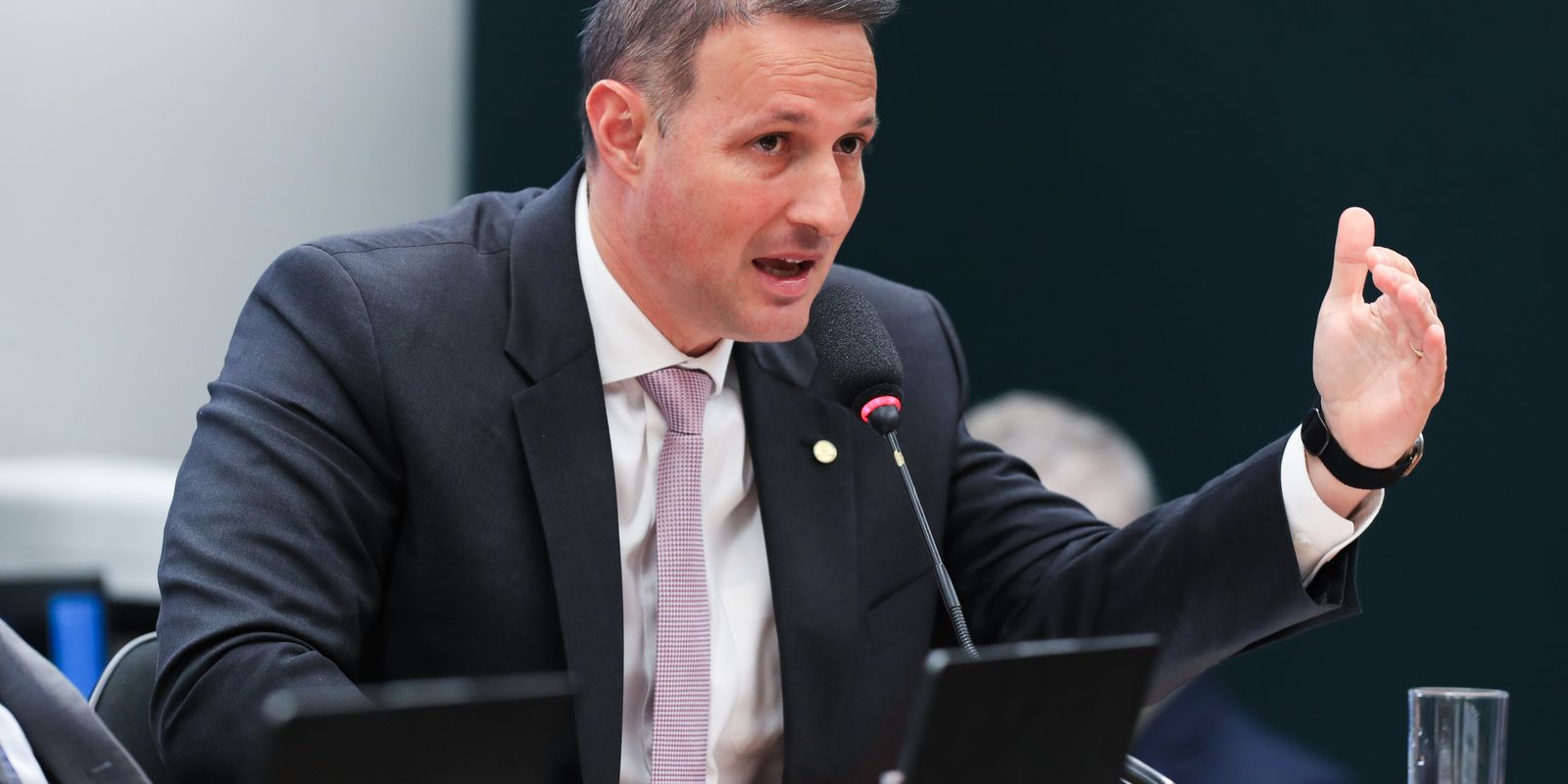
The president of the Chamber of Deputies, Hugo Motta, announced this Friday (7) deputy Guilherme Derrite (PP-SP) as rapporteur of the anti-faction bill, presented by the federal government after the operation that left 121 dead in Rio de Janeiro. The proposal must be transformed into a Legal Framework for Combating Organized Crime.
Derrite, who until Wednesday (5) held the position of Public Security Secretary of São Paulo, resumed his parliamentary mandate to report the text in the plenary. According to Motta, the choice of the opposition parliamentarian to report on a government project seeks to guarantee a technical and broad procedure, with dialogue between benches.
The project presented by the government is urgent and proposes tougher penalties for members of criminal factions, in addition to expanding investigative tools. The text creates the figure of a “qualified criminal organization”, with penalties of 8 to 15 years in prison for anyone who exercises territorial or economic control through violence or intimidation. In cases of murder committed in the name of the faction, the sentence can reach 30 years.
Aggravating factors are also expected, such as the involvement of minors, the use of restricted firearms, infiltration by public agents and links with transnational organizations. The project also authorizes access to geolocation data and financial transactions of those under investigation and provides for the creation of a National Bank for Criminal Factions.
Substitute
After being confirmed as rapporteur, Derrite announced that he will present a replacement to the original text, incorporating points sent by the government, but with changes considered “essential” to strengthen the fight against organized crime. Among the changes are:
- increasing the sentence to 20 to 40 years in cases of domination of cities, attacks on prisons or use of explosives;
- mandatory sentence in maximum security prisons for faction leaders;
- prohibition of amnesty, grace, pardon, parole and cut in prison assistance for family members of those convicted of these crimes;
- increase in regime progression from 40% to 70% of serving the sentence.
The expectation is that Derrite’s text will not include the equation between criminal factions and terrorism, a topic covered in another project. This proposal created controversy, as it opened gaps for foreign interventions in Brazil.
Disrespect
The announcement generated a reaction from parliamentarians from the government base. The PT leader in the Chamber, deputy Lindbergh Farias (RJ), classified Derrite’s choice as “disrespect” to President Luiz Inácio Lula da Silva. In a post on social media, Farias stated that the project is a government priority and that handing it over to an ally of São Paulo governor Tarcísio de Freitas “borders on provocation”.
Motta is close to Derrite and Tarcísio, both allies on public security issues. On social media, the president of the Chamber did not justify Derrite’s choice, he only announced the decision. On Thursday (6), he met with President Lula, the President of the Federal Supreme Court, Edson Fachin, and the President of the Senate, Davi Alcolumbre, to discuss the processing of proposals related to the topic.
Remote voting
The Chamber must analyze the project in a semi-presential regime, a modality that allows remote voting by deputies, authorized due to the holding of COP 30, in Belém.
The Legal Framework for Combating Organized Crime is expected to be voted on this year by deputies and senators.