The family denies that the child will take an defeated medication and denounce delays and lack of resources in the Mayan Polyclinic.
Santiago de Cuba, Cuba.- This Wednesday, September 3, the Provincial Directorate of Health of Santiago de Cuba reported that The death of Adniel Jesús Jarrosay Almeida, five years oldoccurred on day 2 in the polyclinic Carlos J. Finlay, of the Maya, was due to an “exogenous intoxication” caused by the intake at the home of a “expired and not certified” paracetamol.
The mother’s story
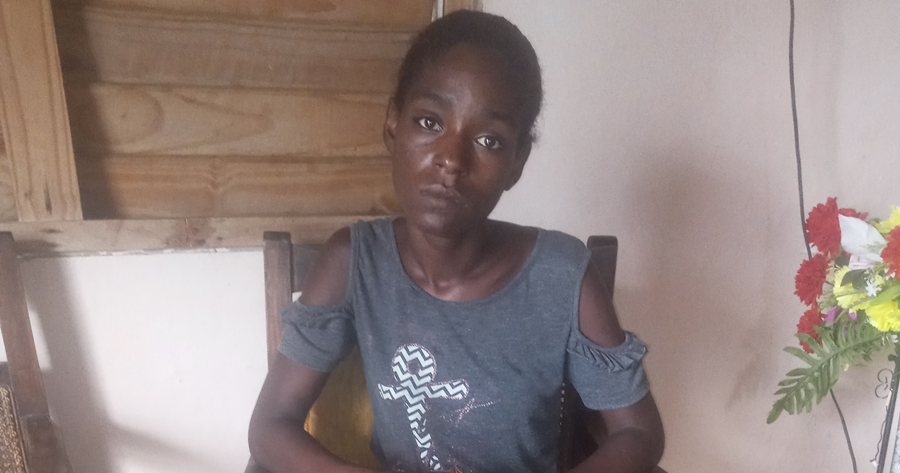
Our writing managed to contact his mother, Malena Jarrosay Almeida, who totally rejects that version. He explains that his son complained about a slight pain of stomach and head the day before, so he gave him half a paracetamol pill of Mexican origin, known as Portem. The medicine was in its original box, with visible lot and expiration date for February 2027, as shown in the image.

“I wasn’t defeated, I was new,” he says.
At the same time he gave equal dose to his 11 -year -old nephew, who also had discomfort. None showed adverse reactions, on the contrary, relief was evident. Adniel, meanwhile, played and ate normally during the afternoon and night.
The next morning dawned animated, he asked for breakfast as usual and went out to the street where he drank a soda. Shortly after he made a single vomit, that his mother seemed strange. Seconds later her temperature began to rise, which led her to run to the polyclinic. He arrived at the body of guard at 8:00 am and explained to the doctor of the guard what happened. Even so they sent her to wait for her turn. “They sent me to sit and put the thermometer to the child to know how much I had a fever,” he recalls.
“I told the nurse: Madam, she has 40.9, but she told me again to sit. We were waiting for about thirty minutes, without being attended.”
Attention in the Polyclinic
When they finally attended him, they applied about three cold compresses and injected Dipirona. They also indicated some analysis: leukogram, urine and an X -ray plate; But in a matter of minutes the child made the first seizure, a fact that contradicts the official version that he had convulsed at home.
“I told the doctor that she did not see him well and replied that that was normal, that after a vomit and the fever the children are left without encouragement. But my son convulsed and urinated in front of her. That was when she moved, because before I was looking at Facebook on her phone,” says Malena.
In less than an hour he suffered eight seizures. The family, which has a history of medicines allergies, suspects that it could be an adverse reaction to the Dipirone, because it was from the injection that the little one worsened. In this regard, the doctor Roberto Serrano, a neighbor of this town, considers that “the right thing would have been to administer adrenaline, antihistamine and, ultimately, a steroid as prophylaxis.” Without affirming that this was what happened, he warns that “the painting described well corresponds to an anaphylactic shock for the dipyone.”
No team to intubate it
The situation was further worse when an experience pediatrician arrived, who tried to reverse the painting and pointed out that the next thing would have been intubar, but the polyclinic did not have the necessary equipment. An ambulance came in support, but when they prepared to transfer the child, he entered respiratory arrest and died shortly before noon.
The eleven -year -old cousin, Yosnier Jarrosay Almeida, also presented similar symptoms. He came into unemployment during the transfer, but was resuscitated and admitted to the South Children’s Hospital, where he remains in intensive care with a diagnosis of bacterial pneumonia. Its evolution is until now favorable. Only the fact that both children shared symptoms reinforces doubts about the official hypothesis of the defeated medication.
In parallel, DNA’s maternal grandmother went on Thursday to the same polyclinic with fever, and according to the child’s stepfather, there were at least eight patients with a similar picture. The family suspects that viruses that circulate in the area are not as harmless as the Ministry of Public Health (Minsap) is believed. Casually this media recently published a report that warns about it and exposes the serious sequelae that these diseases have left in some people, although there is no state confirmation.
A vulnerable mother
Beyond the clinical details, the story also highlights Malena’s vulnerability. He is 26 years old, is the mother of three children and suffers from palate cancer in advanced stadium. He lives with a pension of just over 4,000 pesos and the support of his partner, in conditions of poverty. He has interrupted his treatment several times so as not to leave his children alone, something that has complicated his prognosis much more.
Now, amid the pain for DNIE’s death, it has also been publicly pointed out as responsible, which has prevented him from crying calmly or comforting the other two children, 7 and 10 years.
Its situation shows to what extent the Cuban health system can take advantage of the fragility of a family without resources and with few possibilities of making their voice heard.
The official version, disseminated quickly on social networks, contrasts with this testimony and leaves open questions about the delay in attention, the lack of vital resources and the way in which institutions manage information. In a country where medications are scarce and families must go to the informal market to get them, blame a poor and sick mother, it can be the simplest exit, but not necessarily the most true, nor the most dignified.