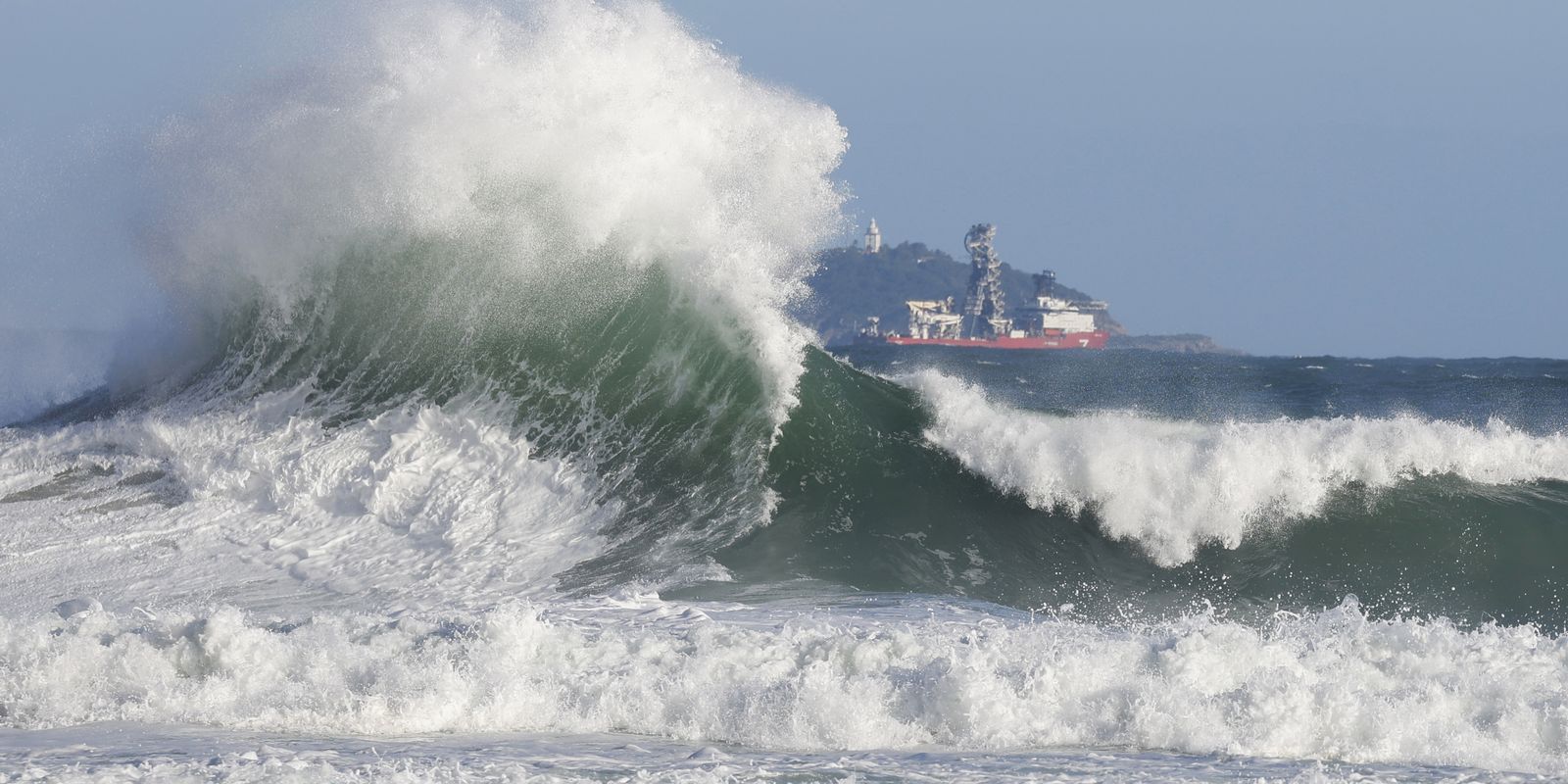
Most of the coast of the state of Rio de Janeiro could suffer from the consequences of climate change. The conclusion is from a study by the Universidade Federal Fluminense (UFF) that estimates 60% of the coastline has medium and high vulnerabilities, which indicates risks of flooding and erosion caused by waves.
THE search was developed by the doctoral student of the Postgraduate Program in Ocean and Earth Dynamics Igor Rodrigues Henud, with guidance from professor Abílio Soares. According to Henud, Natural solutions, such as restoring ecosystems and expanding protected areas, can be effective in addressing climate impacts.
“The aim was to show that there are vulnerable regions and populations. However, vegetation and natural habitats, including dunes, restingas, mangroves, Atlantic Forest, still exert a positive influence on this protection and, therefore, they need to be preserved”, said Igor Henud to Brazil Agency.
Recognizing this positive influence, the study defends the implementation of nature-based solutions (NbS) as the most effective strategy to face the challenges posed by climate change.
This involves the restoration of ecosystems, adaptive management of the territory and the protection of natural habitats. In addition to reducing risks, NbS offers additional benefits such as improving water quality, mitigating air pollutants and increasing resilience to disasters.
Henud believes that these solutions “are ecologically sensitive, economically viable and sustainable in the long term”, unlike conventional infrastructures.
The researchers also advocate the protection of so-called coastal habitats, which are considered strategic ecosystems and are outside the scope of official preservation, but can help increase climate resilience.
Greater risk
The research considers impacts already observed on the coast of Rio de Janeiro, such as more frequent hangovers, intense storms and rising sea levels.
According to the study, The two regions that are most likely to suffer impacts from climate change are Norte Fluminense and Baixadas Litorâneas, also known as the Lagos Region.
In these regions, natural characteristics such as winds, waves and relief add to the fragmentation of coastal habitats, such as the removal of restingas and mangroves, which significantly increases the high risk of these areas.
Henud and professor Abílio Simões reached this conclusion using methodology developed by a university in the United States, which brings together environmental and socioeconomic variables.
Various information was collected, such as Navy data on winds and waves, global ocean depth data, continental shelf and vegetation data, and then inserted into the InVEST software, which simulates what happens naturally, Henud said.
The results indicate that the continuous suppression of natural habitats intensifies environmental risks and increases the exposure of the state of Rio de Janeiro to disasters of greater magnitude in the future.
“For example, if we talk about restinga, mangroves and the Atlantic Forest, if we have this vegetation close to the beach, if a wave hits these regions, it loses strength. So, yes, they generate protection”, explained the doctoral student.
Factors
With around 1,160 kilometers long, the coastal zone of Rio de Janeiro is home to 33 municipalities and accounts for approximately 83% of the state’s populationconfiguring itself as a territory that is both sensitive and fundamental for socioeconomic development.
This area faces increasing pressure from disorderly urbanization, mass tourism and intensive economic exploitation, factors that accelerate environmental degradation and compromise the ability to respond to extreme events.
Therefore, it is necessary to think about the protection factor because, the more vegetation there is, the greater the protection that will be provided on the coastline, he reinforced. He clarifies that it will not be possible to change the strength of the waves or the relief, but it is possible to change the location where those populations that are vulnerable will be located. Adopting nature-based solutions is the way to minimize the impact of climate change, he concludes.
Gray and green solutions
Henud also explains that mitigating the consequences of climate change relies on different tools, and some solutions were called gray solutions and others, green solutions.
Gray solutions involve placing large stones in the coastal region or building walls with concrete, for example. You can also place bags of cement or sand to reduce the intensity of the waves, or build artificial reefs.
“The gray comes from the concrete, from the more urban part.”
The green ones, in turn, prioritize reforestation, that is, using nature for the benefit of human beings and nature itself.