Havana/Amarilys and Gustavo have been without electricity in their home in the municipality of Florida, Camagüey, for more than two weeks. The intense rains at the end of September caused serious damage to the infrastructure of the poles that bring energy to the farmers associated with the Mártires de Barbados Basic Unit of Cooperative Production (Ubpc), since then “the blackout is total and we are desperate,” the woman tells 14ymedio.
“We have complained everywhere but no one gives us a date for us to have power again,” explains the woman from Camagüey with anguish. “All this is costing us money and health, even the animals are suffering because we don’t have electricity to pump the water.” In his case, the situation becomes more dramatic because in the family “there are two elderly people, one of them already bedridden who is suffering a lot without the fan to sleep and without being able to keep food in the refrigerator.”
The heavy downpours of September 23 and 24, associated with a severe local storm, put the finishing touches on an electrical supply system that was already experiencing multiple failures. “Those days we experienced severe flooding in Florida, people had to keep their belongings safe as they could.” The weather has continued to be unstable and this Thursday the rainfall once again caused “it was raining,” says Amarilys, and not only because of the water that fell from the sky.
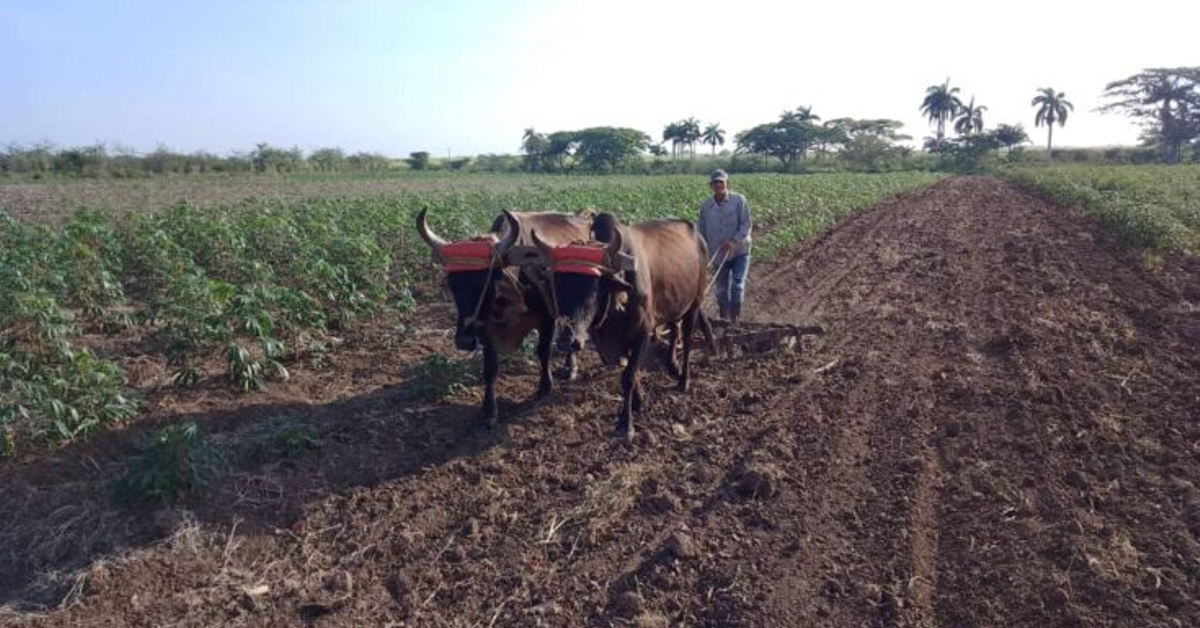
“They say that the rains that have continued make it difficult to repair the fallen poles that left us without electricity and that there are other priorities of more strategic companies than our Ubpc.” With about 25 associated families, including usufructuaries and owners, the entity specializes in the production of milk and the cultivation of sugar cane. Right now, and until the end of next January, the so-called cold campaign is taking place in Florida in which root vegetables, vegetables, grains and fruit trees are mainly planted in the more than 3,200 hectares of land distributed among state companies, cooperatives and other entities.
“This is the largest Ubpc in the municipality in milk delivery and the most important in the cultivation of sugar cane”
“This is the largest Ubpc in the municipality in milk delivery and the most important in the cultivation of sugar cane,” explains to this newspaper the relative of a producer in the municipality who prefers anonymity. “Several demands have been made to restore the electricity supply and the response they give is that there are more important companies.” The source clarifies that “the farmers are going through a difficult situation because they practically cannot give water to the animals or recharge their lamps.”
“There are more than 100 people affected,” estimates the family member who maintains close communication with his relatives in the area. “The farmers have asked that while this situation exists they be given the possibility of delivering cheese, [ya confeccionado y más fácil de conservar aún con la falta de energía] instead of milk, but they don’t accept that possibility,” he explains in reference to the demands of the state-owned Acopio.
“The milk cart goes to pick it up at five in the morning, so the farmers have to get up at three in the morning to milk,” he denounces. “They have no charge in their lamps and doing that task like this is a headache, because due to the rains the mud is horrible.”
Until a few years ago, the Ubpc delivered the cane to the Argentine mill, but after the paralysis of that industry it began to supply the raw material to the Carlos Manuel de Céspedes mill. “Last year there were problems with the milling due to lack of water,” warns Amarilys, who has several relatives who work in the nearby sugar factory. “Now, with these rains, the fields are flooded and it is very difficult to carry out the planting at this stage, in addition to the fact that people are very upset about the lack of power.”
The hopes of the families affected by the long blackout are now focused on “the sun coming out, everything drying out and the electric company being able to work and bring us light.”
The hopes of the families affected by the long blackout are now focused on “the sun coming out, everything drying out and the electric company being able to work and bring us light.” The out-of-pocket costs are high. “You have to cook only what you are going to eat for the day because you can’t save anything. When it comes to buying a package of chicken I have to buy the small ones that end up being more expensive because the big ones would spoil.”
Together with her husband, Gustavo, the woman tries to do “as much as possible while there is sunlight.” When night falls “you can’t even see your hands here because the lamp batteries are already at zero.” This Saturday marks exactly 17 days since the light bulbs hanging from the ceiling shone for the last time in Amarilys’ house. “I wouldn’t wish this on my worst enemy,” he says.
The weather report, however, distances the dreams of the woman and the rest of those affected. “The network of rain gauges of the National Institute of Hydraulic Resources in the province of Camagüey recorded significant accumulated rainfall during the last three days, which has been influenced by the permanence of a trough over the territory and the transit of tropical waves to the south,” he warns. a note published this Saturday. The forecast is that the situation will remain very unstable in the coming days.