About four years ago, designer Ligia Emanuel da Silva opened a small business in Potiguara territory, in the city of Rio Tinto, on the north coast of Paraíba. It was during the Covid-19 pandemic that she had the idea of producing and selling accessories and adornments based on African culture, aesthetics and ancestry.
From a suitcase of mother’s beads, the first pieces of Entorno Acessórios were born.
“I already did it for myself and started doing it to adorn other bodies”, he revealed to Brazil Agency.
“The adornments are based on traditional knowledge, especially manual work, beads and wire”, he describes.
>> Follow the channel Brazil Agency on WhatsApp
Common profile on the social network To promote her business, the woman from Paraíba works alone and, in addition to economic motivation, sees entrepreneurial activity as a cultural factor that results in a political act.

Ligia Emanuel da Silva opened a small business in Rio Tinto, on the north coast of Paraíba – Photo: Ligia Emanuele/Personal archive
“When we adorn ourselves with our symbols, our aesthetic-cultural elements, we articulate a discourse about who we are and where we come from”, he defines.
Pandemic milestone
Ligia illustrates a finding in a survey of businesses operating in Brazilian favelas: 56% of businesses began operating in February 2020, when the Covid-19 pandemic began to spread across Brazil.
The survey shows that 12% of businesses were opened between February 2020 and April 2022, a period that encompasses the most critical moments of the health crisis. And 44% were established as of May 2022, when the health state of emergency ended.
The research was carried out by the Data Favela institute, linked to Central Única das Favelas (Cufa), a non-profit organization. The survey was commissioned by VR, a financial services and food benefits company.
For Cleo Santana, one of those responsible for Data Favela, the fact that most of the businesses were started after the emergence of the pandemic has to do with the economic crisis currently being experienced.
“Many people lost their jobs and needed to reinvent themselves and look for new ways to meet their own and their family’s basic needs,” he told Brazil Agency.
“Why not turn that pie that was made at family parties into a product whose sale brings income into the home?”, he explains.
“It’s the ability to reinvent yourself”, he adds.
Business profile
Data Favela interviewed 1,000 entrepreneurs from favelas across Brazil, in October and November 2025, to create a profile of business owners in the country’s communities.
The survey identified that 23% had revenues of up to one minimum wage at the time (R$ 1,518), while 28% earned between one and two minimum wages, at most. In other words, practically half (51%) earned up to R$3,040. At the other end, only 5% had revenue exceeding R$15,200.
The world of accounting shows that revenue is not synonymous with profit. The research reveals that 57% of establishments spend up to R$3,040 per month to maintain the business.
According to Data Favela, “it leads to the assumption that the expenses are equivalent to what these people earn monthly”.
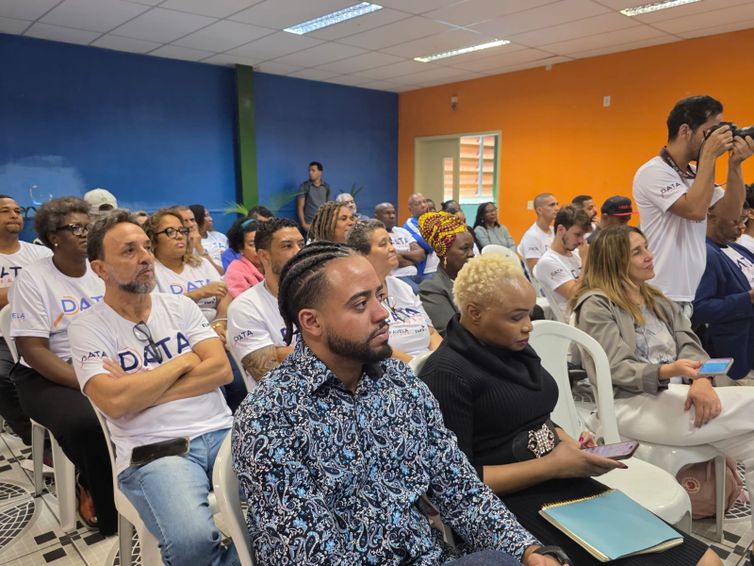
Data Favela interviewed 1,000 entrepreneurs from favelas across Brazil – Photo: Lucas Costa/Disclosure
Start-up investment
The researchers identified that 37% of favela entrepreneurs needed initial capital of up to R$1,520 to open their business. For 23%, the value reached a maximum of R$3,040. Only 9% of respondents cited financial resources greater than R$15,200.
When it came to knowing where the initial capital came from, more than half (57%) cited personal or family savings. Other common sources highlighted are workers’ compensation (14%), extra money (14%) and bank loans (13%).
Administration
Practically six in ten (59%) favela entrepreneurs manage their business with just notes in a notebook, 13% simply do not record anything, 24% use spreadsheets and 4% some other means.
When promoting the product or service, 58% do so via WhatsApp; 75%, through Instagram, like Lígia; and 41%, through Facebook, and 3% are on iFood. Researchers identified that 34% depend exclusively on word of mouth advertising.
The main business areas of establishments in favelas are food and beverages (45%), fashion (12%) and beauty (13%) and crafts (8%).
Motivation
Data Favela asked entrepreneurs what led them to open their own business. At the top of the responses are desire for independence (45%), followed by economic need (29%), lack of employment (26%), opportunity (18%) and family tradition (7%).
For VR’s Marketing Director, Karina Meyer, the research shows that “for many, entrepreneurship was not a planned choice, but a necessity imposed by the lack of opportunities in the formal job market or the urgency of generating income”.
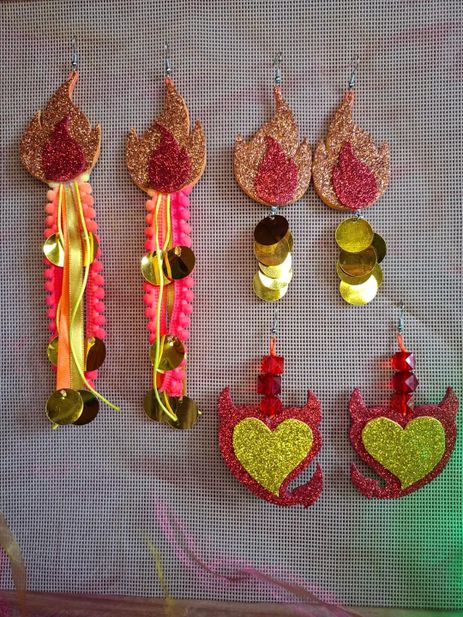
When promoting the product or service, 58% do so via WhatsApp and 75% via Instagram – Photo: entorno_acessorios/Instagram
The researchers sought information about the main challenges faced by favela entrepreneurs. The majority cited lack of capital (51%) and difficulty accessing credit (25%).
Karina Meyer, from VR, points out that “tools such as credit, business management solutions and digitalization of processes are essential to building a stronger and more sustainable economy in favelas”.
More highlights from the research:
- 5% of business owners in favelas live on the “asphalt”, that is, outside the community
- 21% receive the Bolsa Família assistance program
- 5% are retired
- 19% combine business with a job, 9% with a formal contract
- 40% are formalized, 36% being individual microentrepreneurs (MEI)
- the most common means of receiving payment is pix (91%), followed closely by cash (85%)
- The proportion of those who accept cards does not reach 30%, with credit cards (28%) ahead of debit cards (25%)
- 22% agree to sell on credit
Favela economy
According to Data Favela, the Brazilian communities generate R$300 billion per year.
Cleo Santana, from Data Favela, highlights the role of business in communities to develop these territories.
“As a business is born, local employment opportunities arise, even if informal, helping to boost the local economy”, he explains.
“Small entrepreneurs tend to buy locally, strengthening other small entrepreneurs”, he emphasizes.

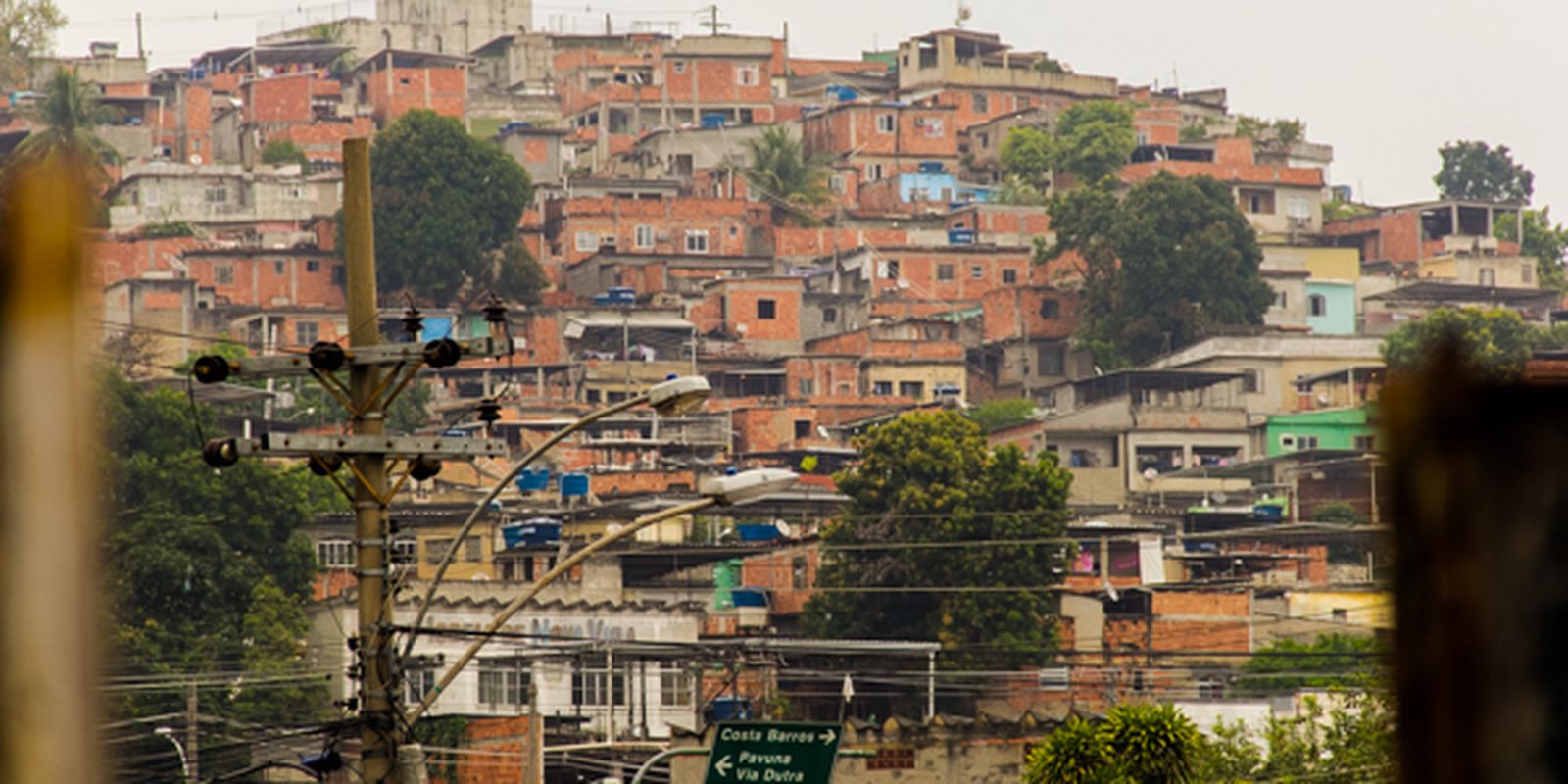
Entrepreneurs from favelas and peripheries generate R$300 billion per year – Photo: Tânia Rego/Agência Brasil
Census
The 2022 Census, carried out by the Brazilian Institute of Geography and Statistics (IBGE), showed that 8% of Brazilians live in favelas. There were 16.4 million people out of a universe of 203 million inhabitantsfour years ago.
The IBGE identified 12,348 favelas in 656 municipalities throughout Brazil.
Blacks (16.1%) and browns (56.8%) represent 72.9% of community residents. Women make up 51.7% of the inhabitants of these areas.