The Cuban Government recognized this Monday that more than half a million people in the country are still without electricity service due to the Hurricane Melissawhich hit the eastern end of the island 19 days ago.
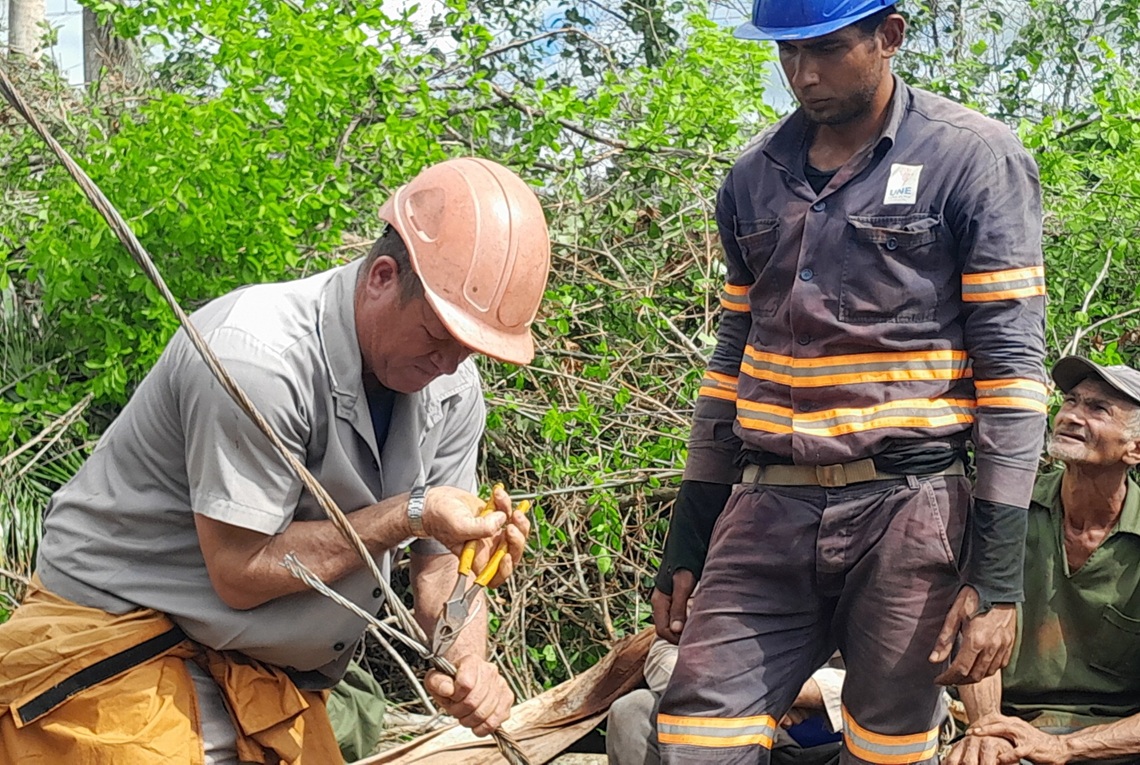
The Ministry of Energy and Mines (Minem) updated on social networks the percentages of customers who have already recovered electricity in the five provinces affected by this powerful hurricane that made landfall as category 3 (out of 5) on the Saffir-Simpson scale.
Thus, the recovery would have reached 100% of the clients in the province of Las Tunas, but only 58% of those in Santiago de Cuba, the most affected region. In the middle would be the provinces of Holguín (91%), Granma (95%) and Guantánamo (99%).
Electrical recovery update in the east of #Cuba
Holguin 91%
Grandma 95%
Guantanamo 99%
Santiago de Cuba 58% pic.twitter.com/u6uJZPLw90— Ministry of Energy and Mines of Cuba (@EnergiaMinasCub) November 17, 2025
Comparing these rates with the population statistics of the National Information and Statistics Office (ONEI), it appears that – approximately – there are still some 526 thousand people affected by the breaks in distribution lines caused by the hurricane.
Of them, about 399 thousand reside in Santiago de Cuba, approximately 85,500 in Holguín, around 37,500 in Granma and about 4,500 in Guantánamo.
Melissa, with winds of up to 200 kilometers per hour and accumulated rain of up to 400 millimeters (or liters per square meter), caused “considerable material damage,” according to President Miguel Díaz-Canel.
So far the Government has not released a final count of the damage.
The main damages are concentrated in homes (about 149 thousand), crops (about 158 thousand hectares) and public infrastructure, from medical centers (600) to schools (2 thousand), including the National Energy System (SEN).
The repair of the lines, however, does not mean that power will automatically return to customers, since Cuba suffers a serious energy crisis and the SEN is unable to regularly produce the electricity that homes and the economy demand.
The maximum deficit expected daily for the moment of greatest demand on the island was around 50% in recent weeks, due to the ravages of Melissa and the national energy crisis.