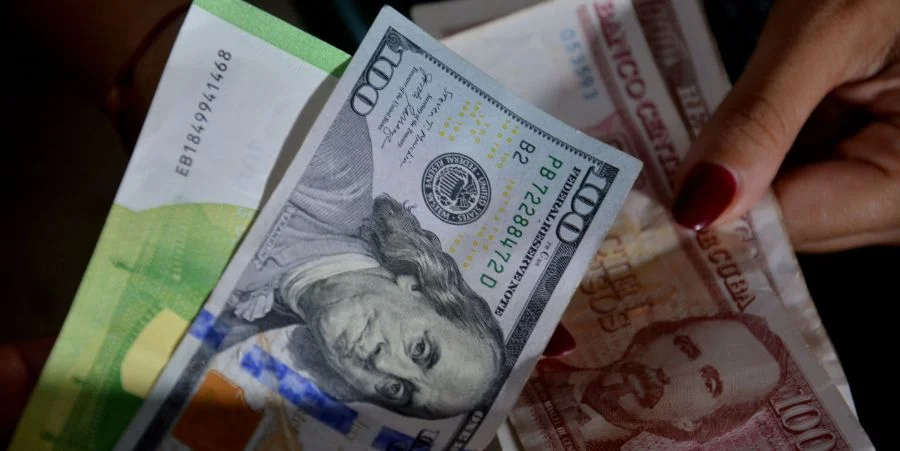
Havana, Cuba. – A great hurry is really appreciated by Castrism’s hierarchs in their eagerness to capture a part of the currencies that enter the country through family remittances and other informal routes. TO The initial market opening of 3rd. and 70 In the Habanero neighborhood of Miramar, it quickly followed the establishment of a network of stores that will market in dollars retail and wholesale.
There are few voices that have raised with the argument that, rather than capturing currencies, the ideal thing for Cuban society would be that the economy could generate the currencies that the country needs, with the aim of importing the goods that it requires The population, as well as inputs and raw materials to enhance national production. Thus, in addition, the apartheid that is created with the growing functioning of venated establishments for the citizen who does not receive the hard currency would not be deepening.
But, of course, in order to import, we must have exportable items that promote income that, in turn, guarantee purchases in international markets. And that is where the Castro economy fails.
In the last session of the National Assembly of Popular Power, it was clarified that without productions there are no exports, and the productions or services that could lead to such income, in general, did not reach the planned dimensions. For example, during 2024, nickel, rum, sugar and lobster capture productions were breached. Tourism, on the other hand, qualified lately as “the locomotive of the Cuban economy”, only entered 76% of the expected. In summary, the country’s foreign exchange was affected by more than 900 million dollars.
Not long ago the regime announced that tariffs were raised for the importation of finished products, while those related to the importation of raw materials and supplies by the MSMEs were decreased. All for the purpose that these forms of non -state management, in addition to being dedicated more to producing than to market, become suppliers of these inputs to the deteriorated national industry.
It should be noted that this tariff maneuver is not a new event in the future of the Cuban economy. The Government of Gerardo Machado, through the famous 1927 tariff, taxed imports of finished products, and decreased the tariff for the entry of raw materials, and thus promote the development of the national industry.
As the historian Julio Le Riverend tells us in volume IX of History of the Cuban Nationfrom that tariff reform the national productions of eggs, birds, meats, footwear, butter, cheeses, rice, corn and condensed milk increased.
They were also other times. Keep in mind that the decade of the 20th of the twentieth century, when the benefits of the commercial reciprocity treaty signed in 1902 with the United States were breathed in the Republic, he witnessed the arrival on the island of hundreds of foreign workers who were attracted to the advantages that reported to work in Cuba.
Now, on the contrary, with an ancient state company, in the midst of an emigration and an exodus that deprives the work centers of qualified labor, and with a non -state sector that suffers the pressures of government machinery, it is very little Probable that a tariff reform, by itself, becomes the engine that generates the currencies that the national economy needs.