Prisoners Defenders denounces that 94% of the prisoners interviewed worked ill, while the vegetable coal and tobacco elaborated in prison nourish Cuba exports to Europe.
Madrid, Spain.- Prisoners Defenders (PD) presented on Monday a report that documents the systematic imposition of forced labor in the Cuban prison system for economic and punitive purposes. According to the organization, at least 60,000 people among the 90,300 inmates and 37,458 sanctioned in regime without internment are forced to work in “inhuman and exploitative” conditions, in disconnection with international legislation and without labor guarantees. From official sources and own collection, PD estimates an average of 61,920 penalties subject to forced labor.
The study relies on 53 individual statements of people deprived of liberty who did “correctional work” during their conviction. The questionnaires – 61 questions – were applied between April and August 2025. The organization states that coercion is structural: 100% of the declarants reported personal threats or their family, criminal reprisals or physical violence to force them to continue working. Likewise, 94.34% said they were forced to work with incompatible diseases or injuries; 98.11% referred absence of appropriate medicines, treatments or medical monitoring. The average workload reached 63.06 hours per week, in days of 6 to 7 days and about 10 hours a day.
Coal and tobacco: production from prisons
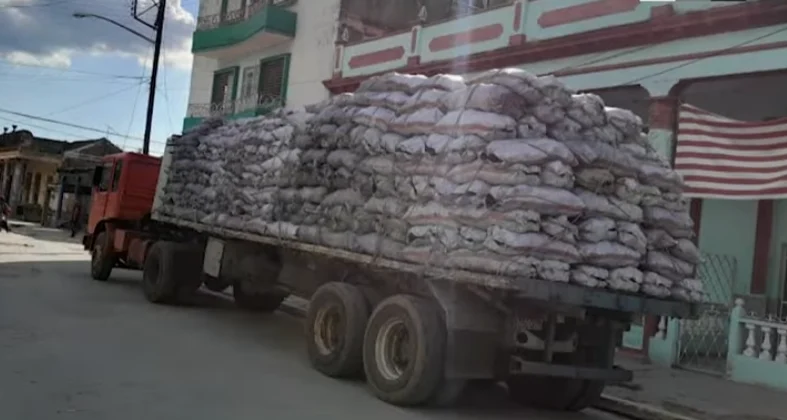
The “type” collected testimonies describe the elaboration of vegetable, agriculture, tobacco and cane cut under extreme conditions. One of them points out: “Marabú had to be cut, make the fire to generate coal, and pack 50 coal bags per day.” Another states: “To produce coal, we sleep in the field, without beds, without a roof … we can only drink the dirty water of a boil.” PD also records physical and psychological sequelae – from injuries and column problems to anxiety and insomnia disorders – in 43 of the 53 cases analyzed.
The report argues that these works nourish export chains, particularly Marabú’s vegetable coal (HS 4402). With OEC and Wits data, PD points out that Cuba exported $ 61.8 million in 2023, located ninth world exporter; The main destinations were Spain, Portugal, Greece, Italy and Türkiye. The organization also warns that part of the coal that Spain re -exports to other European markets could include items of Cuban origin acquired at low cost.
PD also documents forced labor in tobacco production within prisons. In the Quivicán prison, he describes a tobacuba cigar factory with 40 prisoners and 2 civilians. The civilians, with a day from Monday to Friday and approximate salary of 40,000 CUP (≈97 USD per month), contrast with the prisoners, which would be taken to work between 06:30 and 21: 00–22: 00 almost every day and would receive 3,000 CUP (≈7.32 USD per month), also subject to objectives of 50 to 130 cigars daily and arbitrary discounts. PD estimates that, with a conservative production of 75 cigars a day, the average retribution per pure for the prisoner would be USD 0.00325, compared to an average import price to the EU of 3.05 USD and an estimated PVP of 21 USD.
In the legal level, the document alleges violations of agreements 29 and 105 of the ILO, to the PIDCP, to the rules and European regulations such as the US forced Labour Regulation and the CSDDD, calling authorities and companies in the EU to investigate, exercise due diligence and prohibit the commercialization of goods associated with forced labor. PD concludes that the described practices configure “contemporary forms of slavery” and demand immediate measures to protect people deprived of liberty in Cuba.