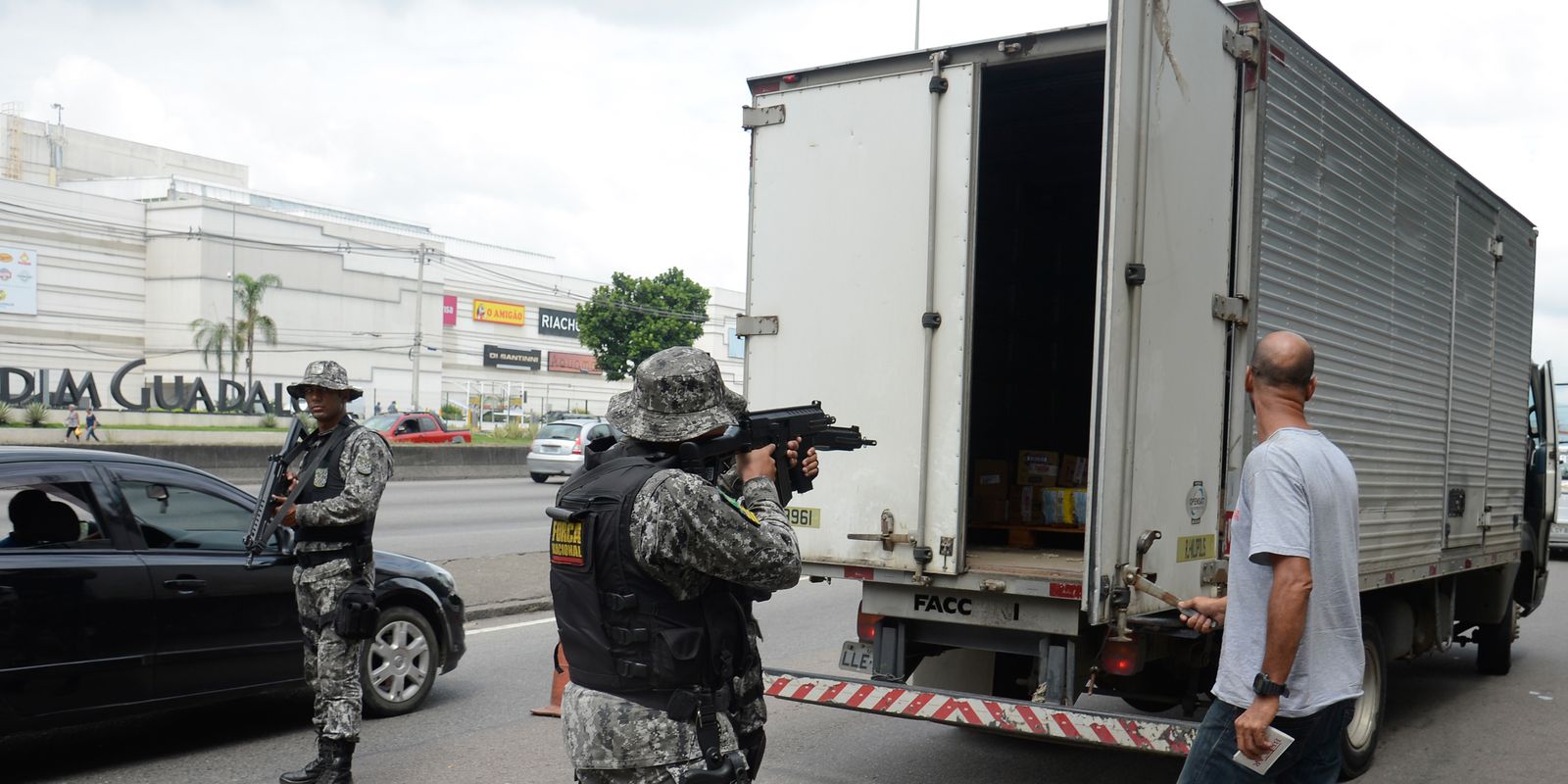
Problems with the road network and the high rate of road theft are the biggest challenges faced by cargo transportation in the country. In 2024, data from the National Public Security Information System (Sinesp) indicate that the country recorded, on average, 27 cargo thefts per day.
Cargo theft in Brazil has been a great source of revenue for specialized gangs. According to the cargo theft analysis report, the attacks grew 24.8% in the first half of 2025. Data from the National Association for Cargo Transport and Logistics indicate that in 2024, 10,478 cargo thefts were accounted for in the country, with estimated losses of R $ 1.2 billion.
Additional investments in safety and technology, delays in deliveries and need for longer routes to avoid risk areas compromise the entire logistics chain. These measures increase the costs passed on to the end consumer and reduce the competitiveness of Brazilian products in the market.
Since 2023, with the promulgation of Law 14.599/23, the hiring of the Civil Liability insurance of the Cargo Highway Carrier (RCTR-C), the Civil Liability of the Road Carrier by Cargo Disappearance (RC-DC) and the vehicle liability (RC-V) is mandatory, which has impacted the demand for insurance products.
In the first five months of this year, according to data from the National Confederation of Insurers (CNSEG), RC-DC revenues grew by 8.1%, reaching R $ 570 million, while compensation rose 12.4%, totaling R $ 239 million. Already the Rctr-C advanced 1.5%, totaling R $ 721 million in prizes, with payments of almost R $ 520 million, up 5.2%.
Ordinance
The scenario should gain new impetus with Ordinance Suroc No. 27/2025, published by the National Land Transportation Agency (ANTT) last August 11. The standard provides for the suspension of the National Cargo Road Transporters Registry (RNTRC) for companies that do not prove the hiring of the insurance insurance.
For the director of CNseg Institutional Relations, Esteves Colnago, the Ordinance will bring greater efficiency and control to exercise cargo transportation on Brazilian roads.
“This new normative of ANTT is of paramount importance. It brings an evolution in the inspection method, coming from an approach based on physical documents to a digital and integrated model, which promises greater efficiency and control over the obligation to cover insurance in cargo transportation, increasing safety for all involved in the logistics chain,” he said.
The proof may be done in two ways: by presenting the frontispiece (face sheet) of the policy or insurance certificate to ANTT inspection; or by automatic verification, through real -time data exchange between the agency and the insurers (or entity that represents them).
The digital system shall be fully implemented by March 10, 2026, a deadline defined by Article 3 of the Ordinance. Until then, ANTT will provide insurers with a technical manual for integration via Webservice, ensuring automatic submission of information regarding insurance.