During the Social Week, organized by the Peruvian Episcopal Conference (CEP), the Episcopal Commission of Social Action (CEAS) and the Bartolomé de las Casas Institute, the Peruvian Catholic Church launched a direct message to the authorities. He asked them to act with sensitivity and commitment to the country’s challenges, avoiding indifference to social demands.
You can see: Editorial | The citizen recovery of Peru
The meeting brought together more than 20 bishops from all regions of Peru, together with popular leaders, leaders of Amazonian communities and business representatives. All participated in dialogue tables oriented by Christian ethics and commitment to the common good.
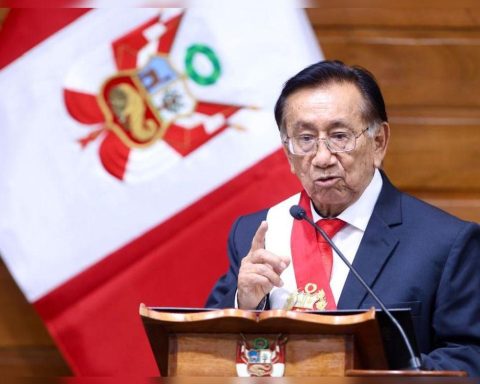
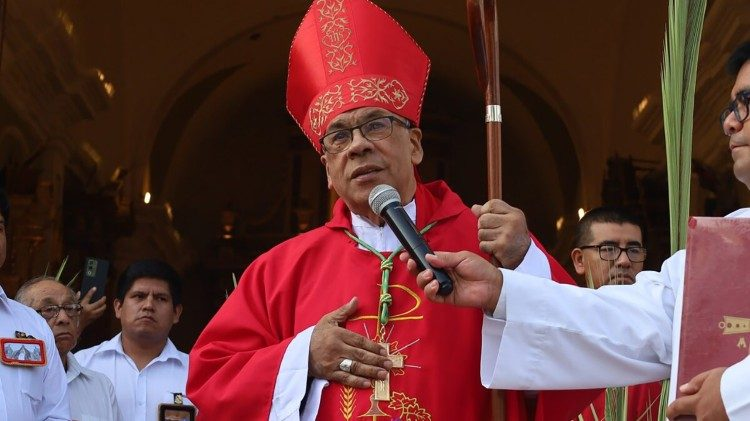
Monsignor Carlos García Camader, president of the CEP, highlighted the importance of generating concrete proposals to strengthen democracy and coexistence. “I think that fundamentally thoughts and contributions must arise for Peruvian society, to live in democracy and walk together in Esperanza,” he said.
Asked about citizen criticisms towards the authorities, García Camader stressed: “To the Peruvian authorities I would be told that we should not walk in indifference. On the contrary, let’s be sensitive: we are at the service of the people.”
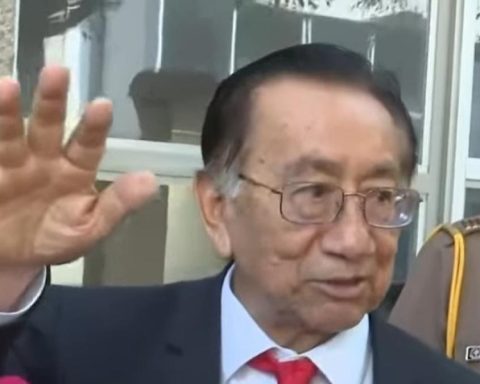
For his part, the Vice President of the CEP declared to the Republic that the commitment of citizens should record “not to yield to corruption.” He added that “the concrete action is to strengthen the values of truth, solidarity, closeness, respect. They are values that we must safeguard.” Regarding the role of young people, he said that “education must prepare young people for life in real and concrete events.” On the current political situation, he added: “We would like that, from the limits that are being imposed – because that is what they are doing -, those responsible for this kind of electoral conditioning are sanctioned.”
Likewise, the Apostolic Nuncio Monsignor Paolo Rocco emphasized the role of the Church in the formation of the laity in politics: “We have to strengthen formation, it is the clamor to the bishops. We start criticizing politicians, but they are people who are not prepared. It is the task of the Church to train the laity who are in politics, and we must form them with the pedagogy of the exodus of the exodus of their people.
He added that, following the message of Leo XIV, “we must put in the center to Christ, our hope, giving testimony of him, as did the Peruvian saints who with their lives speak of the vigorous presence of their people.” According to Rocco, “walking life is the task of the Church. Jesus asked the priests to be preachers of hope. A hope that tells us that it is not death, the last word, but life.” Finally, he insisted on the social mission of the Church: “Add the poor News to the poor. For Christ, everyone will return to life, each in their field.”
With this call, the Catholic Church in Peru sought to reaffirm its commitment to plural dialogue and the construction of collective solutions against the worsen national situation. He recalled that the responsibility of transforming reality also falls to those who exercise public positions.