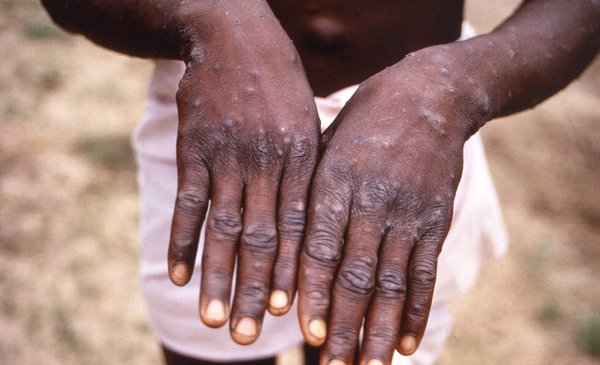
The World Health Organization (WHO) today activated its highest level of alert to try to contain the outbreak of monkeypox, which already affects almost 17,000 people in 74 countries. “I have decided to declare a public health emergency of international scope”, the so-called USPPI, reported the director general of the WHO, Tedros Adhanom Ghebreyesus, at a press conference, in which he stated that the risk in the world is “relatively moderate ”; except in Europe, where he described it as “high”.
Tedros explained that at the moment the outbreak “is concentrated in men who have sex with men and in particular in those who have multiple partners, which means that it can be stopped with the right strategies in the right groups.”
“It is essential that all countries work closely with communities of men who have sex with men” to provide assistance and information, the WHO chief insisted. At the same time he warned of the risk of discrimination stating that “stigma and discrimination can be as dangerous as any virus”.
Since early May, when it was first detected outside African countries where it is endemic, the disease has affected more than 16,836 people in 74 countries, according to the US Centers for Disease Control and Prevention (CDC). Although health authorities in the United Kingdom, one of the epicenters of the outbreak, reported a slowdown in the rate of infections, the number of cases is rising rapidly around the world.
Tedros explained that the expert committee was divided, with nine members against activating the USPPI and six in favor. In the end, it was he who decided. “It’s a call to action, but it’s not the first,” said Mike Ryan, head of emergencies at the WHO, who said he hoped it would lead to collective action against the disease.
The USPPI call is used in situations that are “serious, sudden, unusual, or unexpected.” This is the seventh time the WHO has used this alert level. In a first meeting on June 23, most of the emergency committee experts recommended Tedros not to declare the USPPI emergency.
Vaccines
Monkeypox, first discovered in humans in 1970, is less dangerous and contagious than human smallpox, which was eradicated in 1980. A study published Thursday in the New England Journal of Medicine confirms that in 95% of recent cases, the disease was transmitted through sexual contact and that 98% of those affected were homosexual or bisexual men.
Until now the virus was generally transmitted from animals to humans only in some West African countries. According to Rosamund Lewis, the WHO’s leading expert on monkeypox, the explanation is that a more open world allowed the virus to travel and settle in a group in which it can circulate more actively due to social habits (frequent encounters, sexual relations with several pairs, etc.)
On Friday, the European Medicines Agency (EMA) said it had approved the use of a smallpox vaccine for use against monkeypox. This is the Imvanex vaccine, from the Danish company Bavarian Nordic, approved in the European Union since 2013 for the prevention of smallpox. The WHO recommends vaccinating people at higher risk and health workers who may be exposed to the disease.
AFP