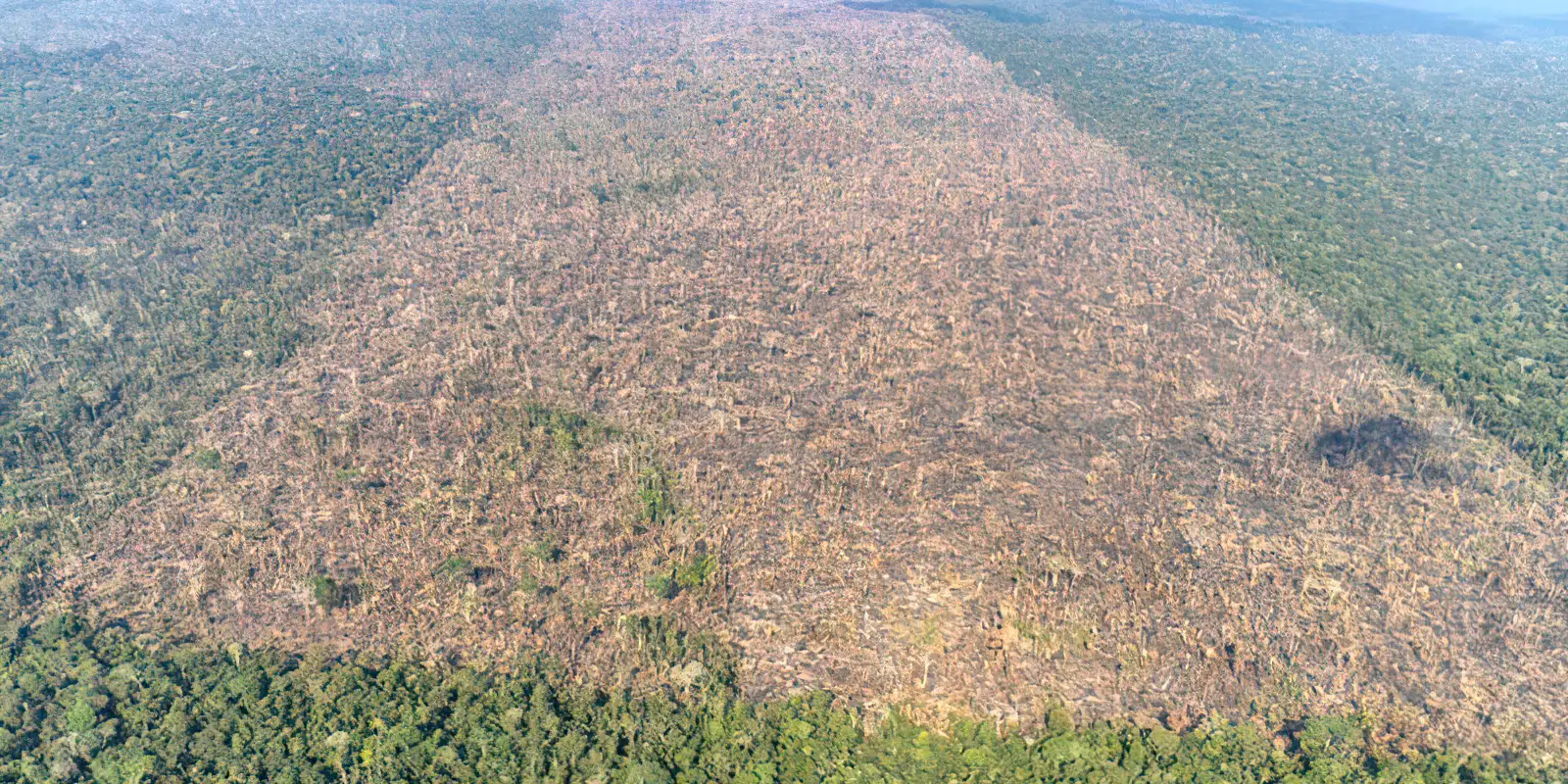
The Ministry of Environment and Climate Change (MMA) and the National Institute for Space Research (INPE) launched on Monday (15) Deter Nona Floresta (deter nf), a system that now monitors the entire Amazon biome.
Unlike the traditional determination model, focused only on the dense forest, the determined NF expands coverage for non -forest areas, such as natural fields, savannas and transition zones, which represent about 20% of the biome.
The tool will use satellite images and artificial intelligence to detect vegetation changes such as deforestation, burning, mining and other irregular activities.
The alerts generated are public, free, and are already available in the TerraBrasilis Platform.
>> Follow the channel of Brazil agency on WhatsApp
According to MMA, innovation represents an advance in the environmental governance of the Amazon and strengthens the supervision of bodies such as the Brazilian Institute of Environment and Renewable Natural Resources (IBAMA) and state environmental police.
“We are closing a critical gap in monitoring. Where before we had a daily emptiness, now we have transparency and agility. This democratizes access to information and immensely strengthens the action of the state,” explained MMA’s extraordinary secretary for control of deforestation and territorial environmental planning, André Lima.
According to Inpe, the system is the result of years of research and development, using advanced image processing techniques. The goal now is to expand technology to the Atlantic Forest, Caatinga and Pampa Biomes, still without daily monitoring.
“We apply advanced image processing techniques using machine learning methods [inteligência artificial] To create a robust and reliable system that meets an urgent need to protect all biome ecosystems, ”said Inpe Biomasbr program coordinator Claudio Almeida.
Det data show that in August this year, deforestation alerts fell 36.6% in the forest Amazon compared to the same month of the previous year. In non -forest areas of the Amazon there was an increase of 8%. In the Cerrado, the reduction was 27.3%, and in the Pantanal, 16.8%.