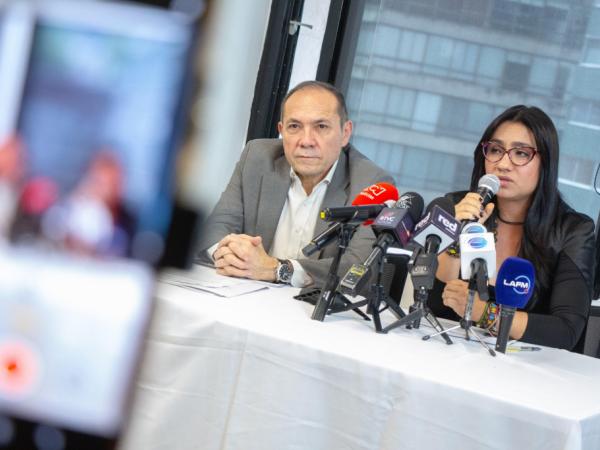
The tension between the National Government and the business associations escalated again, after the Minister of Labor, Antonio Sanguino, responded to the statements of the president of Fenalco, Jaime Alberto Cabal, who in A recent interview described the labor reform as “the worst thing that has happened to the country.”
Although the leader of the merchants in the country explained that his opinion is based on the fact that the reform “does not generate employment, it destroys it,” the minister’s reply was immediate and just a few hours after its publication, he indicated that “the worst thing that has happened to the world of work in the country is the actions of union leaders who behave like rabid and virulent political opponents to the Government of Change.”
Check here: JP Morgan warns that fiscal policy threatens the fight against inflation
In this way, a new chapter opens in the confrontation between the Executive and the spokesmen of the productive sector, which has had several moments and has revolved around issues such as labor reform or the minimum wage; that have kept these parties distant throughout the Petro era.
The worst thing that has happened to the world of work in the country is the actions of “union leaders” who behave like rabid and virulent political opponents of the Government of Change. https://t.co/q2Ry4CctZx
— Antonio Sanguino (@AntonioSanguino) October 9, 2025
Sanguino not only dismissed criticism of the labor project, but also accused some union representatives of using the debate as a platform for political opposition and with his statement, he placed the discussion in a field that transcends figures and delves into the ideological confrontation over the economic and labor model that Colombians need.
Jaime Alberto Cabal, president of Fenalco
EL TIEMPO Archive
It should be remembered that the response was given a few days after the interview granted by Cabal to Bocas magazine, in which the leader of the merchants warned that the labor reform approved by Congress “will increase hiring costs, reduce formality and put thousands of micro and small businesses at risk.”
This is why for the leader, the initiative promoted by the Government has a counterproductive effect, since instead of creating employment, it discourages formal hiring.
You may be interested in: Anniversaries: 50 years ago the first ATM was installed in Colombia
Meanwhile, Sanguino, who assumed the Ministry in the middle of the final stretch of the legislative process of the reform, defended the management of the portfolio and maintained that the project represents “a conquest for the workers,” noting that this government seeks to dignify employment, guarantee stability and formalization, and correct imbalances. structural problems that, he said, were inherited from “precarious and unequal labor models.”
On several occasions, this official has insisted that the reform is not an obstacle to productivity, but rather a tool for equity, since in his vision, the country requires “a new labor pact that does not sacrifice rights in the name of competitiveness.”

The Minister of Labor, Antonio Sanguino, in his speech at the OECD 2025 Local Development Forum.
Minjob
It should be remembered that this is not the first clash between these characters. Last week, the Minister of Labor, Antonio Sanguino, had already described Jaime Alberto Cabal as a “pamphleteer”, accusing him of launching statements without technical support against the Government. On that occasion, the official assured that the official figures refute the union leader’s criticisms and show an improvement in the country’s working conditions.
In his message, Sanguino maintained that workers who earn a minimum wage, as well as shopkeepers and small merchants, “are better off today than with the extreme right-wing governments that Cabal likes so much.”
Also read: Colombia would be on track for its fifth year outside the inflation target range
Finally, Fenalco has made it clear that the warnings from the private sector do not respond to a political position, but to a technical reading of economic conditions, taking into account that the majority of Colombian companies are micro or small, and New surcharges and contractual demands may make your operation unsustainable.
This confrontation is not minor if one takes into account that in a few months negotiations will begin to increase the minimum wage for 2026 and after it became known that President Petro had ordered that the increase be 11%, the merchants stated that they will not attend; making it clear that there are irreconcilable differences on the table.
DANIEL HERNÁNDEZ NARANJO
Portfolio Journalist