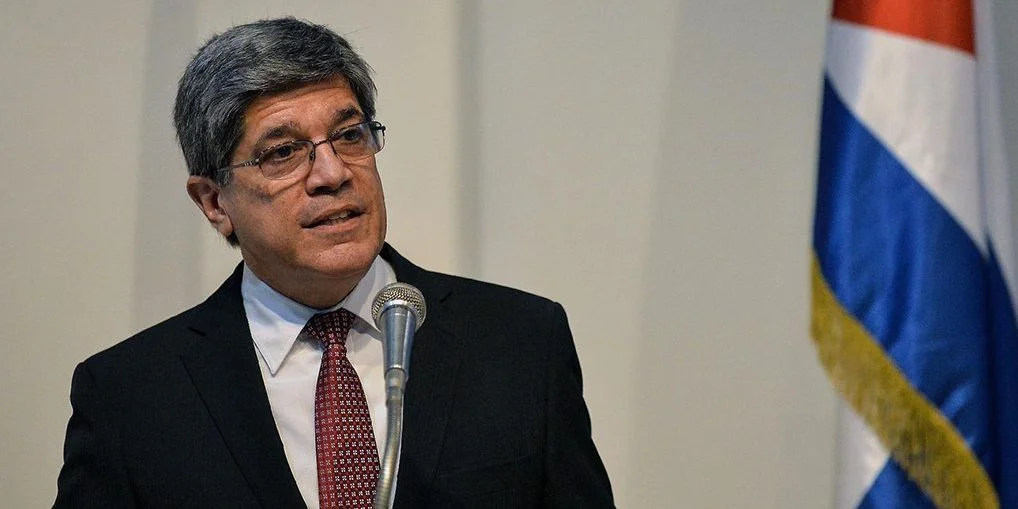
Fernández de Cossío stressed that issues such as the Cuban Constitution, its economic model and its socialist government system are not subject to negotiation.
MIAMI.- The Vice Minister of Foreign Affairs of Cuba, Carlos Fernández de Cossío reiterated this Monday to the AP agency that Cuba does not currently maintain a formal dialogue with the United States, although it insisted that the island is willing to talk under conditions that respect its sovereignty and political principles, amid an escalation of diplomatic and economic tensions between Havana and Washington.
The senior Cuban government official gave an interview to the Associated Press agency in which he made it clear that there is no established bilateral dialogue table. As he explained, although there are no formal negotiations underway, Cuba remains open to establishing an informal dialogue that could eventually lead to broader negotiations, as long as certain fundamental criteria are respected.
Fernández de Cossío stressed that issues such as the Cuban Constitution, its economic model and its socialist government system are not subject to negotiation. However, he stated that there are other issues on which it would be possible to exchange points of view with Washington.
The statements came a few days after the president of the United States, Donald Trump, will ensure that its administration had begun contacts with Cuban leaders. These comments came after the warning to impose tariffs on any country that supplies oil to the island, a measure that is part of the tightening of US policy towards Cuba.
To avoid tariffs, Mexico has canceled fuel shipments to Cuba, and instead has announced other types of humanitarian aid.
Since 2023, Mexico had assumed a key role as a supplier after the collapse of crude oil shipments from Venezuela, becoming a fundamental support amid prolonged blackouts, fuel shortages and a deep economic crisis. In the last year alone, Mexican shipments were around 20,000 barrels per day, according to data compiled by Bloomberg.
On the other hand, after the capture of Nicolás Maduro, the Cuban regime lost Venezuela as its main trading partner.
Against this backdrop, Havana has sought support from international allies such as Russia and Cuban Foreign Minister Bruno Rodríguez is currently in Vietnam.