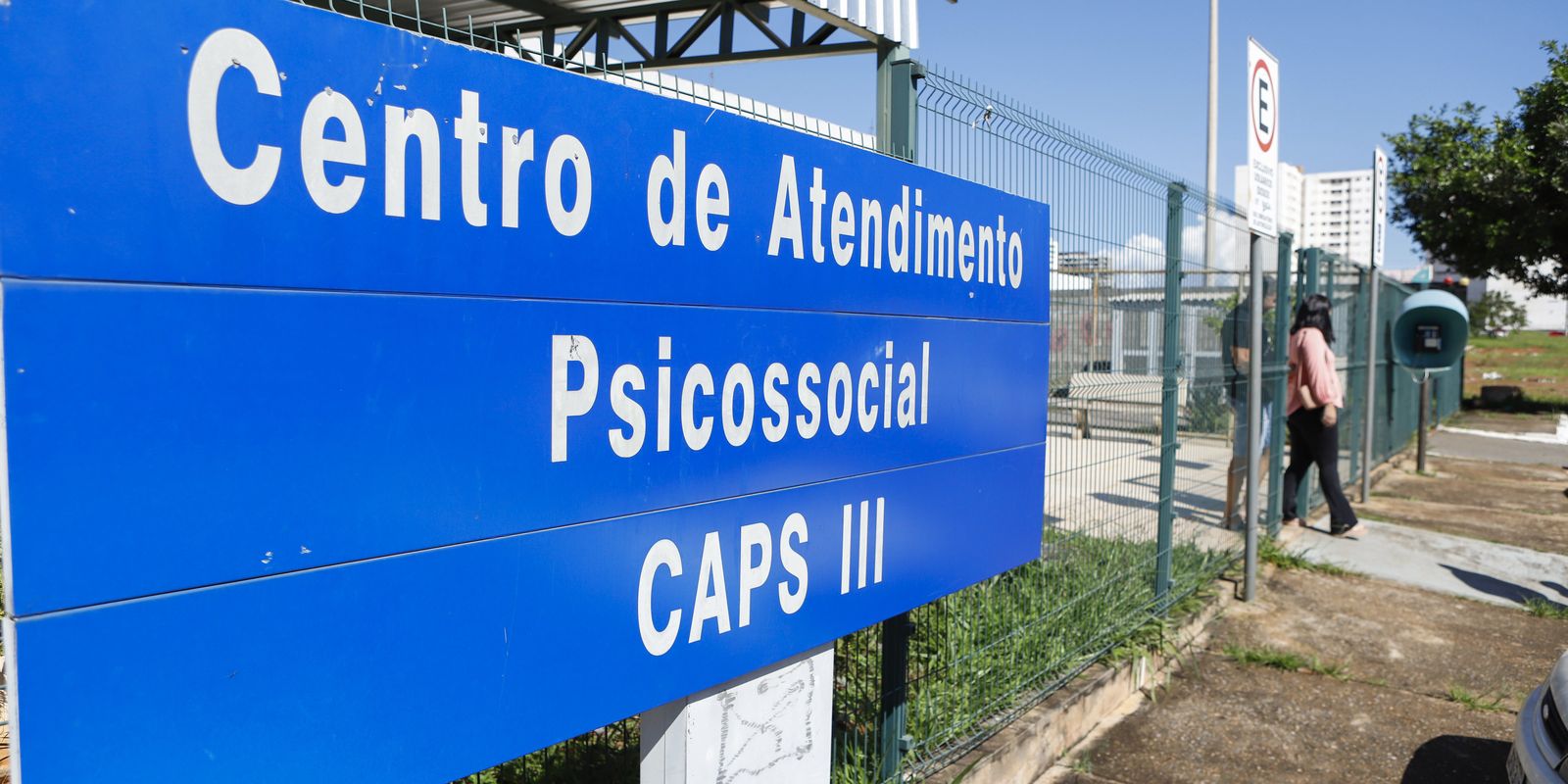
The Ministry of Health is studying reviewing the guidelines and financing standards for the Psychosocial Care Network (Raps), which brings together public services across the country aimed at people in psychological distress or who face problems arising from the use of alcohol and other drugs.
The initial examination of the two ministerial ordinances that, since September 2017, establish the way in which Raps is organized and funded is the responsibility of a working group that will include representatives of the entities that bring together the health secretaries of the states and the Federal District (Conass) and municipalities (Conasems).
The working group responsible for reviewing and proposing changes to GM/MS Consolidation Ordinances No. 3 and #6 was created through Ordinance No. 10published in Official Gazette of the Union of the last day 6, and it will be composed of six ministerial representatives; two from Conass and two from Conasems.
The ordinance also provides for the possibility of experts and representatives of bodies and entities, public or private, to participate as special guests, without the right to vote.
According to the text of the ordinance, the working group will have 180 days to present its proposal to review Raps standards and guidelines. If necessary, the initial deadline may be extended for the same period. Finally, the group’s suggestions will be submitted for evaluation by the Tripartite Intermanagers Commission – negotiation and decision forum composed of the Ministry of Health, Conass and Conasems.
In a note, the Ministry of Health reported that the initiative is part of its actions to strengthen the public policy of psychosocial care and seeks to improve “the articulation between the different points of care [da Raps]based on the needs of the territories”.
“With the establishment of the working group, the ministry reaffirms its commitment to strengthening the SUS and consolidating a mental health policy guided by the principles of comprehensiveness, networked care, care in freedom and shared management among federative entities,” informed the ministry.
Weaknesses
Conass reported that it considers the initiative “legitimate and necessary”, as long as the foundations of the Law No. 10,216/2001the main legal framework of the so-called Brazilian Psychiatric Reform, for providing for the protection and rights of people with mental disorders and establishing a new mental health care model.
According to the council, state health departments have been pointing out “important weaknesses in Raps” for some time, such as the difficulty for many city halls to fund psychosocial assistance for citizens; the lack of regional arrangements that promote and guarantee this type of assistance and the undersizing of mental health in primary care.
“Added to this are new post-pandemic demands [como o crescente número de diagnósticos de autismo e outros transtornos mentais; de medicalização de crianças e adolescentes; uso de psicotrópicos pela população em geral; casos de violência nas escolas; jogos e apostas online e dos agravos enfrentados pela situação em população de rua] and impasses regarding the role of therapeutic communities, which are often disconnected from the psychosocial care network and are the target of complaints of rights violations”, pointed out the council, adding that, in the working group, “it will continue to reiterate its commitment to the Unified Health System (SUS), to the Psychiatric Reform and to a mental health policy based on evidence, human rights and the reality of the territories.”
“Conass defends updating standards and funding criteria to strengthen Raps and expand access and qualify care as long as the foundations of Psychiatric Reform are preserved, such as care in freedom, community and territorial services, defense of human rights and the protagonism of users and families – achievements of Brazilian society”, concluded the council.
Challenges
According to Conasems, the Union, states and municipalities have been debating the components of Raps and the challenges that public managers face in ensuring the provision of qualified mental health care services since last year. According to the entity, the demands related to psychological suffering are increasingly complex, demanding more and more from the Unified Health System (SUS).
“The problem of mental health is not limited to issues of financing or the performance of Psychosocial Care Centers (CAPS), but involves the system’s capacity to integrate the urgency and emergency network, primary and hospital care, combined with the need for qualified professionals, coordination with other sectors and the reduction of stigma in society as a whole”, Conasems informed Brazil Agency.
Also according to the entity, faced with problems such as the lack of trained professionals and the difficulty of attracting existing ones to regions that are difficult to access, The members of the working group should discuss possible improvements to the network, considering the differences and particularities of the 5,570 Brazilian municipalities.
“The proposal is that, within the scope of the tripartite governance of the SUS, possible improvements are debated, respecting the precepts of psychiatric reform and counting on the support of social control – including users, family members, professionals and society in general –, in order to formalize a national mental health policy”, added the council of municipal health departments.
Support
Raps offers comprehensive care from basic care, which includes Basic Health Units (UBS); teams from Street Clinics and Community and Cultural Centers (Ceco), to specialized psychosocial care, focused on different types of Psychosocial Care Centers (CAPS).
The network also provides crisis support through Urgent and Emergency Care (SAMU 192, UPAs and stabilization rooms) and Hospital Care, with specialized wards in general hospitals. The structure is complemented by Deinstitutionalization Strategies, such as Therapeutic Residential Services, Transitional Residential Care (reception units and residential services) and transversal Psychosocial Rehabilitation actions, which together aim to promote the autonomy and social reintegration of users.