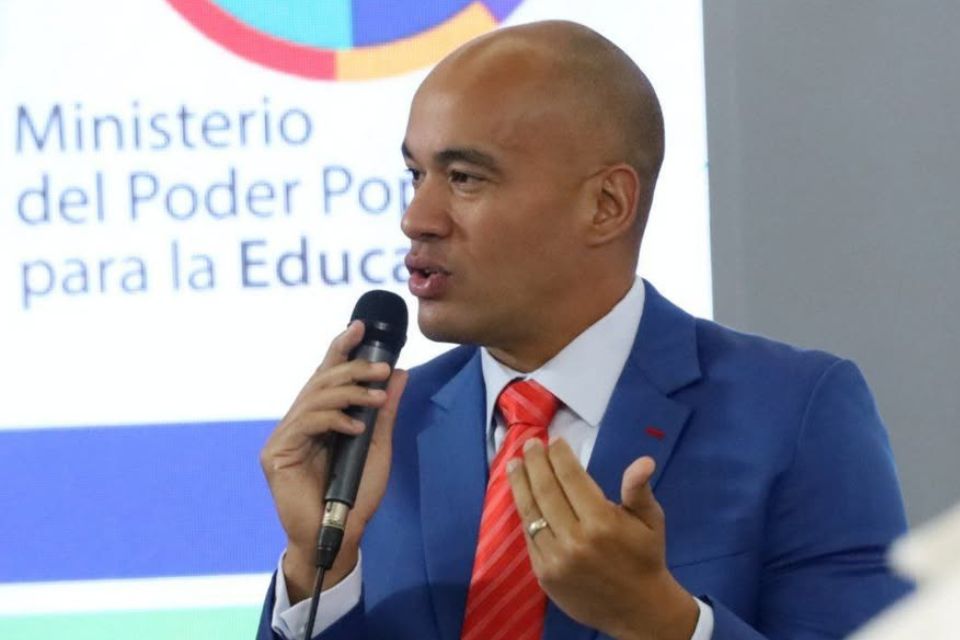
The Minister of Education, Héctor Rodríguez, had said that the goal is to reach seven million students; But with the return of 110 thousand about 918,526 are still excluded
The Minister of Education, Héctor Rodríguez, said that 110,000 children who were outside the education system will return to classes next Monday, September 15, when the 2025-2026 school year will begin.
«I ask you zero bureaucracy, that if they lack a document, that if we have to level them, then we do it. If the boy has no shoes, he has no uniform, who does not have the supplies, we give them to them, but we cannot leave any boy, any girl without registering, ”Rodriguez asked, through an official note.
Although there are no official figures on the number of children in the country, because since 2015, the Ministry of Education does not present memory and account, the Living conditions survey (Encovi) He indicated that by 2024 there was a deficit of almost three million students with school age that are not in the classrooms »; But these are figures that the minister dismisses.
*Also read: Reinsert is not enough: experts warn that de -schooling requires structural changes
However, and although the authorities do not release the complete data, in January of this year, Héctor Rodríguez indicated that the number of students had grown up to the beginning of the 2024-2025 school year. He explained that the number of students had increased by 400,532, for a total of 5,971,474 registered children, and insisted that The goal is to reach seven million students; That is, the number of lagging schoolchildren, according to their calculations, at that time was about 1,028,526, almost two million less than those reported by Encovi.
Taking as a starting point the numbers given by Héctor Rodríguez and his claim that 110,000 children will return to the classrooms and that the goal was seven million, there would still be 918,526 lagging children.
In the same way, the minister requested accompaniment to infants by admitting that “they surely come from difficult environments, some will have reduced mobility or live in places far away from school and the daily transfer makes them difficult.”
«Enrolling them is a challenge, but that they go to classes every day is a major challenge. We are responsible for this, if the child is missing a few days, alert, go to touch the door and know why, ”the official urged.
*Journalism in Venezuela is exercised in a hostile environment for the press with dozens of legal instruments arranged for the punishment of the word, especially the laws “against hatred”, “against fascism” and “against blockade.” This content was written taking into consideration the threats and limits that, consequently, have been imposed on the dissemination of information from within the country.
Post views: 397