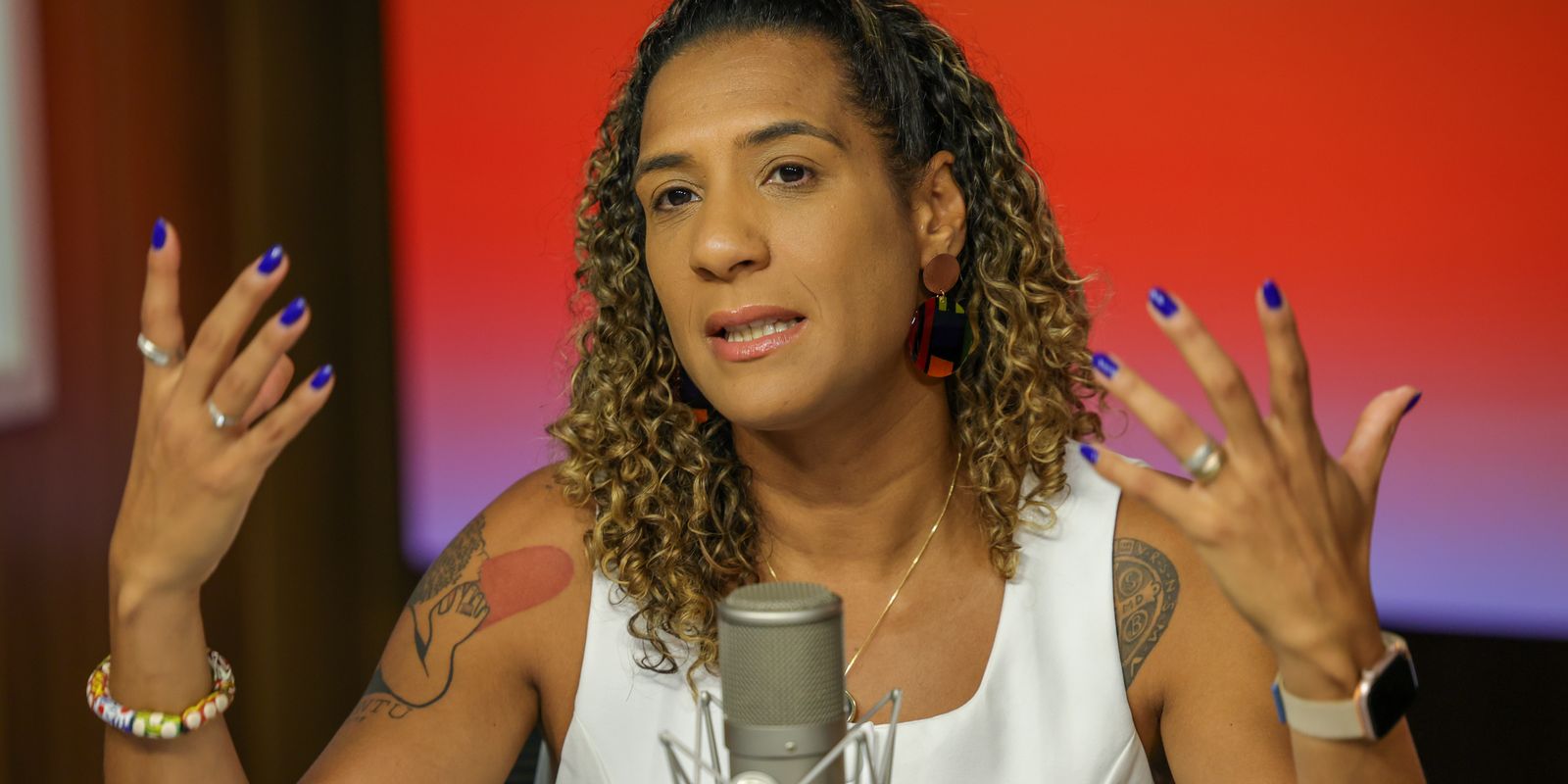
Less than a week after the completion of the 5th National Conference on Promotion of Racial Equality (Conapir)the Minister of Racial Equality, Anielle Franco, charged states and municipalities support and partnership so that the approximately 500 proposals approved during the meeting can be transformed into public policies.
“Much has happened in the last three years at the head of the Ministry of Racial Equality, where we did as our duty should be done, send resources and everything else and often states and municipalities, because they had different positions from ours, or took too long, or delayed or did not want to make it happen,” he said.
“This is a big obstacle. For politics to reach the tip, we need the governors, the mayors to make it happen,” said Anielle. “It’s a big challenge. We live a phase in our country where we need, increasingly, remember that it is not about where I vote, who I vote, but about taking care of the people.”
Election year
In an interview today (23) to radio stations during the program Good morning, ministerproduced by Brazil Communication Company (EBC)Anielle also recalled the proximity of the election year and how the period can impact the implementation of the proposals approved in Conapir.
“We have a year that will be challenging. This dispute of minds, hearts and narratives, where people, in fact, need to understand that these places, these positions, these posts they occupy are to take care of the people and not for their own interests,” he said.
“It can’t be just a government policy. After two, four, six years, it’s another [governo]won’t we do it? No, we have to do yes. It has to be a state policy. This is the way, [é] the political will. You can reach any position you want, but if you don’t want to do it, the political will to make it go and work, you won’t get out of paper, ”he concluded.
Understand
Coniri delegates, gathered in Brasilia, presented last Friday (19), a final document with the proposals that will be sent to the federal government-guidelines and recommendations for the formulation and improvement of public policies of equality, democracy, historical reparation and racial justice.
The meeting, which ended last week, brought together about two thousand people from all over the country, with 1,700 elected delegates, 200 guests and 50 observers who discussed 740 proposals approved in the previous stages in municipal, state and regional conferences.