Beyond extraction: mining that Peru needs
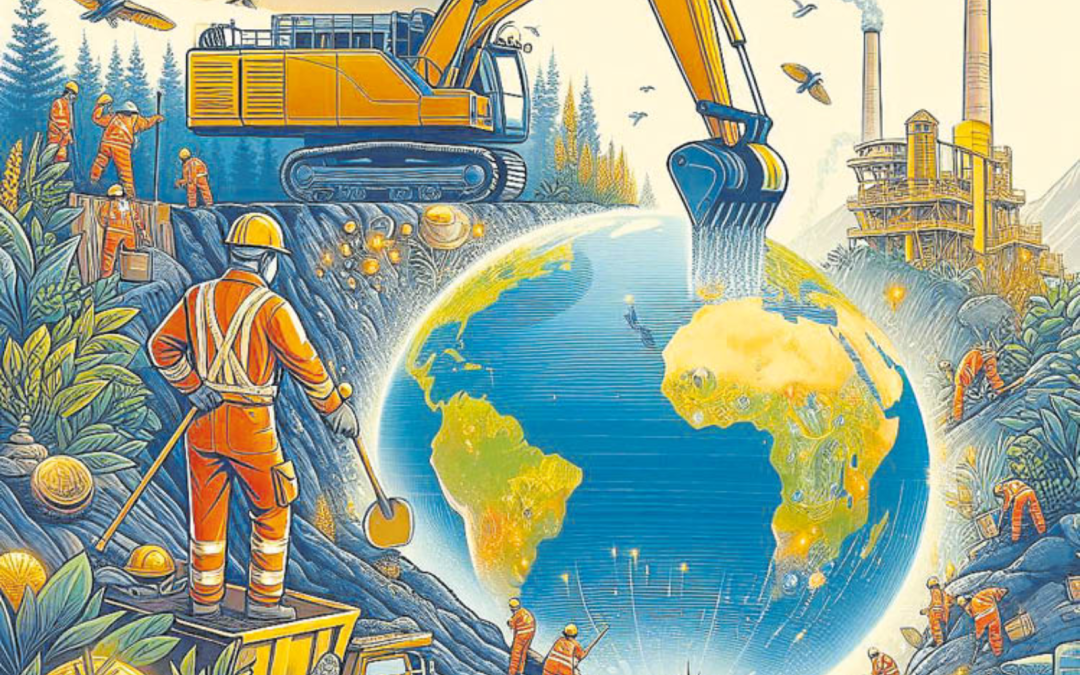
Mining companies have in their hands the power to transform communities. Investing in education, health and infrastructure they create lasting opportunities in remote villages, where the presence of the State is limited.
Historically, Peru is considered a mining country. Not only for its great wealth in mineral resources but also for the importance of this activity in the country’s economy. Mining represents more than 60% of our exports. Peru occupies the first places in production of various metals such as gold, silver, copper, lead, zinc, iron, tin, molybdenum, telurio, among others, according to updated reports of the Ministry of Energy and Mines (Minem).
In line with this boom, for some decades, mining activity is experiencing a paradigm shift in terms of social responsibility. Far from being just an extractive activity, responsible mining emerges as a sustainable development engine, promoting projects that improve the quality of life and build a more promising future for the communities surrounding their operations.
This new approach is becoming a business conviction, where success is measured not only in tons of mineral, but also with the social and environmental impact they promote.
Creating economic opportunities
Through productive development programs, mining companies have focused on the economic autonomy of communities to promote the diversification of the local economy and reduce the dependence of this unique activity.
One of the efforts that has
followed this path is that of the Mining Company Antamina, in the Ancash region. In this region, the local supplier development program has been implemented, a project that trains micro and small businesses in the area in management, safety and quality issues, allowing them to become suppliers of the Minera and other companies.
This not only generates employment and energizes the local economy, but also builds a robust and sustainable business fabric. Another example is that of the Minera Gold Fields, which has supported the development of agriculture and livestock in the communities of Cajamarca, improving cultivation and raising techniques, in addition to facilitating access to new markets.
Through the Sumaqta project, from Minera Las Bambas, more than 1,200 families in Apurímac have received training and support to improve quinoa production, guinea pigs, trout and vegetables, integrating into regional value chains. In Moquegua, Anglo American Quellaveco encourages youth entrepreneurship. At the end of 2024, more than 2,000 young people had participated in technical training, digital skills and internships in local private sector companies.
Improving living conditions
In this regard, the commitment of responsible mining translates into concrete actions to solve the basic needs of the communities that surround their operations. The cases of companies that invest in critical infrastructure and contribute to close the marked social gaps of the country are increasingly.
For example, in terms of infrastructure and basic services, the work done in the Central Sierra by the Hudbay Peru company, in coordination with local authorities, has guaranteed access to water resource for public health. His initiatives have improved drinking water and sanitation infrastructures in the province of Chumbivilcas, Cusco; And it has also implemented a Bofedales Management Plan that seeks the efficient use of water, the reduction of the livestock impact and the training of the local population in sustainable practices. It is not the only company, in the south, Southern Peru has invested in the construction and equipment of health centers, and in food security and food safety programs, especially aimed at pregnant children. These initiatives not only save lives, but also improve the quality of life and human development.
Sowing the future
For anyone it is a secret that education is the cornerstone of development. Investing in it is a long -term commitment in favor of human capital in communities.
For this reason, miners such as Yanacocha, in Cajamarca, have invested in the construction and rehabilitation of schools, creating adequate learning environments. In addition, they have established complete scholarship programs for young talents from communities, allowing them to access higher education in prestigious universities and technical institutes, both in Peru and abroad.
The educational approach points to infrastructure, but also to educational quality. Bambas, for example, have implemented training programs for teachers, updating them in teaching and using educational technologies in the province of Cotabambas.
In addition, the mining company has invested in the reconstruction of educational institutions and in the equipment of laboratories and classrooms, has signed agreements with the Ministry of Education to improve educational infrastructure and quality of teaching. He has also donated equipment for literacy programs that seek to strengthen reading, writing and calculation. These programs are preparing students to face an increasingly competitive and digitized world.
It is impossible to deny that social conflicts, unfulfilled promises and environmental liabilities have marked part of the way of mining in Peru, but it is also necessary to mention that the actions reported above are part of the new vision of the sector.
Far from limiting taxes or royalties, generating lasting opportunities for communities is one of the largest current commitments of mining companies. And, incidentally, the best response to their detractors. Because gold, silver and copper pass, what remains and remembered are the works in favor of those who need it most.
Bambas drives education in Cotabambas with comprehensive programs that benefit young people and teachers
Scholarships, infrastructure projects, food support and training, are the tools used by the mining company to improve educational quality in the province of Apurímac.
With the commitment to improve educational quality and expand opportunities in the province of Cotabambas (Apurímac), Minera Las Bambas has been developing a series of initiatives that cover scholarships for higher studies, modern infrastructure, teacher training and strengthening of cultural identity
local.
Since 2017, the company has invested more than US $ 6 million in its higher education program, which includes undergraduate scholarships and professional accompaniment. About 200 young people – more than 50% women – have been able to access university and technical studies, in a clear commitment to gender equity in education.
At the community level, the program learning in community has promoted adult literacy and strengthened the pedagogical abilities of more than 300 teachers. For its part, the School Food Support Project has benefited 635 students of initial, primary and secondary in the communities of Fuerabamba and Huancuare, through the equipment of dining rooms, food provision and training in good manipulation practices. This initiative also boosted the local economy by integrating communal suppliers.
A remarkable milestone has been the participation of the IEE of Fuerabamba in the National Tinkuy contest with ideas in Action – APEC Bicentennial edition, where it obtained the second place among more than 1,200 projects, with a proposal on the preservation of the typical suit of Nueva Fuerabamba. This achievement, backed by the bambas, valued the cultural wealth of the area and allowed the institution to represent its community in the National Meeting of Students of Original Peoples.
In infrastructure, the company leads the reconstruction of 12 educational institutions through the mechanism of tax works (OXI), with a projected investment of S/178 million. This plan includes an integral renewal of schools in communities such as Pumamarca and Asaccasi, as well as in the districts of Tambobamba and Mara, combining the modernization of classrooms, laboratories and furniture with training programs for teachers and managers.
In addition, since November 2024, Bambas maintains a framework agreement with the Ministry of Education, aimed at improving learning results in Cotabambas. According to the Minedu, only 29.6 % of primary school students achieve a satisfactory level in reading and 29.9 % in mathematics, figures still below the national average.
These actions reflect a sustainable territorial development approach, which not only seeks to raise educational quality, but also to promote the employment and hiring of local services, generating comprehensive benefits for the communities of Cotabambas.